How Natural Language Processing Guides Tours Today
Discover how natural language processing guides tours today, transforming audio experiences into interactive journeys with real-time narration.

Natural language processing (NLP) is the technology that converts written scripts and live data into spoken, interactive tour narration. It powers everything from GPS-triggered audio at a Roman ruin to a real-time answer when you ask why a building looks the way it does. Tools like Google Cloud Text-to-Speech, Amazon Polly, and Azure TTS transform tour scripts into natural-sounding speech with tunable emphasis, pacing, and pronunciation. Platforms like Guidio and DocentPro show how NLP in tour planning has moved well beyond pre-recorded audio into fully adaptive, multilingual experiences. Understanding how natural language processing guides tours reveals why the gap between a flat audio file and a living, breathing guide has never been wider.
How does location-aware NLP create context-sensitive tour narration?
Location-aware narration is the backbone of every smart tour with NLP. A tour app continuously tracks your GPS coordinates and queries a backend database for nearby points of interest. When you step within a set radius of a landmark, the system triggers a narration segment automatically.
Timing is the hardest design challenge in this entire workflow. Narration that fires too early sounds disconnected from what you are seeing. Narration that fires too late breaks the story mid-stride. The Guidio architecture addresses this by queuing content by distance, so the closest and most relevant segment always plays first.
Practitioners structure NLP narration scripts into short, punchy segments that lead with the strongest detail. That approach keeps pace with walking speed and avoids the awkward silence of a loading delay. Here is how a well-built location-aware system works in practice:
- Coordinate check. The app polls GPS every few seconds and compares your position against a map of POI boundaries.
- Content query. On a match, the backend fetches the correct narration chunk for that specific location and language.
- Queue management. If two POIs overlap, the system ranks them by proximity and plays the nearest one first.
- Playback and reset. After narration ends, the POI is marked as visited so it does not repeat on your return path.
- Fallback content. If GPS signal drops, the app serves a general neighborhood story rather than going silent.
Pro Tip: Design narration segments to run no longer than 90 seconds each. Shorter segments reduce the chance that a visitor walks past a POI before the audio finishes.
What role does RAG play in personalized tour question answering?
Retrieval-Augmented Generation, or RAG, is the architecture that lets you ask a tour app a real question and get a real answer. Standard AI models rely on static training data, which goes stale fast in a travel context. RAG solves this by splitting the process into two steps: retrieve, then generate.
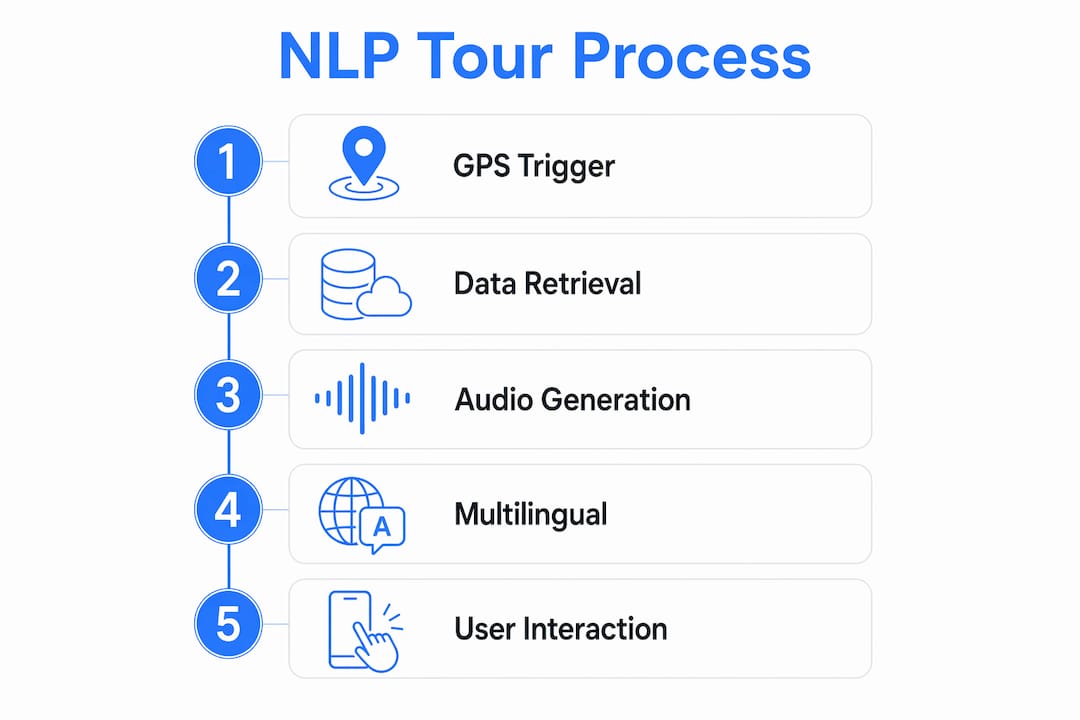
The retrieval step pulls relevant data chunks from a vector database like ChromaDB at query time . That means the answer is grounded in current, venue-specific information rather than a model’s memory of something it read two years ago. The generation step then produces a natural language response built from those retrieved facts.
The practical result is that you can stand in front of a 17th-century gate and ask, “Why is this arch asymmetrical?” and receive a historically accurate, site-specific answer in seconds. RAG systems also separate retrieval from generation for ambiguous queries, activating external tools only when needed. That keeps response times fast and answers accurate.
Key advantages of RAG over fine-tuning for travel applications:
- Always current. New venue data updates the vector database without retraining the entire model.
- Traceable answers. Each response links back to a specific retrieved chunk, making it easier for curators to audit.
- Reduced hallucination. The model generates from facts it just retrieved, not from pattern-matched guesses.
- Scalable across cities. Add a new city’s data to the database and the same model serves it immediately.
Pro Tip: Ask your tour app open-ended questions like “What happened here in the 1800s?” rather than yes/no questions. RAG systems return richer, more contextual answers when the query has breadth.
How does multilingual NLP make tours accessible worldwide?
Multilingual NLP combines neural machine translation, text-to-speech synthesis, and GPS synchronization into a single pipeline. The result is narration that shifts language as you move, without you touching a setting.

The most documented real-world example is a smart tour pilot in Da Nang, Vietnam. That project delivered GPS-triggered narration in 5+ languages and produced a 35% increase in visitor satisfaction. That figure matters because it came from a live deployment with real travelers, not a lab study. Local drivers received training on the system, and translations were culturally adapted rather than word-for-word.
The distinction between localization and translation is critical here. A direct translation of “this neighborhood has character” may land flat in another language. A localized version finds the culturally resonant equivalent. DocentPro’s multi-agent NLP system handles this by running domain-specific agents for attractions, restaurants, and activities, each feeding into a translation and TTS pipeline.
Offline capability deserves special attention. Travelers in historic districts often face weak data signals, so well-built systems preload audio packages for each language before the tour begins.
What audio design choices make NLP narration truly immersive?
Audio design is the difference between a tour that informs and one that transports you. The voice, the pacing, the ambient sound, and the silence all shape how much you absorb and how much you feel.
A 2025 study on AI voice guides found that cognitive predictors and affective experience together explained over 42% of listener engagement variance. That means the emotional quality of a voice is not a soft preference. It is a measurable driver of how well travelers retain what they hear. Voice familiarity and mental imagery both contributed positively to engagement.
Speech Synthesis Markup Language, or SSML, gives developers precise control over how a neural voice sounds. You can insert pauses before a dramatic reveal, stress a key word, or slow the pace when describing something visually complex. These micro-adjustments make AI narration sound natural rather than mechanical.
Sound effects and music add atmosphere but carry real risk. The same 2025 study noted that poorly balanced audio layers create cognitive overload, pulling attention away from the narration itself. The best-designed tours use ambient sound sparingly, as a frame rather than a feature.
Institutional accuracy anchors all of this. Artlas, an AI cultural companion, grounds its narration in curator-verified content, positioning AI as a supplement to human expertise rather than a replacement. That approach builds the kind of trust that keeps travelers engaged from the first stop to the last.
Key Takeaways
NLP guides tours most effectively when GPS timing, RAG-powered Q&A, multilingual localization, and curator-verified audio design work together as a single system.
Why tight synchronization is the make-or-break factor
The technology behind NLP-guided tours is genuinely impressive. But after spending time with multiple AI audio platforms, I keep coming back to the same observation: the gap between a good tour and a forgettable one almost always comes down to synchronization.
When narration fires at exactly the right moment, the story and the place fuse together. You are standing in front of a weathered stone wall, and the voice begins. That alignment feels almost cinematic. When it fires three seconds late, or while you are still 50 feet away, the spell breaks completely. No amount of beautiful writing or perfect voice acting recovers that moment.
The curator-in-the-loop workflow is the other piece most platforms undervalue. AI can propose narration quickly and at scale. But a human curator who knows the site catches the errors that a language model cannot. A date that is off by a decade, a cultural framing that misses the point, a story told from the wrong angle. These are not edge cases. They are common, and they erode trust fast.
The most exciting development I see coming is multi-agent systems that handle the full trip, not just the walking tour. Imagine a single AI companion that narrates your walk through a historic district, answers your lunch question about a local dish, and then queues up the right story as you approach a harbor at dusk. DocentPro’s modular architecture already points in that direction. The travelers who experience that kind of continuity will not go back to static audio files.
"— Eugene"
Votura brings NLP-guided tours to over 500 cities
You now know what separates a flat audio file from a genuinely immersive tour. Votura puts all of it into practice, combining expert narration with real-time AI assistance so you can ask questions about your surroundings as you walk.
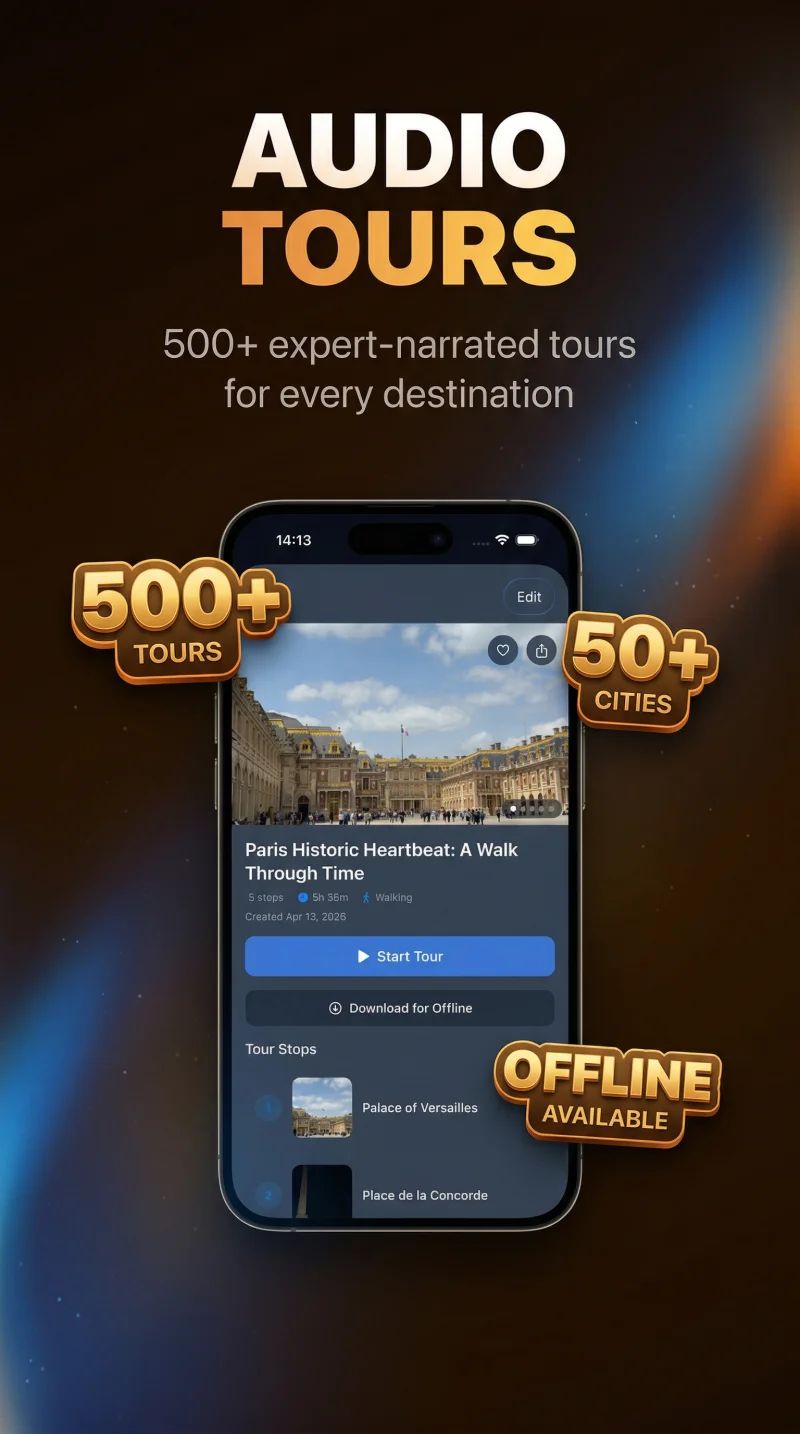
Votura offers 1,400 AI-powered audio tours across more than 500 cities, with a 4.5-star rating from independent travelers. Whether you are a history enthusiast wanting deep context at iconic landmarks or a curious explorer hunting for hidden gems in an unfamiliar neighborhood, the app adapts to your pace and interests. Tours work offline, so weak signals in historic districts never cut the story short. Open the app, pick your city, and let the narration begin.
FAQ
What is NLP in the context of guided tours?
NLP, or natural language processing, converts written tour scripts and live data into spoken, interactive narration. It powers features like GPS-triggered audio, real-time question answering, and multilingual voice synthesis.
How does a tour app know when to start narrating?
The app tracks your GPS coordinates and triggers narration when you enter a set radius around a point of interest. Systems like Guidio queue content by distance to keep timing accurate and immersion intact.
Can I ask questions during an NLP-guided tour?
Yes. Apps built with RAG architecture retrieve venue-specific facts from a database and generate a direct spoken answer. You can ask open-ended questions about history, architecture, or culture and receive current, grounded responses.
What languages do AI-guided tours support?
Support varies by platform, but multilingual NLP systems can deliver narration in five or more languages using neural machine translation and text-to-speech synthesis. The Da Nang pilot demonstrated this at scale with GPS synchronization across language tracks.
Are AI tour narrations accurate?
Accuracy depends on the platform’s editorial process. Curator-in-the-loop workflows, used by platforms like Artlas, require human review of AI-proposed content before it goes live, which significantly reduces errors and maintains institutional trust.
Recommended
- Votura - AI-Powered Self-Guided Audio Tour App | Walking Tours Worldwide
Frequently Asked Questions
How does location-aware NLP create context-sensitive tour narration?
Location-aware NLP uses GPS to track where you are and triggers the right narration when you enter the radius of a landmark or point of interest. If two places overlap, the system ranks them by proximity and plays the nearest one first.
What tools turn tour scripts into natural-sounding speech?
Google Cloud Text-to-Speech, Amazon Polly, and Azure TTS convert tour scripts into spoken narration. The article says these tools let creators tune emphasis, pacing, and pronunciation for a more natural result.
Why is timing so important in NLP-guided tours?
Timing matters because audio that starts too early feels disconnected from what you are seeing, while audio that starts too late can interrupt the story. The article says good systems queue content by distance so the most relevant segment plays at the right moment.
How are tour narration scripts structured for walking tours?
Practitioners keep narration segments short and punchy so they match walking speed and avoid awkward loading pauses. The article recommends keeping segments no longer than 90 seconds each.
What happens if GPS signal drops during an NLP-guided tour?
If GPS signal drops, the app does not go silent. It serves a general neighborhood story instead as a fallback.
Where has NLP moved beyond pre-recorded audio in tours?
Platforms like Guidio and DocentPro show that NLP has moved beyond static audio files into adaptive, multilingual tour experiences. The article says this makes the guide feel more like a living, interactive narrator.
Hear this city out loud
Votura turns the places in this guide into a self-guided audio tour you can follow at your own pace.