Busan Self-Guided Tour: A Route You Can Start Today
Take a self-guided tour of Busan on your own schedule — Votura's AI narrates each stop as you walk, with no group, no fixed start time, and no guide to wait on.

Busan is a city that rewards spontaneity: you can begin at Jagalchi Fish Market in the morning, wander through Gamcheon Culture Village when the light is best, and end the day by the sea in Haeundae or Gwangalli without worrying about keeping up with a tour group. With a self-guided route, Busan becomes your own flexible day out, where you can pause for coffee, detour for street food, or skip a stop entirely and still feel like you’ve seen the city properly.
Why Go Self-Guided in Busan
That freedom is what makes this kind of trip so easy to start today—no fixed schedule, no need to book weeks ahead, and no pressure to move at anyone else’s pace. Votura AI creates audio tours tailored to your available time, preferred transport, and chosen theme, so you can explore Busan in the way that fits you best, whether that means a half-day coastal walk, a food-focused route, or a full city day by subway and on foot.
Harbor Echoes: A Two-Day Walk Through Busan's Jung-gu Docks
This walk follows Busan’s old harbor edge and the steep streets above it, moving from 부산항 국제여객터미널 to the inner-city hills around Nampo-dong and back down to the fish market front. It is less a scenic promenade than a stitched-together path through port logistics, postwar rebuilding, film culture, and daily market trade. The route earns its time because the changes in scale are sharp: ferries and cranes at the start, then museum halls, park steps, narrow shopping lanes, and finally the waterline at Jagalchi. Walking it in sequence makes the neighborhood’s layers read clearly.
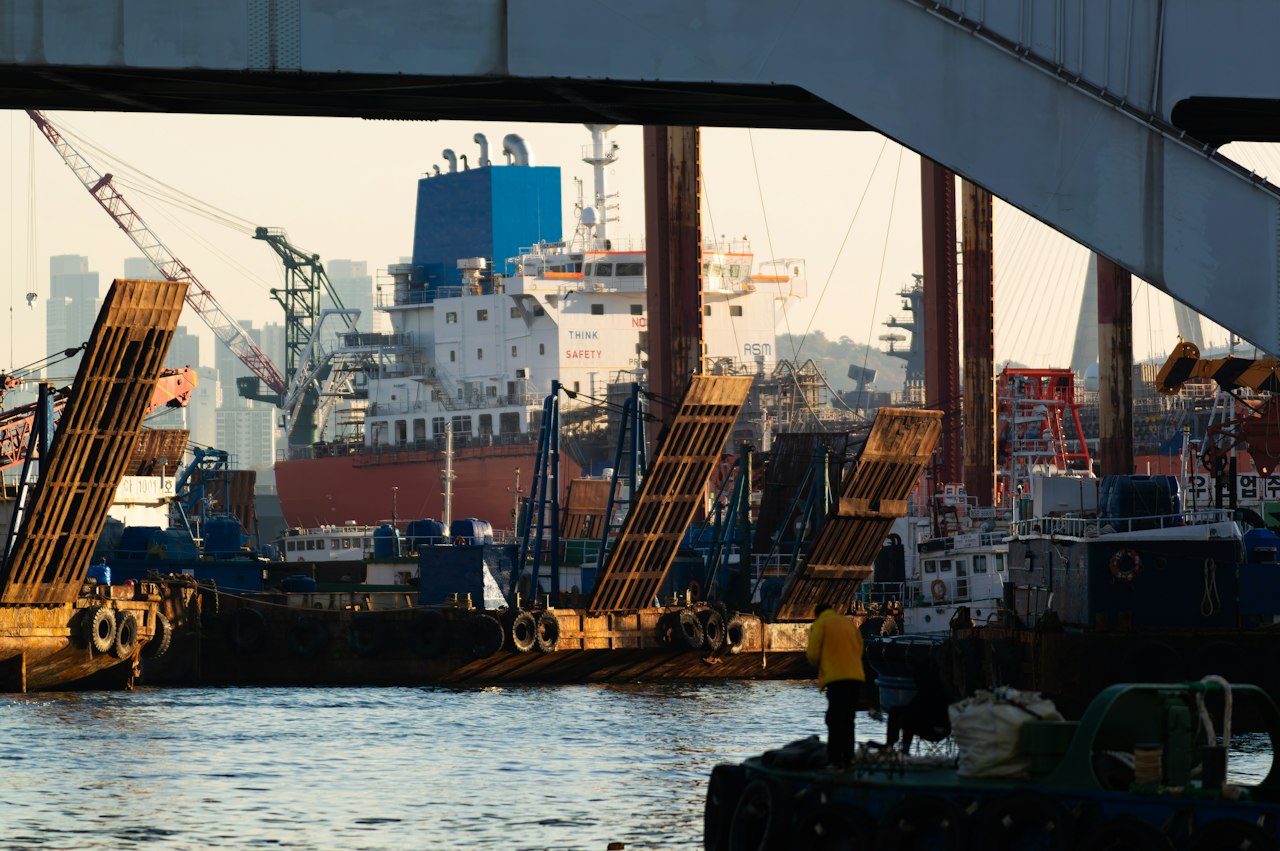
At Busan Port Int'l Passanger Terminal, the first thing that stays with you is the working harbor mood: ferry traffic, security fencing, and the hard geometry of quays and gangways. 부산근대역사관 (Busan Modern History Museum) sits in a former colonial-era building, and the stone façade itself is part of the exhibit; inside, the story of modern Busan is anchored in maps, photographs, and port history. Yongdusan Park changes the tempo with its slope and trees, and the tower rises above the paths like a fixed landmark for the whole district. BIFF Square is where the pavement becomes crowded and textural, with handprints, food stalls, and the narrow lane energy of a cinema district that never fully stops moving. Gukje Market feels broader and more improvised, with stacked goods, hardware, clothing, and old-style shopfronts packed into tight alleys. At Jagalchi Fish Market, the smell, the water, and the stainless-steel fish stalls bring the route back to the harbor; the upper floors and outer edges are worth noting for how the market meets the sea.
The route
Best walked from the port to Jagalchi over two days, with the harbor first and the markets last.
- Busan Port Int'l Passanger Terminal (부산항 국제여객터미널)
- 부산근대역사관 (Busan Modern History Museum) (부산근대역사관 본관)
- Yongdusan Park (용두산공원)
- BIFF Square (비프광장)
- Gukje Market (국제시장)
- Jagalchi Fish Market (자갈치시장)
Paste it into the agent chat in Votura and it will build the map and the audio guide.
Before you go
A morning start works best, when the harbor light is clear and the market streets are not yet at their busiest. The walking itself is not technically difficult, but there are repeated uphill and downhill stretches, stairs around Yongdusan Park, and a fair amount of crossing through busy city traffic. BIFF Square, Gukje Market, and Jagalchi Fish Market can be crowded late in the day, and some small stalls close earlier than the main streets around them. Bring water, comfortable shoes, and a little flexibility for pauses inside museums or market lanes.
Busan's Coastal Treasures: Market, Cinema & History Drive
This route threads through Busan’s southern port district, moving from Jagalchi Fish Market down to BIFF Square, then inland to Bosudong Book Street before ending at Yeongdodaegyo Bridge. It follows a compact stretch of old streets where fish stalls, cinema history, secondhand bookstores, and harbor views sit close together. The walk makes sense because the places are different in character but tightly linked by the city’s working waterfront history. It feels like a slice of Busan that is still lived in, not arranged for display.
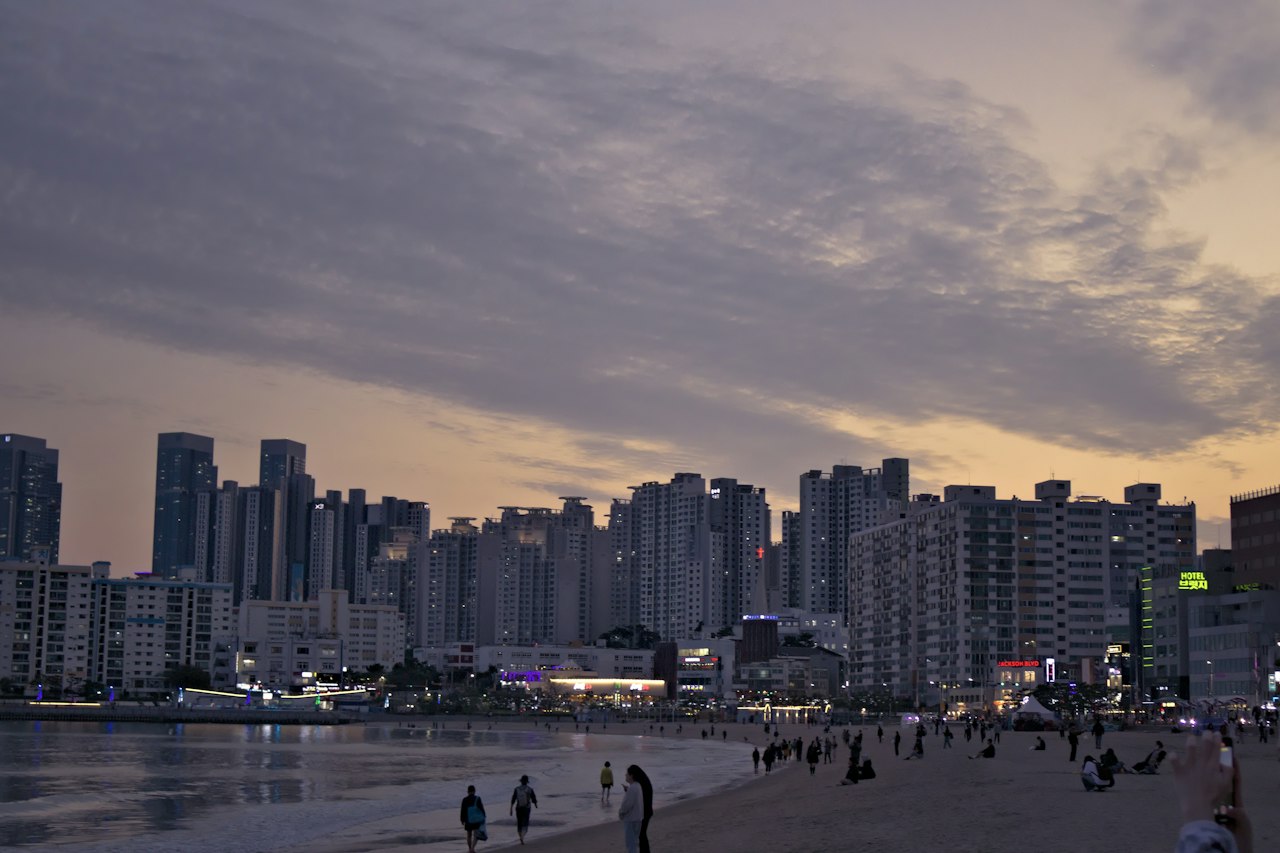
At Jagalchi Fish Market, the first thing that stays in memory is the wet, metallic smell and the rows of tanks with moving crabs, octopus, and fish flashing under fluorescent light. Around the market entrances, the sidewalks carry the rhythm of carts, plastic tubs, and vendors calling out prices. BIFF Square is a short walk away, and the change is immediate: there are handprints in the pavement, movie-theater signs, and street stalls clustered around narrow lanes that still feel busy after the film festival season. Bosudong Book Street is quieter, with low shopfronts and stacks of used books pressed into small spaces; the narrow alley form and the uneven signs make the street feel older than the surrounding city. Yeongdodaegyo Bridge finishes the route with harbor traffic and the bridge’s lift mechanism, which is the detail to watch for rather than the span itself. When it rises, the bridge becomes the route’s clearest reminder that this part of Busan still has to make room for ships.
The route
About 2.5 hours; walk from Jagalchi toward Yeongdodaegyo, following the route in that order.
- Jagalchi Fish Market (자갈치시장)
- BIFF Square (비프광장)
- Bosudong Book Street (보수동 책방골목)
- Yeongdodaegyo Bridge (영도대교)
Paste it into the agent chat in Votura and it will build the map and the audio guide.
Before you go
Starting in the morning works best, especially for Jagalchi Fish Market, when the market is most active and the streets are less crowded later in the day. The walking itself is moderate and mostly urban, with sidewalks, crossings, and a few short slopes rather than any serious climb. BIFF Square and the market area can be busy throughout the day, while smaller bookstores in Bosudong may close earlier than the surrounding streets feel like they should. A bottle of water, comfortable shoes, and a little flexibility for traffic lights and pedestrian crowds are enough.
Busan Icons: Yongdusan Park and Busan Tower
This is a short urban loop through the old center of Busan, linking the hilltop area around Busan Tower and Yongdusan Park with the nearby Busan Modern History Museum annex. The route stays in one compact part of Jung-gu, so most of the time is spent moving between stairs, plazas, and a few short city blocks rather than covering distance. It works well as a half-day walk because the sights are close together, but each stop has enough detail to slow you down. The pace leaves room for a meal break without making the day feel rushed.
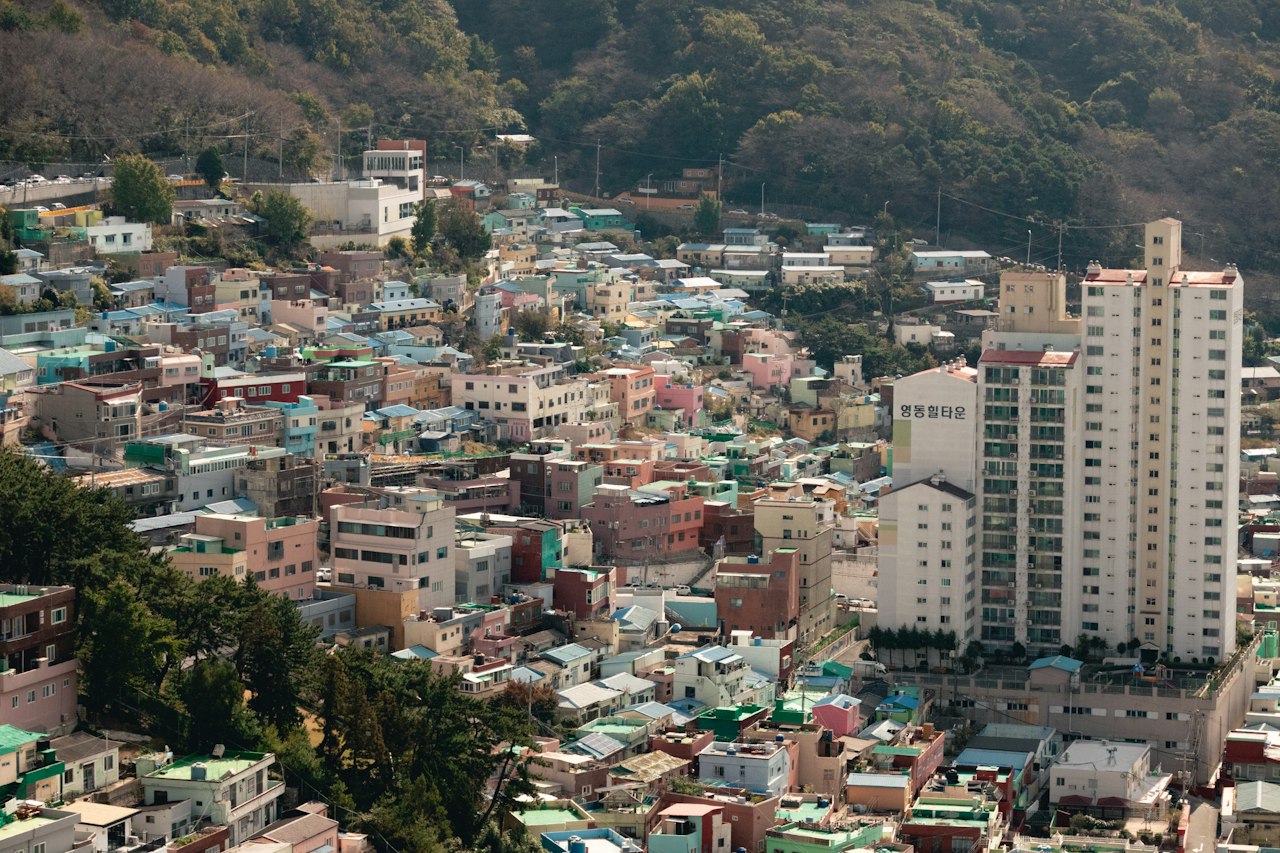
Busan Tower comes first, rising above the trees and rooftops of Yongdusan Park; the shape of the tower is the main landmark, but the broader view from the surrounding area is what makes the approach memorable. From there, Yongdusan Park feels quieter than the streets below, with paths, railings, and small monuments arranged around the hilltop rather than a single central lawn. One detail worth noticing is how the park opens toward the harbor side, with glimpses of cranes, buildings, and the port between trees and stonework. The Busan Modern History Museum annex adds a different layer, with its preserved older exterior and the sense that the neighborhood around it has changed repeatedly over time. Seen in this order, the walk moves from skyline and open views to a more grounded civic landscape, with the museum giving context to the older streets nearby.
The route
About half a day, easiest from Busan Tower down through Yongdusan Park to the museum annex.
- Busan Tower (부산타워)
- Yongdusan Park (용두산공원)
- Busan Modern History Museum (부산근대역사관 별관)
Paste it into the agent chat in Votura and it will build the map and the audio guide.
Before you go
Start in the late morning or around midday, when the hill is easier to enjoy and a lunch break fits naturally between stops. The walking itself is easy to moderate, but there are slopes, stairs, and uneven sections around the park and tower area. The busiest parts are usually the tower precinct and the park around peak sightseeing hours, while the museum can be quieter but may have shorter or irregular access than the outdoor areas. Bring water, comfortable shoes, and a light layer if you plan to stay for the view near the top.
Waves of Courage: A Two-Day Women's History Walk Through Busan's Jung-gu
This route is a walking loop through Jung-gu that connects museums, parks, markets, and old commercial streets in central Busan. It begins at 부산근대역사관 (Busan Modern History Museum) and moves through Yongdusan Park, the BIFF영화의 전당 야외극장, Gukje Market, Bosudong Book Street, and Jagalchi Fish Market. The walk earns its time because the geography itself tells the story: modern history, public memory, postwar trade, reading culture, and seafood commerce all sit close together. It feels less like sightseeing than following how the city has been built and remembered.
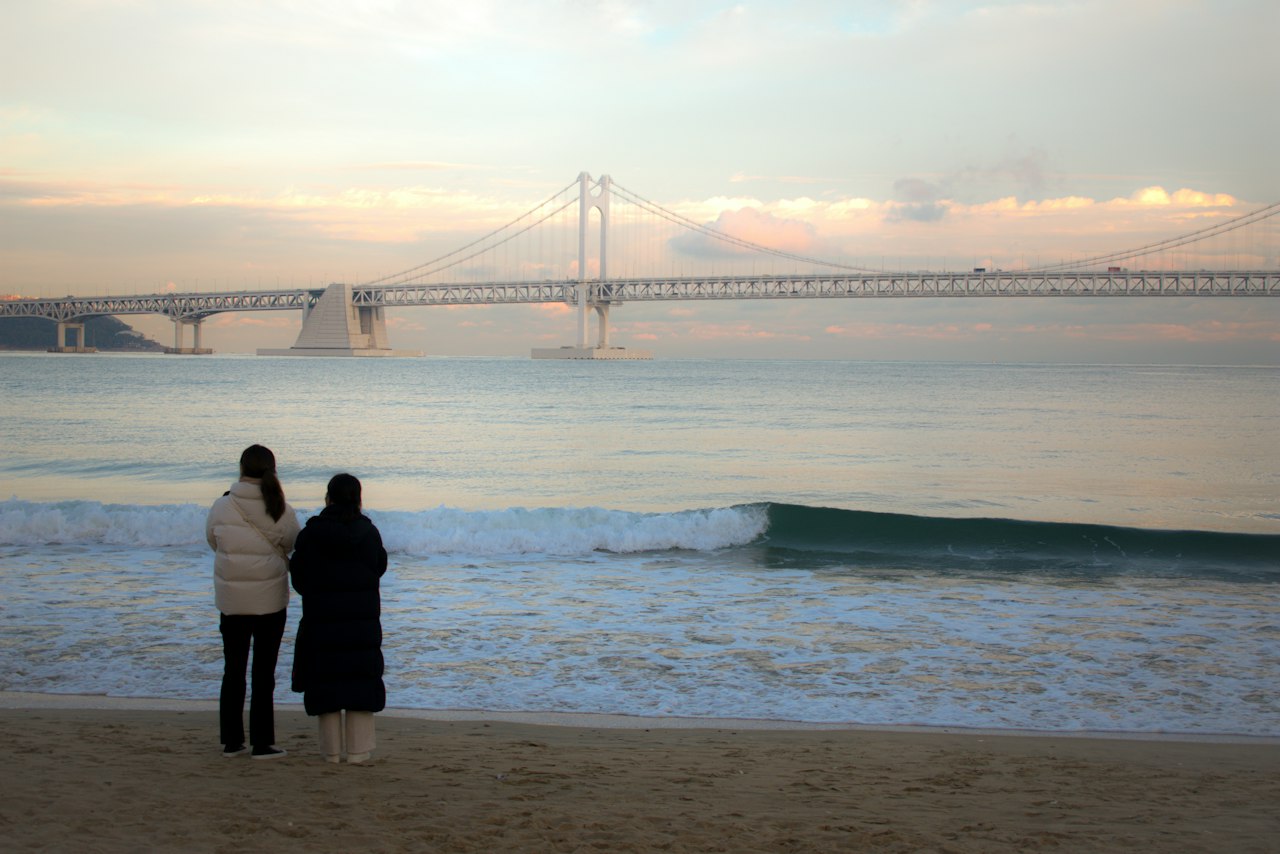
At 부산근대역사관 (Busan Modern History Museum), the building and its exhibits set the historical frame before the walk even starts, especially if you pay attention to the city’s modern-period transition rather than only the big-name events. Yongdusan Park comes next, where the change in pace is immediate: stairs, shade, open views, and the central presence of Busan Tower above the trees. The BIFF영화의 전당 야외극장 appears in a more contemporary register, with the plaza’s hard surfaces, seating, and film-festival atmosphere contrasting with the older parts of town around it. Gukje Market is all movement and narrow stalls, where the detail is in stacked goods, signboards, and the way alleys bend without much ceremony. Bosudong Book Street slows the route again, with secondhand books piled in front of small shops and the worn edges of a street shaped by reuse. At Jagalchi Fish Market, the final stretch is all noise, wet floors, and displays of fish and shellfish that make the sea feel very close.
The route
About a long day on foot, best walked from 부산근대역사관 to Jagalchi Fish Market.
- 부산근대역사관 (Busan Modern History Museum) (부산근대역사관 본관)
- Yongdusan Park (용두산공원)
- BIFF영화의 전당 야외극장
- Gukje Market (국제시장)
- Bosudong Book Street (보수동 책방골목)
- Jagalchi Fish Market (자갈치시장)
Paste it into the agent chat in Votura and it will build the map and the audio guide.
Before you go
Starting in the morning works best, because the market areas are easier to read before the day gets crowded and the light is better for the park and museum sections. The walking itself is moderate rather than strenuous, but there are enough slopes, stairs, and stop-and-go crossings that it feels like a full day on foot. Jagalchi Fish Market and the surrounding market streets can be busiest around mealtimes, and some book-stall or museum hours may vary by day, so it is worth checking before setting out. Comfortable shoes, water, and a little flexibility for detours or pauses will make the route much easier.
How to Start Your Busan Tour with Votura
- Open Votura and tap Explore
- Search for Busan or let the app detect your location
- Browse available tours or tap Generate to create a custom tour
- Hit Play and follow the audio guide stop by stop
All tours include audio narration, a route map, and estimated stop times. Download any tour for offline access before you travel.
Sources
- Visit Busan — The Official Travel Guide to Busan Metropolitan Cityvisitbusan.net
- Busan Tourist Map (English) — Korea Tourism Organizationenglish.visitkorea.or.kr
Frequently Asked Questions
What is the best way to do a self-guided tour in Busan?
The post recommends using a self-guided route so you can explore Busan at your own pace without a fixed schedule. You can start in the morning, pause for coffee or street food, skip stops, and still see the city properly.
Where can I start a Busan self-guided tour?
The article says you can start at Jagalchi Fish Market in the morning. It also describes a harbor-to-city route that begins at Busan Port International Passenger Terminal and moves through central Busan toward Nampo-dong and Jagalchi.
How long does the Harbor Echoes route in Busan take?
The Harbor Echoes route is described as a two-day walk through Busan's Jung-gu docks. It follows the old harbor edge, the hills above it, and ends back down at the fish market front.
What stops are included on the Harbor Echoes route?
The route includes Busan Port International Passenger Terminal, Busan Modern History Museum, Yongdusan Park, BIFF Square, Gukje Market, and Jagalchi Fish Market. These stops highlight harbor life, modern history, film culture, shopping lanes, and market trade.
Can I customize a Busan self-guided tour to my schedule?
Yes, the post says Votura AI creates audio tours tailored to your available time, preferred transport, and chosen theme. It can be adapted for a half-day coastal walk, a food-focused route, or a full day by subway and on foot.
Hear this city out loud
Votura turns the places in this guide into a self-guided audio tour you can follow at your own pace.