Explore Plovdiv: Famous Landmarks and Local Secrets
Whether you have a day or a weekend, discover Plovdiv at your own pace with Votura's AI-powered self-guided audio tours.

Plovdiv rewards the curious traveler with a cityscape where Roman stone, Revival-era houses, and lively pedestrian streets sit within a walkable, layered center. Here, the story is not just in the famous sights like the Ancient Theatre or the Old Town, but in the quiet courtyards, hillside lanes, and small cafés that appear when you let the city lead the way.
Why Plovdiv Rewards Curious Explorers
That mix of landmark and local detail is what makes Plovdiv ideal for open-ended exploration: you can start with a well-known monument and end up following a mural, a market stall, or a neighborhood view you never planned to find. Votura AI generates audio tours matched to the traveller's time, transport preference, and chosen theme, so each route can feel as spontaneous or structured as you want.
Twilight Phantoms of Philippopolis: A Two-Day Haunting Walk Through Plovdiv
This is a long, city-center walk through Plovdiv’s Roman core, Ottoman-era streets, and the steeper lanes of the Old Town. It runs between the area around Драматичен театър Пловдив, across the central archaeological remains, up into Стария град, and ends on Nebet Tepe before dropping to the Regional Natural History Museum of Plovdiv. The route makes sense because Plovdiv layers its history so tightly that each stop feels like a different city built on the same ground. It earns the time by letting you see those layers on foot, instead of only as separate monuments.
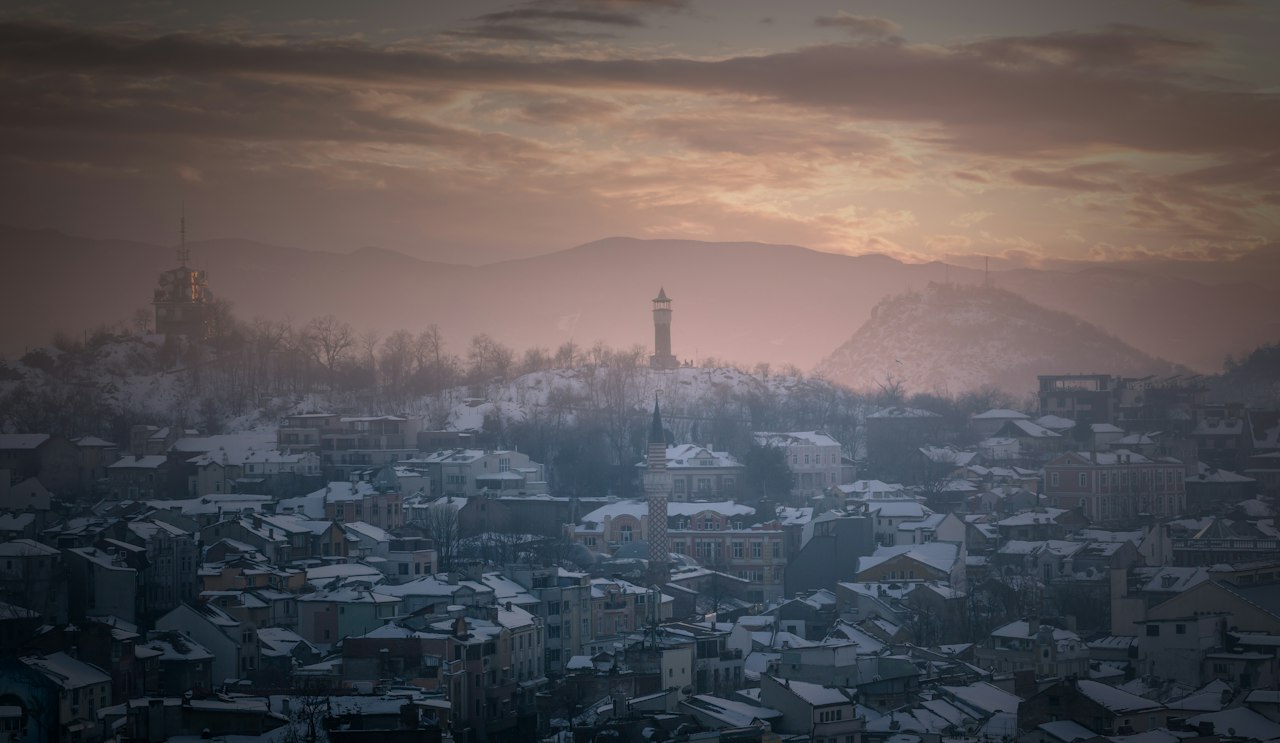
At Драматичен театър Пловдив, the route starts in a busy civic square where the theater façade gives way quickly to older stone underfoot. The Ancient Stadium of Philippopolis is worth pausing for because the surviving curve and the exposed seating line sit below street level, easy to miss unless you stop and look down. At Джумая джамия, the contrast is sharp: the mosque’s dome and minaret stand over one of the most active parts of the center, with the Ottoman building set into a contemporary shopping street. The Ancient Theater of Philippopolis rises in stone tiers above the modern traffic, and the view from the upper rows back toward the city is one of the clearest on the walk. In Стария град, the cobbles, walled compounds, and painted National Revival houses matter more than any single building, though Balabanov House stands out for its symmetrical façade and dark timber details. Nebet Tepe finishes the uphill section with exposed ruins and wide views over the river and central Plovdiv, before the walk ends at the Regional Natural History Museum of Plovdiv, where the transition from archaeology to natural history feels abrupt but fitting.
The route
Allow a long day and walk it west to east, ending at Nebet Tepe after the Old Town climbs.
- Драматичен театър Пловдив
- Ancient Stadium of Philippopolis (Античният стадион на Филипопол (Ancient Stadium of Philippopolis))
- Джумая джамия (Dzhumaya Mosque)
- The Ancient Theater of Philippopolis (Античният театър на Филипопол)
- Стария град (Old town) (Старият град)
- Balabanov House
- Небет Тепе (Nebet Tepe)
- Регионален Природонаучен Музей Пловдив (Regional Natural History Museum of Plovdiv)
Paste it into the agent chat in Votura and it will build the map and the audio guide.
Before you go
Starting in late afternoon works best, because the light is softer on the stones and the Old Town is less harsh in the heat. The walk is moderately strenuous: the ground changes from flat central streets to steep cobbled climbs in Стария град and around Nebet Tepe, so good shoes matter. Some interiors on the route may have separate hours or occasional closures, especially smaller museums and houses, so it is better not to rely on every stop being open. Water, a charged phone, and a layer for after sunset are useful, since the route stretches into evening and the pavements can be uneven.
Two-Day Immersion in Plovdiv's Old Town: A Walk Through Time
This route is a two-day loop through Plovdiv’s Roman core, Revival-era streets, and the city’s Ottoman and modern layers. It runs from the Bishop’s Basilica of Philippopolis up into the Old Town, then down toward Kapana, Dzhumaya Mosque, and the Ancient Stadium before ending by the Regional Natural History Museum of Plovdiv. The walking itself is part of the point: steep lanes, uneven stone, and short stretches where the city opens suddenly to excavations or long views. It earns the time because the changes in period are visible block by block, not just in the museums.
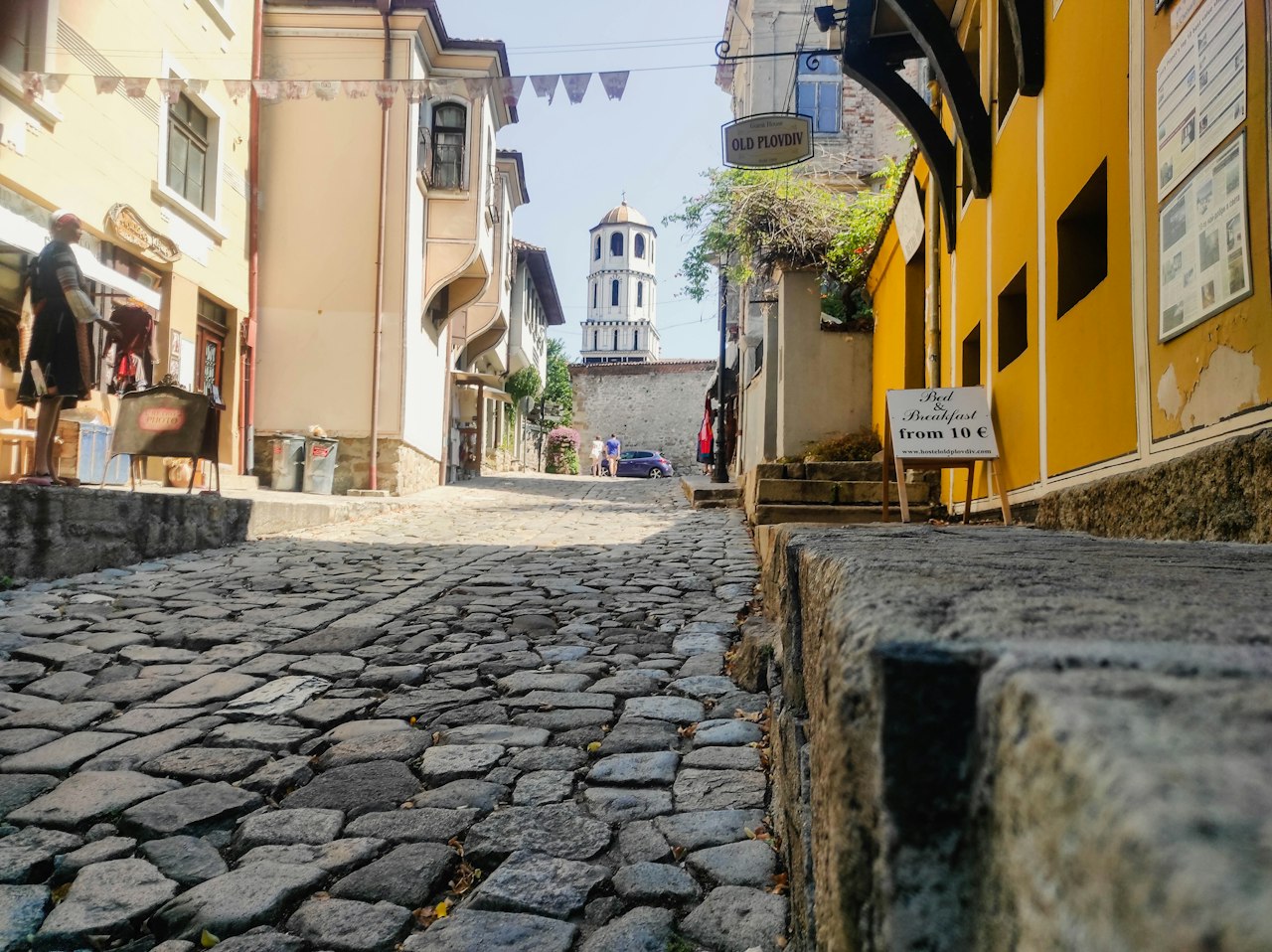
At the Bishop’s Basilica of Philippopolis, the floor mosaics are the main thing to stand still for, with their geometric bands and surviving bird imagery. The Ancient Theater of Philippopolis comes next, set into the slope with its white stone seating and stage front looking almost too complete to be ancient. In Стария град (Old town), the streets turn to cobbles and the houses sit high behind plastered walls, with painted façades and projecting upper floors that keep appearing around corners. Balabanov House is worth noticing for its carved wood, symmetrical rooms, and the way the interiors are arranged around reception rather than display. Hindliyan House feels more layered, with painted walls, richer ornament, and traces of merchant comfort in the proportions of the rooms. Nebet Tepe ends that uphill section with exposed ruins and broad views over the city, before Kapana drops the walk into narrower streets, murals, small workshops, and café tables under the trees. At Dzhumaya Mosque, the contrast is immediate: Ottoman prayer hall, brick and stone exterior, and a busy square around it, then the Ancient Stadium of Philippopolis appears as a long cut through the modern street grid, with only a section visible but enough to sense its scale. The Regional Natural History Museum of Plovdiv closes the route in a quieter register, with exhibits that feel especially grounded after two days of walking the city itself.
The route
Plan on two days, starting at the Bishop’s Basilica and finishing at the museum by walking downhill where possible.
- Bishop’s Basilica of Philippopolis
- The Ancient Theater of Philippopolis (Античният театър на Филипопол)
- Стария град (Old town) (Старият град)
- Balabanov House
- Hindliyan House
- Небет Тепе (Nebet Tepe)
- Kapana
- Джумая джамия (Dzhumaya Mosque)
- Ancient Stadium of Philippopolis (Античният стадион на Филипопол (Ancient Stadium of Philippopolis))
- Регионален Природонаучен Музей Пловдив (Regional Natural History Museum of Plovdiv)
Paste it into the agent chat in Votura and it will build the map and the audio guide.
Before you go
Starting early helps most, because the Old Town and the open-air ruins are best seen before heat and midday crowds build up. The walking is moderate but uneven: expect hills, long cobbled stretches, and steps, especially around the ascent to Nebet Tepe and the upper streets of Стария град. Several stops are busiest in the middle of the day, and some interiors may close earlier than the outdoor sites, so it helps to allow flexibility. Good walking shoes, water, and a light layer for shade or cooler evenings make the route easier.
Kapana Kukeri Trail: A 2-Day Immersive Walk Through Plovdiv's Haunted Quarter
This route is a long urban walk through central Plovdiv, starting at the Ancient Stadium of Philippopolis and winding through Kapana, the Old Town edge, and up to Nebet Tepe before ending at the city museums. It mixes Roman remains, revival-era houses, pedestrian streets, and hilltop viewpoints, so the day shifts constantly from open square to narrow lane to museum hall. The Kukeri thread gives it a seasonal frame, but the walk still works as a way to read how Plovdiv layers antiquity, domestic architecture, and everyday city life. It earns the time because the distances are short enough to stay on foot, yet each stop changes the mood of the city noticeably.
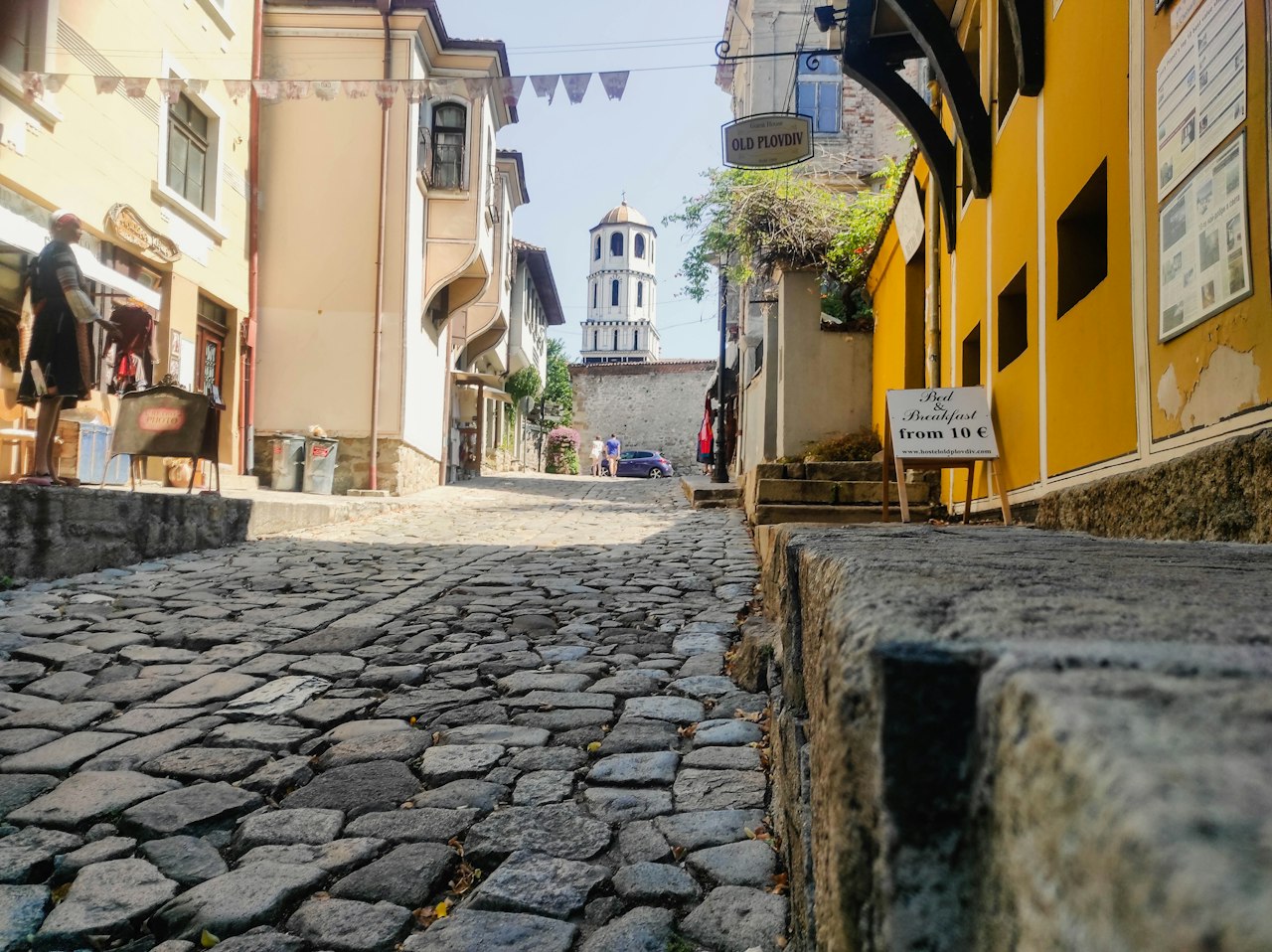
The Ancient Stadium of Philippopolis appears first as a surviving fragment under the modern street, with the curved outline easiest to read from above ground. In Kapana, the point is not a single landmark but the tight grid of lanes, workshop fronts, café tables, and wall art packed into a few blocks. Balabanov House shifts the tone completely: the carved wood, painted ceilings, and carefully arranged rooms are the detail to watch, not just the façade. On Plovdiv Main Street (Главната), the contrast between the broad pedestrian flow and the older layers below becomes obvious, especially where the walk passes above archaeology and into the zone leading toward the hills. At Небет Тепе (Nebet Tepe), the worn stone edges and the wide look over the Maritsa valley are what stay in memory. The Regional History Museum Plovdiv and the Регионален Природонаучен Музей Пловдив (Regional Natural History Museum of Plovdiv) finish the route with objects rather than streets: museum cases, maps, artifacts, and natural specimens that pull the walk back into the city’s deeper history.
The route
Walk this one over two days, starting at the Ancient Stadium and finishing at the museums, with Nebet Tepe before the final descent.
- Ancient Stadium of Philippopolis (Античният стадион на Филипопол (Ancient Stadium of Philippopolis))
- Kapana
- Balabanov House
- Plovdiv Main Street (Главната)
- Небет Тепе (Nebet Tepe)
- Regional History Museum Plovdiv (Регионален Исторически Музей Пловдив)
- Регионален Природонаучен Музей Пловдив (Regional Natural History Museum of Plovdiv)
Paste it into the agent chat in Votura and it will build the map and the audio guide.
Before you go
Starting in the morning works best, partly because the route is long and partly because Kapana and Главната feel most crowded later in the day. The walking itself is moderate but cumulative: the hills and stone surfaces around Nebet Tepe make the second half feel longer than the map suggests. Some parts of the route are street life rather than timed sightseeing, while museum stops can be affected by weekly closing days or special exhibitions, so it helps to check current opening hours before setting out. Bring water, comfortable shoes, and enough time to pause for shade or coffee, especially in warm weather.
Nocturnal Plovdiv: A 2-Day Immersive Night Walk through 9 Stops
This route is a long evening-and-night walk through central Plovdiv, linking the park by Tsar Simeon Garden with the old hilltop core at Nebet Tepe. It runs from the flat center past Central Square, Главната, the Ancient Stadium of Philippopolis, Dzhumaya Mosque, the Old Town, and the Regional Ethnographic Museum before climbing to the stone terraces above the city. The time on foot is not just for distance; it lets the city change character as the shopfronts dim, the mosque lights come on, and the cobbles of the Old Town empty out. It earns the time because the route shows how much of Plovdiv’s nightlife is built around ordinary streets rather than a single nightlife district.
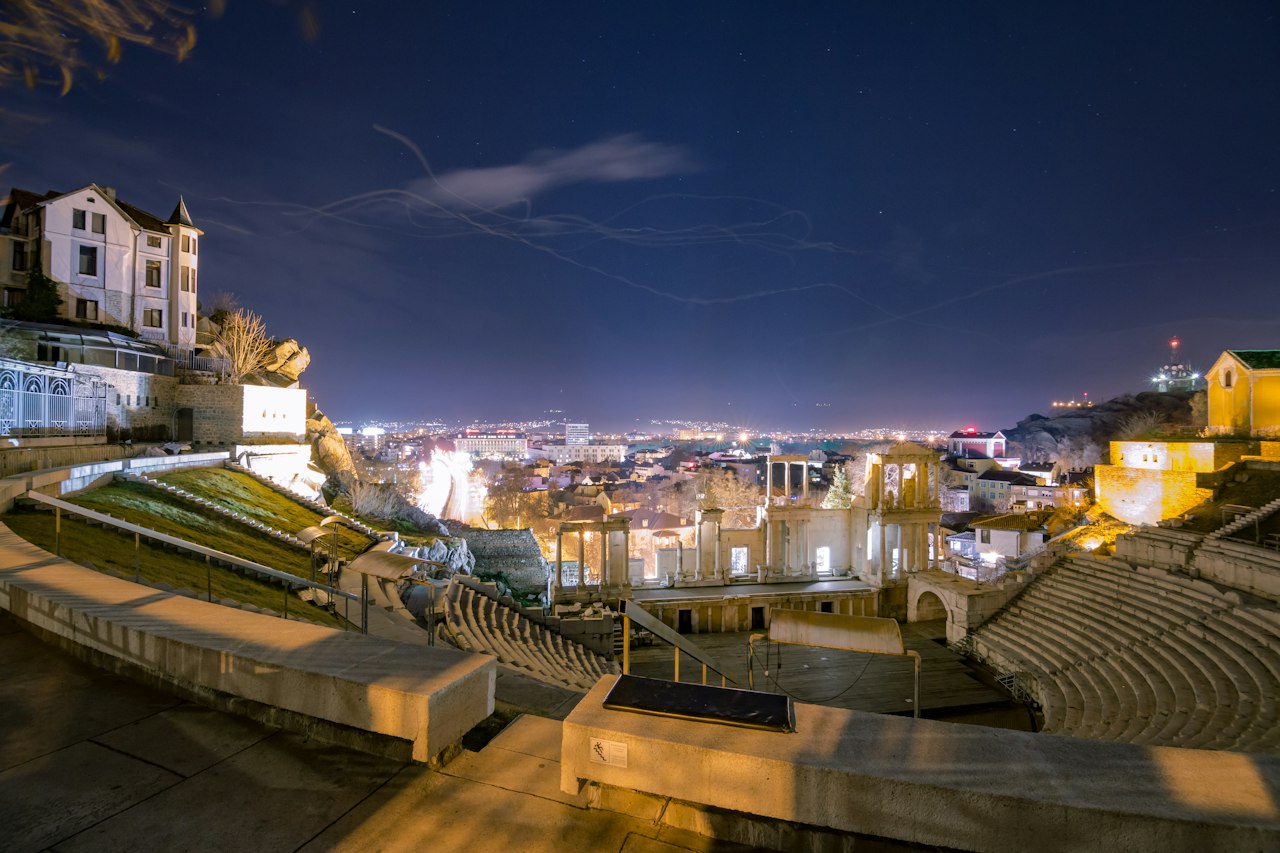
Tsar Simeon Garden Park begins with trees, lamps, and the Singing Fountains area, where water and light do most of the work after dark. On Площад Централен, the open space around the post office and surrounding buildings feels broader at night, with traffic noise bouncing off the façades. Near the District Rotaract assembly stretch, the route is more about the street life around the center than a single landmark, and the rhythm changes as you approach Главната, Plovdiv’s pedestrian spine, with its lit storefronts, pavement cafés, and the steady line of people walking both directions. The Ancient Stadium of Philippopolis is easiest to notice for the exposed curve of seating and the way Roman masonry sits below street level, while Dzhumaya Mosque stands out for the contrast between its dome, minaret, and the busy pedestrian square around it. In the Old Town, the shift is immediate: cobbles, uneven lanes, plastered houses, and the quieter edges around the Regional Ethnographic Museum before the climb to Nebet Tepe, where the view opens over the river, rooftops, and lights spread across the city.
The route
Plan on a long evening and night; walk it from Tsar Simeon Garden to Nebet Tepe.
- Tsar Simeon Garden Park (Цар Симеонова градина)
- Площад Централен (Central Square)
- District Rotaract assembly
- Plovdiv Main Street (Главната)
- Ancient Stadium of Philippopolis (Античният стадион на Филипопол (Ancient Stadium of Philippopolis))
- Джумая джамия (Dzhumaya Mosque)
- Стария град (Old town) (Старият град)
- Regional Etnographic Museum
- Небет Тепе (Nebet Tepe)
Paste it into the agent chat in Votura and it will build the map and the audio guide.
Before you go
Starting in late afternoon works best, so the first part is still clear and the Old Town and Nebet Tepe are reached after dark. The walk is moderate in effort overall, but the climb into the Old Town and up to Nebet Tepe is the hardest part, with uneven paving and short steep sections. Central Plovdiv can be busy in the evening, especially around Главната and the square by Dzhumaya Mosque, while parts of the Old Town become much quieter later on. Comfortable shoes, water, and a light layer for the hilltop breeze are enough for most of the route.
How to Start Your Plovdiv Tour with Votura
- Open Votura and tap Explore
- Search for Plovdiv or let the app detect your location
- Browse available tours or tap Generate to create a custom tour
- Hit Play and follow the audio guide stop by stop
All tours include audio narration, a route map, and estimated stop times. Download any tour for offline access before you travel.
Sources
Frequently Asked Questions
What are the must-see landmarks in Plovdiv’s city center?
The post highlights the Ancient Stadium of Philippopolis, Джумая джамия, the Ancient Theater of Philippopolis, and the National Revival houses in Стария град. It also recommends ending at Nebet Tepe for ruins and wide views over the river and central Plovdiv.
Where does the two-day walking route in Plovdiv start and end?
The route starts around Драматичен театър Пловдив in a busy civic square. It ends on Nebet Tepe before dropping to the Regional Natural History Museum of Plovdiv.
How walkable is Plovdiv for sightseeing?
Plovdiv is described as having a layered center that is ideal for open-ended exploration on foot. The route links Roman, Ottoman-era, and Revival-era sites within a walkable central area.
What makes Plovdiv different from other historic cities?
Plovdiv is presented as a city where Roman stone, Ottoman-era streets, and Revival houses are tightly layered together in one center. The article emphasizes that each stop can feel like a different city built on the same ground.
Can I combine famous sights with local discoveries in Plovdiv?
Yes, the post says you can start with a well-known monument and then follow a mural, market stall, or neighborhood view you did not plan to find. It also mentions quiet courtyards, hillside lanes, and small cafés as part of the experience.
Hear this city out loud
Votura turns the places in this guide into a self-guided audio tour you can follow at your own pace.