Free Walking Tour of Lyon & Free Things to Do (Self-Guided)
A free self-guided walking tour of Lyon: 6 free sights in route order. No booking, no tips, start any time.

Lyon is a city you can enjoy at street level without spending a cent: stroll the Presqu’île’s grand squares, cross the Saône for riverside views, and wander the traboules and steep lanes of Vieux Lyon from the outside. From the basilica hill to the market stalls of Croix-Rousse, so much of the city’s character is visible in public spaces, architecture, and everyday street life.
Why Lyon Rewards Travellers on a Zero Budget
This guide focuses on the free side of Lyon—open-air viewpoints, bustling markets, façades, and neighborhoods best explored on foot. Votura AI generates audio tours matched to the traveller’s time, transport preference, and chosen theme, so you can shape a route that fits your pace while keeping the experience completely self-guided.
Parc de la Tête d'Or
A large city park in north-central Lyon, with a lake, broad lawns, tree-lined paths, and the city’s botanical garden and zoo. What you actually see is less a single monument than a sequence of landscapes: water, roses, glasshouses, and long avenues shaded by mature trees. The detail worth noticing is how much of the park is used by locals for running, cycling, rowing, and simple everyday sitting, so it feels lived-in rather than staged.
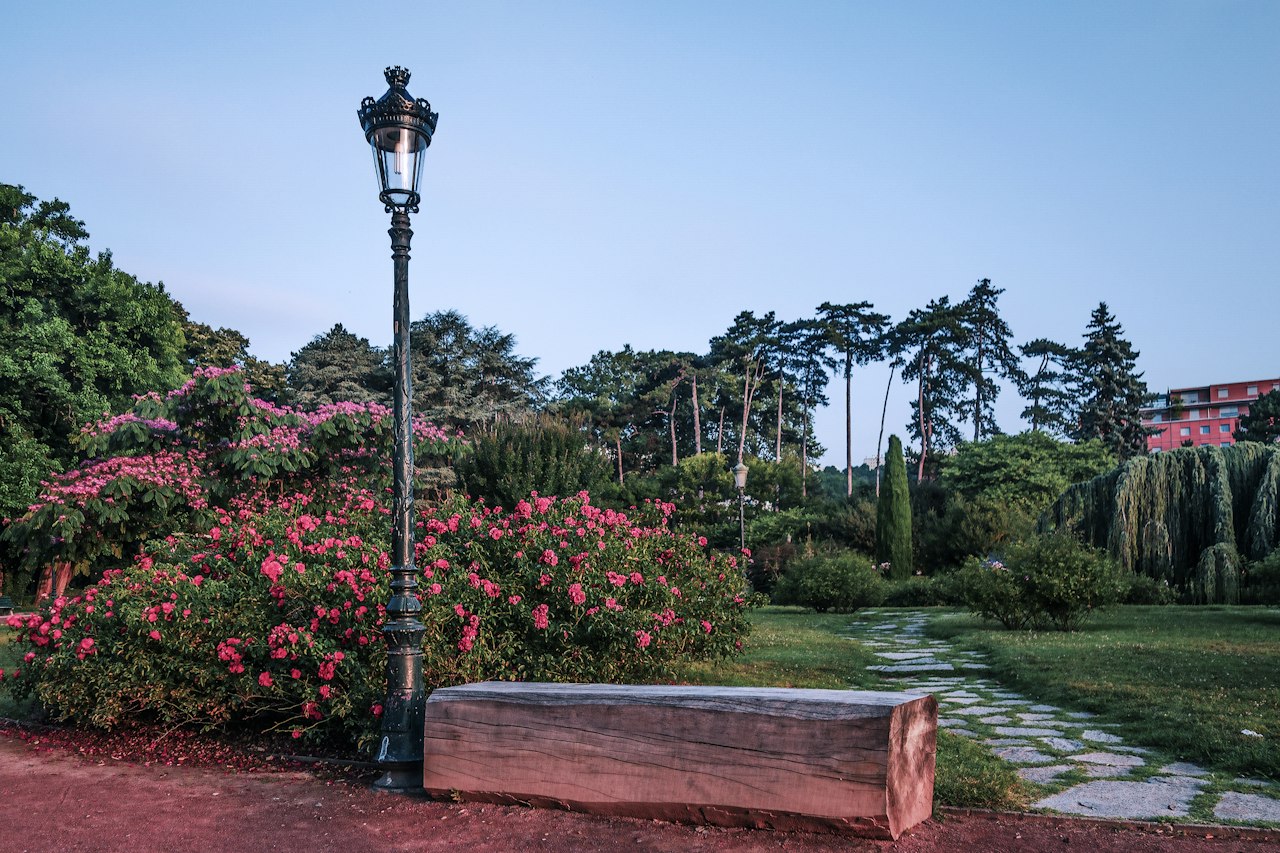
It is usually busy in good weather, especially on weekends and around the lake, while the quieter corners are the more wooded paths and the botanical areas. People often spend an hour or several, depending on whether they are walking through or lingering. It connects easily to the riverfront and to the wider northern part of the city, though it is not immediately in the historic center.
Berges du Rhône
The Berges du Rhône are the landscaped riverbanks along the Rhône, turned into a long public promenade. What you see is a wide sequence of paths, cycling lanes, lawns, steps down to the water, and places to sit facing the river. The detail that stands out is the constant movement: commuters, joggers, skaters, and people stopping briefly on the edge of the water.
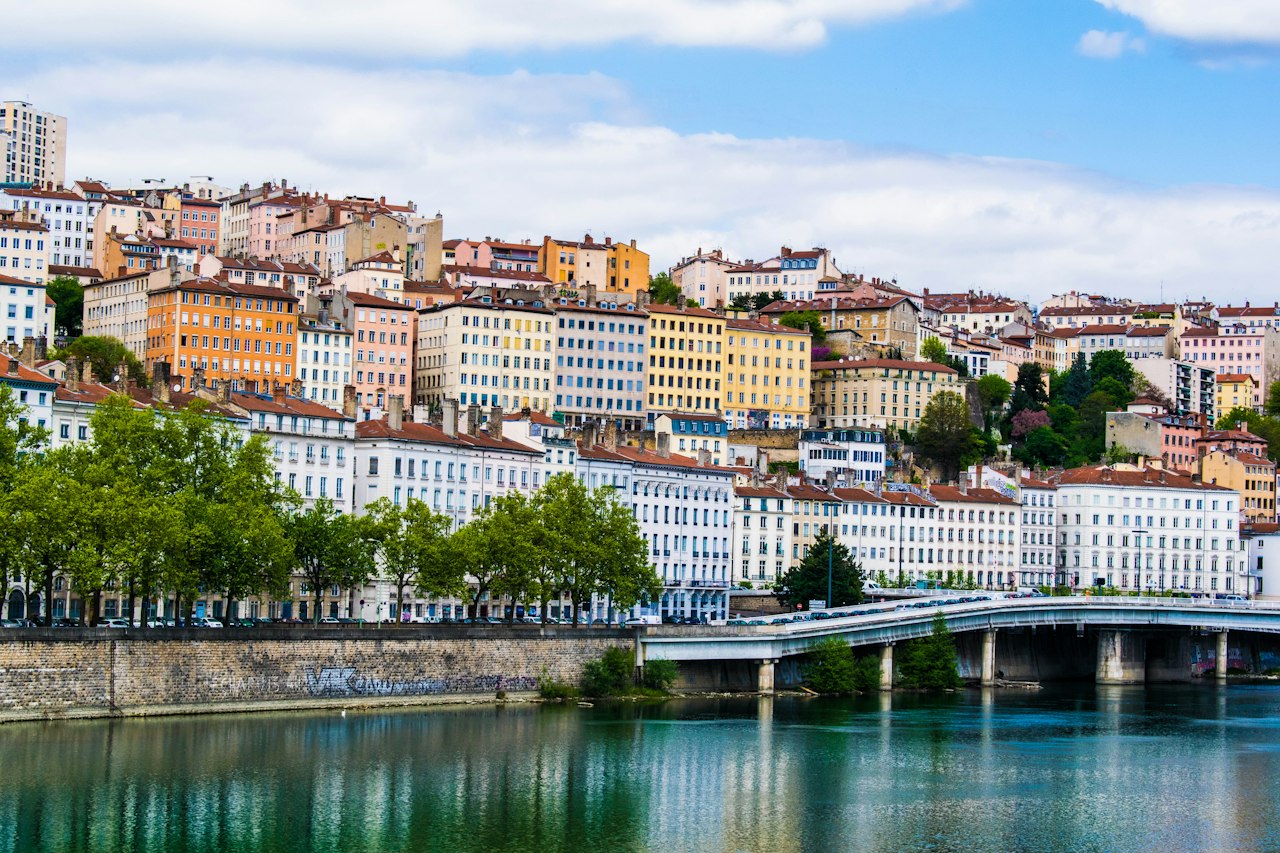
They are liveliest in the late afternoon and early evening, especially in warm weather, and calmer early in the morning. Visitors may spend a short walk or a longer stretch of time depending on whether they are crossing the city or following the river. The promenade links several parts of Lyon and gives an easy connection between the city center and the riverfront atmosphere.
Place des Terreaux
A major square in central Lyon, bordered by the Hôtel de Ville and the Musée des Beaux-Arts, with the Bartholdi fountain as its focal point. What you actually see is a broad urban space where historic façades, stone paving, and the water sculpture of the fountain meet. The detail worth noticing is how the square changes with the light and with the flow of people passing between the presqu’île and the slopes toward Croix-Rousse.
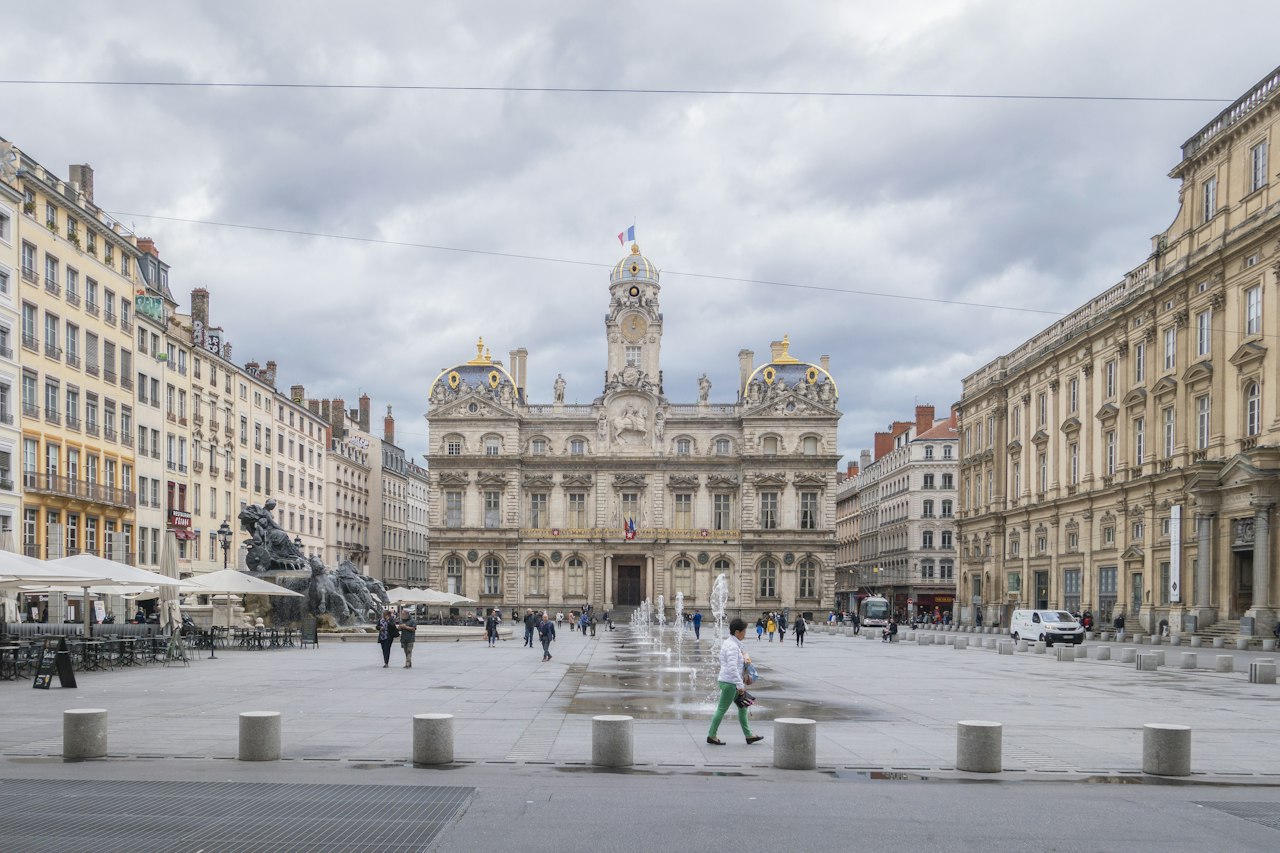
It is usually busy during the day and into the evening, because it is both a meeting point and a crossing point. People generally stay from a few minutes to half an hour, longer if they are sitting nearby or entering the museum. It connects directly to the shopping streets of the presqu’île and to the climb up toward the old hills of the city.
Place Bellecour
One of the largest open squares in Europe, set in the center of Lyon on the presqu’île. What you see is a very open, mostly empty expanse framed by city streets, with the equestrian statue of Louis XIV at the center and Fourvière visible in the distance. The detail to notice is the scale: it can feel almost stripped down compared with the dense city around it, which makes the surrounding façades and views stand out more clearly.
It is a busy crossing point throughout the day, with heavier foot traffic in shopping hours and on event days. Most people spend only a few minutes crossing or orienting themselves, though some stay longer to sit or use it as a starting point. It sits between the old town, the shopping streets, and the routes toward the Rhône and Saône.
Traboules of Vieux Lyon
Traboules are passageways that cut through buildings and courtyards, linking streets in Vieux Lyon. What you actually see is a sequence of doors, stairwells, galleries, and narrow interior courtyards, often with Renaissance stonework and worn passage floors. The detail worth noticing is the way these routes bend the city inward, revealing a layered residential fabric rather than a single facade.
They are usually quietest in the early morning and can become busier when groups are moving through the old town. A visit often takes only a short time for one or two passages, but more if you are following several routes. They connect directly to the streets, courtyards, and slopes of Vieux Lyon, so they are best understood as part of the neighborhood rather than as isolated sights.
Basilique Notre-Dame de Fourvière
A basilica perched on Fourvière hill, visible across much of Lyon. What you see is a white stone church with richly decorated towers, interiors, and a prominent position above the city, plus wide views from the esplanade around it. The detail worth noticing is the contrast between the elaborate religious architecture and the broad panorama of the river valleys and rooftops below.
It is busiest when tour groups and day visitors arrive, especially around midday, and quieter early or late in the day. People often spend 30 to 60 minutes, longer if they also visit the surroundings or stay for the view. It is closely tied to the hilltop area above Vieux Lyon and to the routes that lead down toward the old town.
Jardin du Rosaire
A terraced garden on the slope between Fourvière and Vieux Lyon. What you see is a sequence of paths, planted terraces, stairs, and openings onto views of the city below, rather than a flat park. The detail worth noticing is how the garden acts as a transition space, softening the steep descent from the basilica to the old quarter.
It is generally quieter than the basilica itself, though people pass through steadily on the route between hill and old town. Many visitors spend 15 to 30 minutes, longer if they are resting or looking over the city. It connects directly to Fourvière above and to the streets of Vieux Lyon below, making it part of a larger walking route.
Quais de Saône in Vieux Lyon
The quays along the Saône beside the historic district of Vieux Lyon. What you actually see is the river edge, stone embankments, bridges, reflections on the water, and the facades of the old city rising behind the quay. The detail worth noticing is the slower rhythm here: the river’s width, the changing light on the water, and the way the neighborhood’s colors are read from below.
They are calmest in the morning and busier when people come for walks, crossings, or evening views. A visit can be brief or can last quite a while if you continue along the water toward other parts of the city. They sit directly beside Vieux Lyon, so they are an easy continuation of any walk through the old quarter.
Fresque des Lyonnais
A large mural painted on the side of a building in Lyon, portraying well-known figures associated with the city. What you see is a trompe-l'œil facade that makes the wall look like an inhabited urban scene, with windows, balconies, and people rendered in a highly readable way from the street. The detail worth noticing is that it works at the scale of the block: it is meant to be read from a distance, then inspected for the individual figures and references.
It is usually easy to see at street level and often has people stopping briefly to look or take photos. Most visits take only a few minutes, though it is often combined with a walk through the surrounding streets. It is close to the Saône side of the city and fits naturally into an itinerary through the western edge of the center and toward Vieux Lyon.
Free Walking Tour of Lyon: The Route
The route: Lyon
This route works best in the late afternoon or early evening, when the old town and hilltop views are at their most atmospheric; expect some uphill walking and cobbled streets, so wear comfortable shoes.
- Place Bellecour
- Traboules of Vieux Lyon
- Quais de Saône in Vieux Lyon
- Fresque des Lyonnais
- Jardin du Rosaire
- Basilique Notre-Dame de Fourvière
Paste it into the agent chat in Votura and it will build the map and the audio guide.
Want the Stories Behind Each Stop?
Everything above is free to do on your own. If you want the history and local context narrated as you walk, Votura's AI audio tours of Lyon guide you stop by stop — at your own pace, offline if you like.
Sources
- Free things to see and do in Lyonen.visiterlyon.com
- Historic Site of Lyonwhc.unesco.org
Frequently Asked Questions
What free things can I do in Lyon on foot?
You can stroll the Presqu’île’s grand squares, cross the Saône for riverside views, and wander the traboules and steep lanes of Vieux Lyon from the outside. The guide also highlights Parc de la Tête d'Or, the Berges du Rhône, Place des Terreaux, and the market areas of Croix-Rousse as free places to explore.
Where are the best free walking areas in Lyon's city center?
The guide points to the Presqu’île, the Berges du Rhône, and Place des Terreaux as key central areas to visit for free. These spots are easy to enjoy at street level through squares, promenades, façades, and public spaces.
How long should I spend at Parc de la Tête d'Or?
You can spend about an hour there if you are just walking through, or several hours if you want to linger. The time depends on whether you are focusing on the lake and main paths or exploring the quieter wooded and botanical areas.
When is the Berges du Rhône promenade busiest?
The Berges du Rhône are liveliest in the late afternoon and early evening, especially in warm weather. They are calmer early in the morning.
Is Vieux Lyon worth visiting if I only want free activities?
Yes, the guide says Vieux Lyon is worth exploring for free from the outside, especially its traboules and steep lanes. You can also enjoy the neighborhood’s architecture and street atmosphere without paying for attractions.
Hear this city out loud
Votura turns the places in this guide into a self-guided audio tour you can follow at your own pace.