Free Walking Tour of Strasbourg & Free Things to Do (Self-Guided)
A free self-guided walking tour of Strasbourg: 8 free sights in route order, about 4 km, about 3 hours with stops. No booking, no tips, start any time.

Strasbourg is a city you can enjoy most of the time without spending a cent: the timber-framed streets of La Petite France, the sweeping views along the canals, and the grand squares around the cathedral all work beautifully as a self-guided walk. Even the city’s most iconic details, from Gothic stonework to half-timbered facades, are easy to take in just by wandering the streets and public spaces.
Why Strasbourg Rewards Travellers on a Zero Budget
That makes Strasbourg ideal for a free walking tour built around what you can see from the outside—markets, riverfront paths, historic bridges, and neighborhood architecture all add up to a full experience at street level. If you want to go deeper, Votura AI generates audio tours matched to the traveller's time, transport preference, and chosen theme.
Cathédrale Notre-Dame de Strasbourg
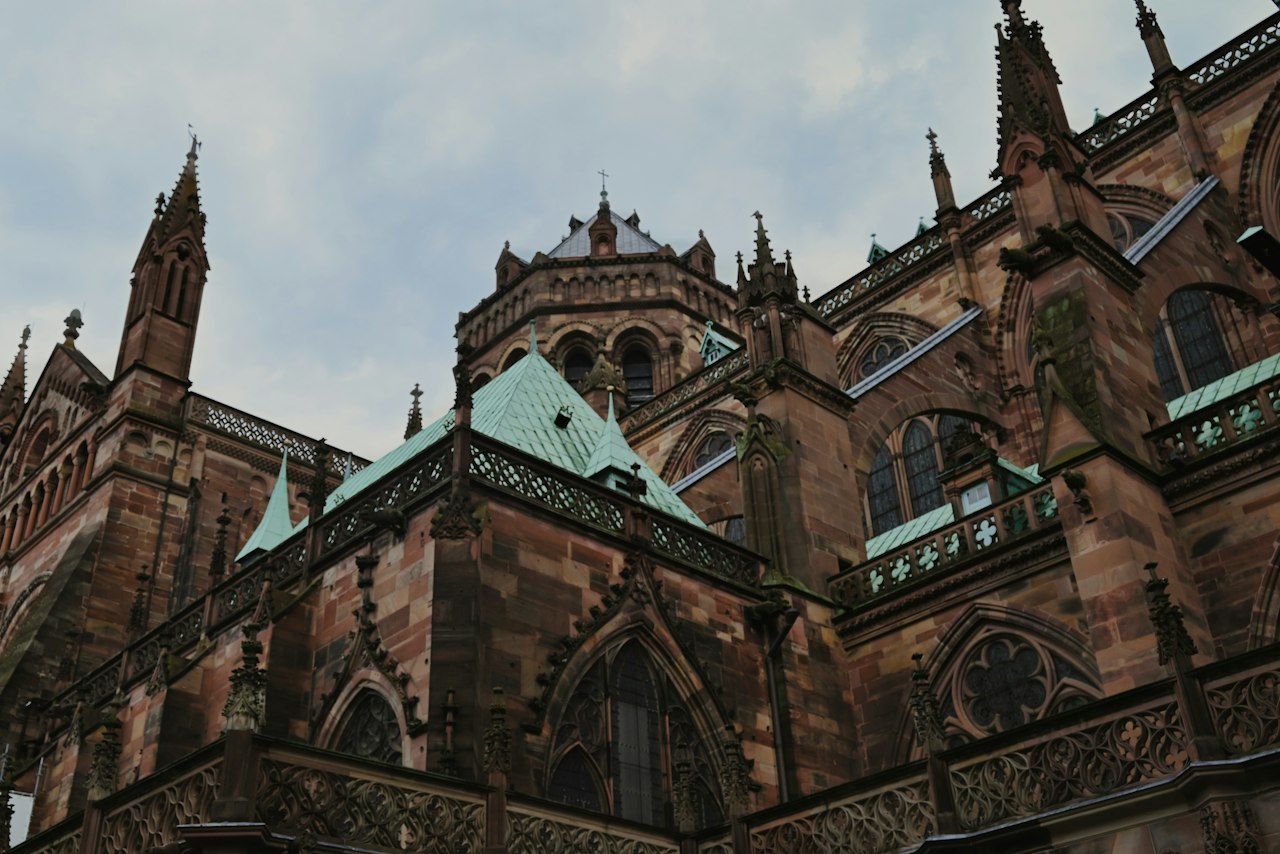
This is Strasbourg’s main cathedral, a large Gothic church built in pink sandstone. From the square, you see the tall west front, the carved portal figures, and the single tower rising above the old city. Up close, the surface changes color with the light, from pale rose to almost brown. One detail many people notice only after a moment is how the facade is crowded with sculpture, tracery, and narrow vertical lines that make it feel very tall even before you look up at the spire.
It is usually busy in the square during the day, especially when the weather is good and tour groups are passing through. People often spend 20 to 45 minutes looking at the exterior, taking photos, and then moving on into the surrounding old streets. It sits close to the centre of the Grande Île, with Place du Château and the nearby lanes just behind it.
Place Kléber
Place Kléber is Strasbourg’s main central square, open and wide rather than enclosed by one style of building. You mainly see the large open pavement, the surrounding shops and façades, and the statue of General Kléber in the middle. Because the square is used for events and seasonal installations, its appearance changes with the time of year. What stands out is how much of Strasbourg’s everyday movement passes through here, so it feels less like a monument than a civic room.
It is generally busiest in shopping hours and during events, while early morning is quieter. Many visitors spend 10 to 20 minutes here, usually as a crossing point between the station, the cathedral area, and the shopping streets. It connects easily to the Grande Île’s main pedestrian routes and the nearby commercial streets.
Place Gutenberg
Place Gutenberg is a smaller square named for Johannes Gutenberg, who worked in Strasbourg. In the centre is a statue of Gutenberg, and around it are the façades of the old town, with cafés and shops at street level. You do not come here for a vast panorama; you come to stand in a compact square that feels layered with history. The detail to notice is how the square sits between everyday commerce and the memory of printing, which gives it a quieter tone than some of the larger central spaces.
It is usually active through the day because people pass through between the cathedral area and the streets toward Petite France. Visitors often stay 10 to 15 minutes unless they sit at a café. It is close to the cathedral and the pedestrian lanes of the old centre, so it often works as a stop rather than a destination on its own.
Petite France
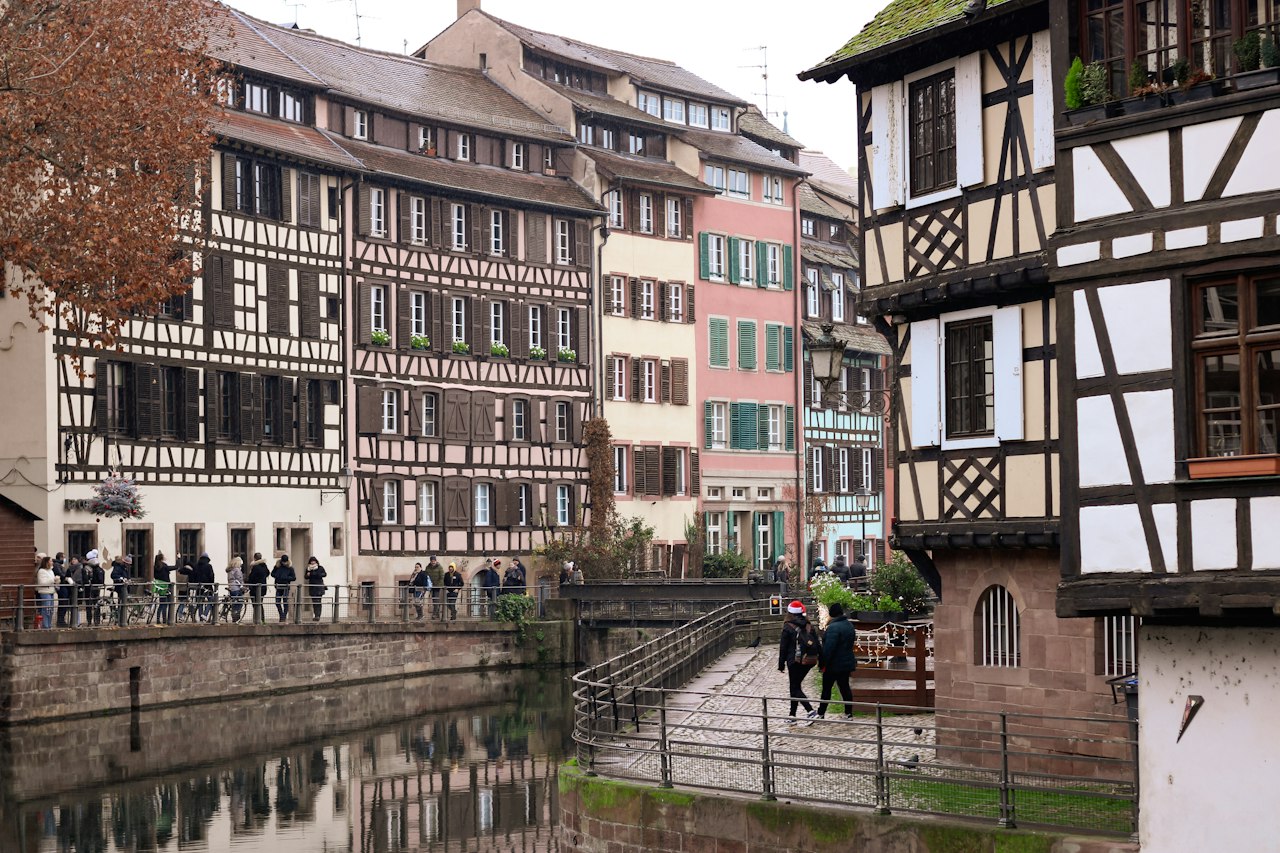
Petite France is the old quarter of Strasbourg with canals, timber-framed houses, and narrow streets. What you actually see is a dense mix of gabled roofs, bridges, water, and old façades leaning close to the streets and canals. It is one of the clearest places to read the city’s historic river-and-trade character. The detail worth noticing is how the buildings seem shaped by both water and practical use, with the lower levels, shutters, and overhanging forms all reflecting the old life of the quarter.
It is busy through the day, especially around midday and late afternoon, but calmer in the early morning. People usually spend 30 minutes to an hour walking the canals and bridges, or longer if they stop for food. It connects naturally to the riverfront, the covered bridges area, and the walk back toward the cathedral side of the Grande Île.
Barrage Vauban
The Barrage Vauban is a fortified dam and bridge on the River Ill, built as part of Strasbourg’s defensive works. From the outside, you see a long stone structure with arched openings and a terrace above the river. It looks functional first, and that is part of its interest: it was built to control water and protect the city, not just to be looked at. The detail to notice is the way it frames views of the Ponts Couverts and the old quarter rather than standing apart from them.
It is usually less crowded than the cathedral area, though the terrace can get busier in good weather. People often spend 15 to 30 minutes here, especially to look over the river and the old bridges. It is very close to Petite France and the Ponts Couverts, so it fits naturally into a riverside walk.
Ponts Couverts
The Ponts Couverts are a set of historic bridges and former defensive towers on the River Ill. Despite the name, the bridges are no longer covered, but the towers and stone spans still give the area its old military outline. From the riverside, you see water, stone, and the repeated shapes of the towers reflected below. What is easy to miss is how this was once a practical defensive system, not just a scenic backdrop, and that older purpose still shapes how the place reads today.
They are often busier in daylight hours when people are walking between Petite France and the Barrage Vauban. A visit usually takes 10 to 20 minutes unless someone is stopping for photos from different angles. They connect directly to the river walk and the nearby old quarter, so they are usually part of a larger circuit rather than a separate stop.
Parc de l'Orangerie
Parc de l'Orangerie is Strasbourg’s large city park, with broad paths, lawns, trees, and water. What you actually see is a calm landscape of walking routes, a lake area, and open green space rather than one single monument. It feels more residential and local than the historic centre, even though it is a major public park. One detail worth noticing is how the park mixes formal areas with looser, everyday use, so people use it for walking, running, picnics, and quiet pauses.
It is usually quieter in the early morning and busier on weekends and pleasant afternoons. People can spend 30 minutes to several hours here depending on whether they are walking through or staying to sit. It is farther from the cathedral and old town than the central squares, and it connects more to the European quarter and nearby residential streets than to the historic core.
Église Saint-Thomas
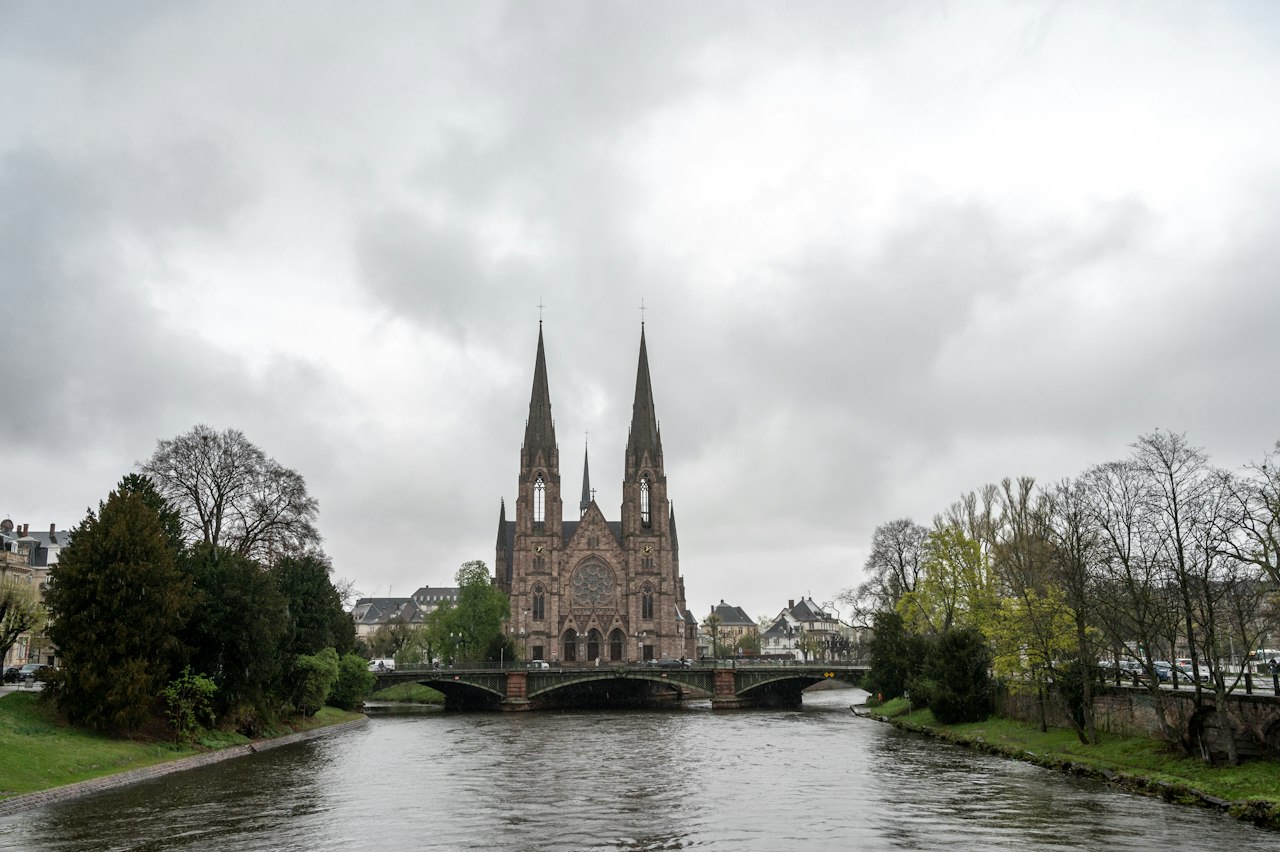
Église Saint-Thomas is a large Protestant church in Strasbourg’s old centre. From outside, you see a restrained Gothic building that looks less ornate than the cathedral, with a strong, plain profile in stone. Inside, it is known for its long interior space and its association with organ music and historical figures linked to Strasbourg’s Protestant past. The detail to notice is the contrast between its relatively sober exterior and its more layered interior history.
It is usually less crowded than the cathedral area, so the approach can feel calmer. Visitors often spend 15 to 30 minutes here, a little longer if they stop to look inside or if there is music. It sits in the old centre not far from the cathedral and the Petite France side, so it can be included in a walk across the Grande Île.
Free Walking Tour of Strasbourg: The Route
The route: Strasbourg
This route works best as a daytime walk, with the historic center first and the park at the end; expect about 4 km total at a relaxed pace, and late afternoon or early evening is especially pleasant for river views and photos.
- Place Kléber
- Place Gutenberg
- Cathédrale Notre-Dame de Strasbourg
- Église Saint-Thomas
- Petite France
- Ponts Couverts
- Barrage Vauban
- Parc de l'Orangerie
Paste it into the agent chat in Votura and it will build the map and the audio guide.
Want the Stories Behind Each Stop?
Everything above is free to do on your own. If you want the history and local context narrated as you walk, Votura's AI audio tours of Strasbourg guide you stop by stop — at your own pace, offline if you like.
Sources
- Guided visit on foot using an audio-guidevisitstrasbourg.fr
- Discovering Strasbourgculture.strasbourg.eu
- Individual - Lieu d'Europe Strasbourglieudeurope.strasbourg.eu
- Strasbourg, Grande-Île and Neustadt - UNESCO World Heritage Centrewhc.unesco.org
Frequently Asked Questions
What are the best free things to do in Strasbourg on foot?
The post highlights wandering La Petite France, walking along the canals, and exploring the grand squares around the cathedral as the best free experiences. It also mentions markets, riverfront paths, historic bridges, and neighborhood architecture as part of a self-guided walk.
Where is Cathédrale Notre-Dame de Strasbourg located?
The cathedral sits close to the centre of the Grande Île. It is near Place du Château and the surrounding old lanes.
How long do people usually spend at Cathédrale Notre-Dame de Strasbourg?
People often spend 20 to 45 minutes looking at the exterior, taking photos, and then continuing into the nearby old streets. The square is usually busy during the day, especially in good weather.
Where is Place Kléber and what is it used for?
Place Kléber is Strasbourg’s main central square on the Grande Île. It is used for events and seasonal installations, and it also serves as a busy crossing point between the station, the cathedral area, and the shopping streets.
Can you do a self-guided free walking tour of Strasbourg?
Yes, the post says Strasbourg is ideal for a free walking tour built around what you can see from the outside. You can comfortably explore the city’s streets and public spaces without spending money, and the post also notes that Votura AI can generate audio tours if you want a deeper experience.
Hear this city out loud
Votura turns the places in this guide into a self-guided audio tour you can follow at your own pace.