Seville Self-Guided Tour: A Route You Can Start Today
Take a self-guided tour of Seville on your own schedule — Votura's AI narrates each stop as you walk, with no group, no fixed start time, and no guide to wait on.

Seville is a city that rewards wandering on your own terms, whether you want to slip into the Alcázar early, pause under the orange trees in Plaza de España, or linger over tapas without watching the clock. A self-guided tour lets you move at your own pace, skip the parts you’re not in the mood for, and start exploring today instead of planning weeks ahead.
Why Go Self-Guided in Seville
That freedom is the point: no fixed schedule, no group to keep up with, and no pressure to see Seville the “right” way. With Votura AI, you can generate audio tours matched to your available time, preferred transport, and chosen theme, so your route feels built around your trip rather than the other way around.
Velázquez in Seville: Noon Tiles, Court Shadows & the Road from San Vicente to San Pedro
This route follows a long thread through central Seville, from the San Vicente area into the historic core and down toward Santa Cruz. It is built around places where Velázquez’s Seville would have been visible in stone, tile, cloister, and courtly architecture rather than in a single museum stop. The walk earns its time because the city changes character several times without ever leaving the old center: from quieter convent and palace streets to the ceremonial heart around the Cathedral and Alcázar. It feels less like a checklist than a gradual shift from domestic Seville to official Seville.
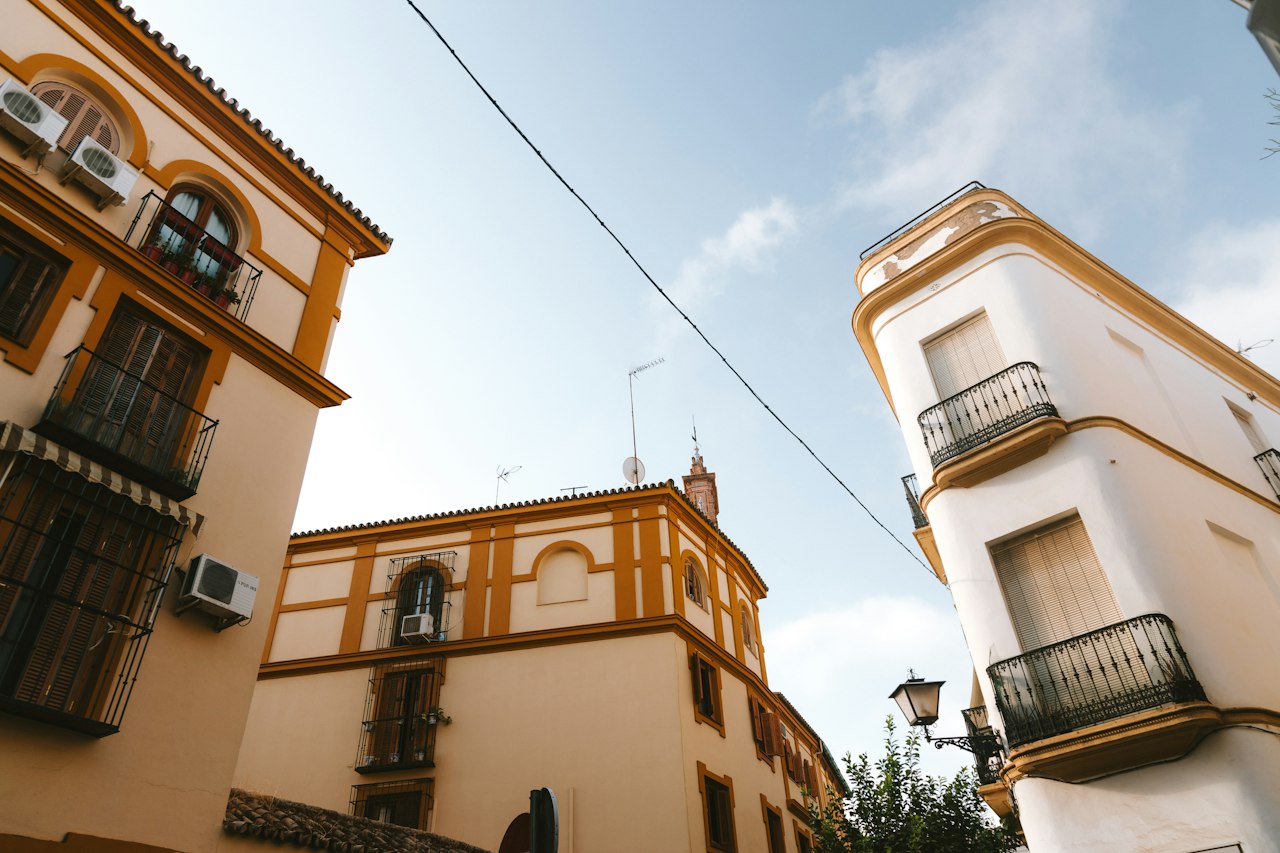
At Casa de Pilatos, the first impression is the cool weight of the patios and staircases, especially the tilework and the carved mix of mudéjar and Renaissance detail. Iglesia de la Anunciación - El Valle has a more restrained interior feel, with a sober nave and the sense of a church that belongs to a dense neighborhood rather than a monument district. Palacio del Marqués de la Motilla is worth a pause for its facade and for the way it sits almost unexpectedly in the middle of the city, a reminder of Seville’s layered private architecture. The Museum of Fine Arts of Seville changes the pace completely; even before the galleries, the former convent structure and its cloisters make the building itself part of the visit. Patio de los Naranjos opens the walk back into light, with the trees, paving, and arcaded edges giving a strong contrast before the Seville Cathedral’s enormous exterior walls and buttresses. The Royal Alcázar of Seville adds the final courtly register, where tile surfaces, courtyards, and shaded passages make the building feel like the culmination of the route rather than a separate stop, and Plaza de Santa Cruz closes things in a smaller scale with narrow lanes and a quieter, neighborhood finish.
The route
A full-day walk, best done from Casa de Pilatos toward Plaza de Santa Cruz.
- Pilate's House (Casa de Pilatos)
- Iglesia de la Anunciación - El Valle
- Palacio del Marqués de la Motilla
- Museum of Fine Arts of Seville (Museo de Bellas Artes de Sevilla)
- Patio de los Naranjos
- Seville Cathedral (Catedral de Sevilla)
- Royal Alcazar of Seville (Real Alcázar de Sevilla)
- Santa Cruz Square (Plaza de Santa Cruz)
Paste it into the agent chat in Votura and it will build the map and the audio guide.
Before you go
Starting in the morning works best, before the heat builds and before the busiest central sites fill up. The walking itself is straightforward but long, with several stops that invite lingering and a fair amount of time spent on stone pavements and in crowded historic streets. The Cathedral and the Royal Alcázar can be busy, and their access is the part most likely to slow the day; religious spaces may also be less open during services. Comfortable shoes, water, and a bit of patience for queues and uneven surfaces matter more than speed.
Triana After Dark: Flamenco Roots, Memory, and the Real Seville
This route is a two-day walk through the city’s flamenco geography, starting in the center and ending on the Triana riverfront. It links performance spaces, old walls, a market, a church, and the streets where Triana’s working life still shapes the mood of the neighborhood. The point is not a neat sightseeing loop but a slow move from staged flamenco into the places that fed it: courtyards, old quarters, river trade, and memory. It earns the time because the route makes the city’s cultural history feel connected rather than scattered.
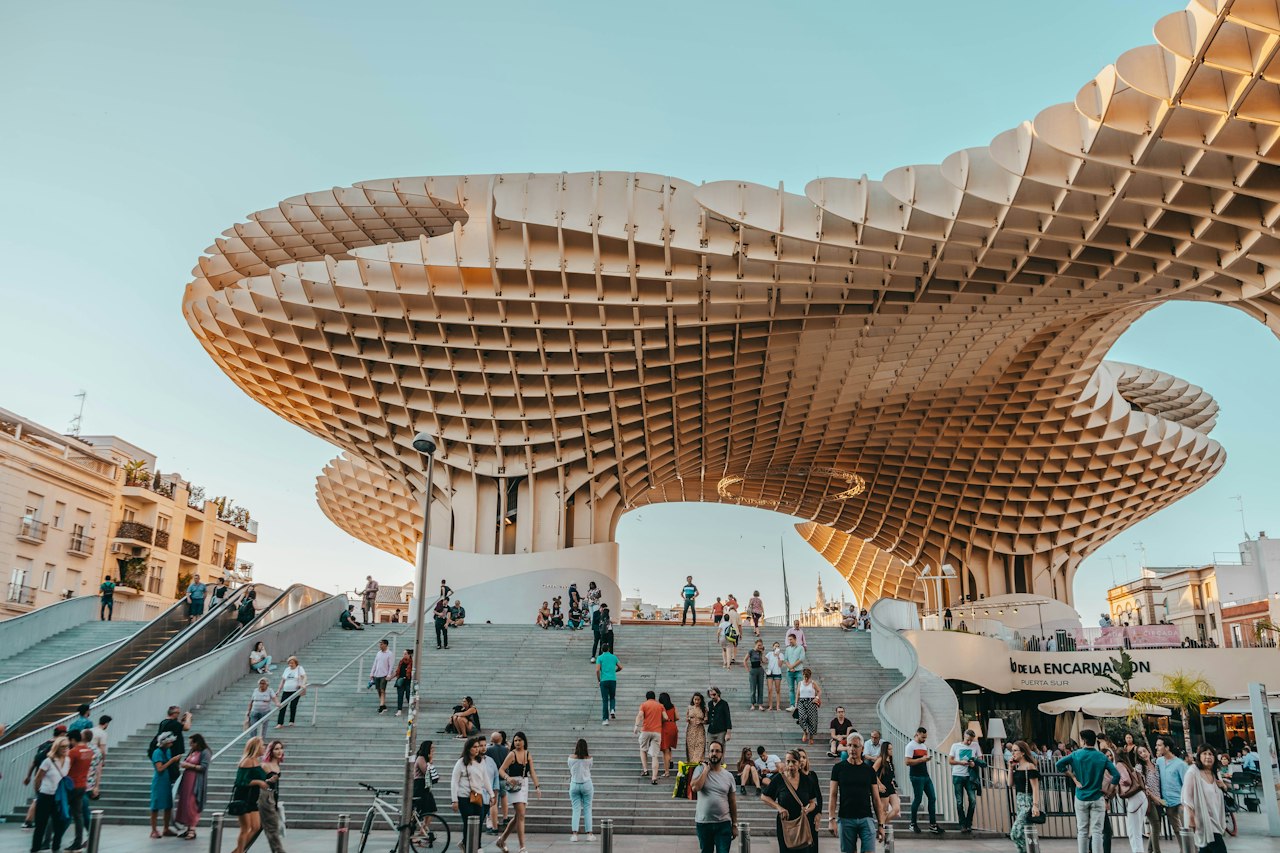
At Museo del Baile Flamenco, the first thing to notice is that the subject is dance itself, not a general folklore display; the building sets up the route as one about performance and form. Casa de La Memoria - Centro Cultural Flamenco feels smaller and more immediate, the kind of place where the room matters as much as the program, and the whole stop is about close listening. Palacio de las Dueñas shifts the tone completely: its patios, tiled surfaces, and planted courtyards open the walk out before the route reaches the broad, social space of Alameda de Hércules. From there, the route narrows again at Basílica de la Macarena, where the focus is the face of the Virgin and the strong devotional atmosphere around her, then along the Macarena Wall, where the surviving stretch of fortification gives the walk a harder historical edge. Crossing the Isabel II Bridge into Triana changes the light and the river view at once, and near Capilla Virgen del Carmen, Castillo de San Jorge, Mercado de Triana, and Centro Cerámica Triana, the details that stand out are all about labor: the chapel by the water, the foundations of the old fortress, the market’s daily trade, and the tiled surfaces and kiln history that make Triana read as a working district rather than a backdrop. Betis Street finishes the route with the river in front of you and the long line of façades behind, a place where the neighborhood finally opens onto the Guadalquivir.
The route
Best walked over two days, from the city center toward Triana, ending on Betis Street.
- Museo del Baile Flamenco
- Casa de La Memoria - Centro Cultural Flamenco
- Palacio de las Dueñas
- Alameda de Hércules
- Basílica de la Macarena
- Macarena Wall (Muralla Macarena)
- Isabel II Bridge 'Triana Bridge' (Puente de Isabel II 'Puente de Triana')
- Capilla Virgen del Carmen
- Castillo de San Jorge
- Mercado de Triana
- Centro Cerámica Triana
- Betis Street (Calle Betis)
Paste it into the agent chat in Votura and it will build the map and the audio guide.
Before you go
Early evening is the best time for the center-to-Triana stretch, because the heat is lower and the route makes more sense once the city starts to cool. The walking itself is straightforward, but it is long enough to split across two days if you want time for stops and detours without rushing. Museums, chapels, and cultural centers can have irregular hours, and parts of the route feel busiest around meal times and on weekends, especially near the bridge and on Betis Street. Bring water, comfortable shoes, and enough time to pause; the sidewalks are mostly easy, but Seville’s humidity makes the distance feel longer than it looks on a map.
Seville to Cordoba: 2-Day Andalusian Road Trip of Cathedrals, Palaces, and Patios
This route links central Seville with Córdoba in a two-day loop, following the city’s major monuments before continuing east along the Guadalquivir valley. It begins in the old core around La Giralda and the Seville Cathedral, then passes the Royal Alcázar, the Guadalquivir 96 sculpture, and Plaza de España before leaving for Carmona and Córdoba. The walk-and-drive mix works because the first day is dense with monuments and the second shifts to a larger historic center with different layers of Roman, Islamic, and Christian architecture.
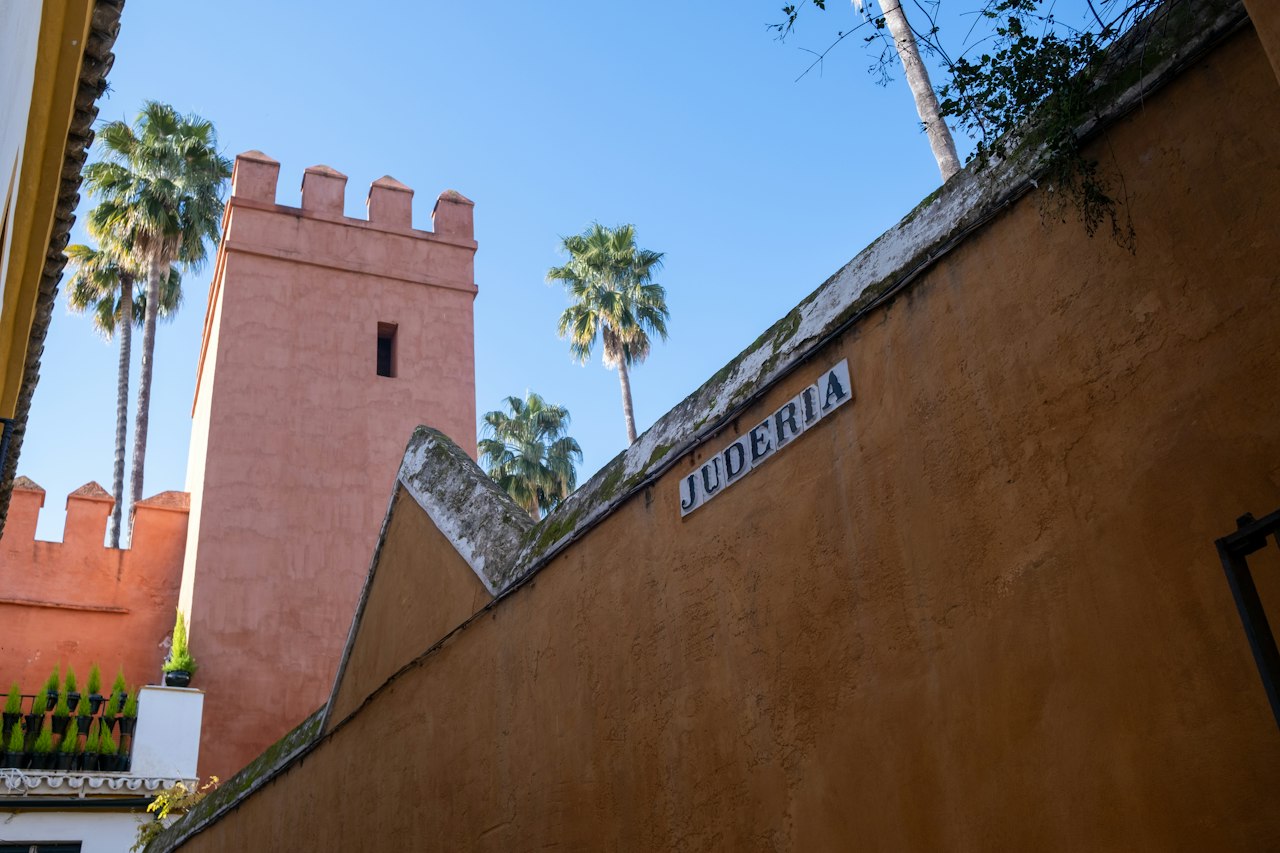
La Giralda sets the tone with its brick-and-stone profile and the carved details that are easiest to notice from the plaza below. At the Seville Cathedral, the scale changes immediately: the long nave, side chapels, and the tomb of Columbus give the interior its weight. The Royal Alcázar of Seville is best for its patios and tiled surfaces, especially where water channels and orange trees break up the masonry. Guadalquivir 96 is a small pause by the river, where the focus is on the waterline and the city’s relationship to it rather than on a large monument. Plaza de España opens the route outward with its curved facade, tiled alcoves, and the canal running through the center. In Córdoba, the Alcázar de los Reyes Cristianos is worth time for its formal gardens and straight water axes, before the Mosque-Cathedral of Córdoba brings the route to its most striking interior, with the forest of columns and the layered arches standing out at once.
The route
Allow two days, starting in Seville and ending in Córdoba, then returning south along the Guadalquivir.
- The Giralda (La Giralda)
- Seville Cathedral (Catedral de Sevilla)
- Royal Alcazar of Seville (Real Alcázar de Sevilla)
- Guadalquivir 96
- Spain Square (Plaza de España)
- Carmona
- Alcázar de los Reyes Cristianos
- Mosque-Cathedral of Cordoba (Mezquita-Catedral de Córdoba)
Paste it into the agent chat in Votura and it will build the map and the audio guide.
Before you go
Starting early in Seville helps with both heat and crowds, especially around La Giralda, the Cathedral, and the Royal Alcázar, which are busiest later in the day. The first day is mostly flat but involves a lot of standing and repeated stops; the second day adds a longer transfer to Córdoba and more walking through compact historic streets. Some interiors can be busy enough that lines form, and a few parts of the route may close for services or events, so it is better to check on the day rather than assume access. Water, sun protection, and comfortable shoes matter more than anything else on this route, particularly between late spring and early autumn.
Seville Art & History Walking Tour
This route links a major museum with two palace-adjacent historic sites in central Seville, so it feels more like a slow city walk than a point-to-point sightseeing run. It begins at the Museum of Fine Arts of Seville and then threads east through streets of the old quarter toward Palacio de las Dueñas and Plaza de Pilatos. The walking itself is modest, but the value of the route is in the contrast between the museum galleries and the ornamental courtyards, facades, and churches that appear along the way. It earns the time if you like seeing how Seville’s art and architecture sit inside the everyday city rather than apart from it.
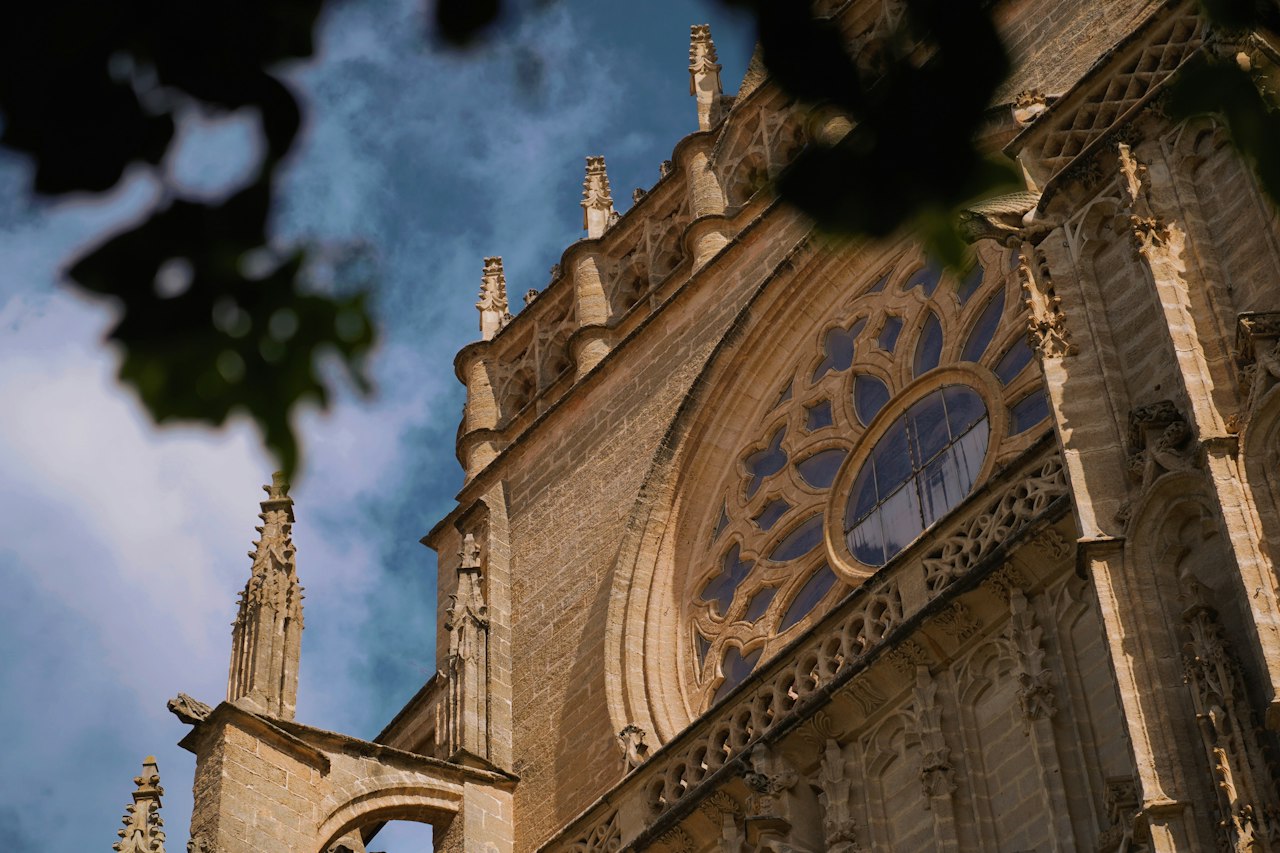
At the Museum of Fine Arts of Seville, the main thing to notice is the building itself: a former convent with calm patios and a sense of scale that suits the paintings inside. The collection is strongest in Seville school religious art, so the route starts with a clear visual language of altarpieces, sculpture, and Baroque color before you step back into the street. As you walk onward, the city shifts from museum quiet to tighter historic streets, with tiled corners, church fronts, and shaded squares appearing between the larger landmarks. Palacio de las Dueñas feels different again, with its layered facade, courtyard planting, and the blend of aristocratic house and lived-in Seville domestic architecture. At Plaza de Pilatos, the interest is in the setting around Palacio de Casa de Pilatos rather than a single open square: carved stone, brickwork, and the way the palace sits within the neighborhood make it worth a slow look from outside.
The route
About half a day on foot, best walked from the Museum of Fine Arts toward Palacio de las Dueñas and Plaza de Pilatos.
- Museum of Fine Arts of Seville (Museo de Bellas Artes de Sevilla)
- Palacio de las Dueñas
- Plaza de Pilatos
Paste it into the agent chat in Votura and it will build the map and the audio guide.
Before you go
Starting in late morning or early afternoon works well, because the museum visit sets the rhythm and the walk is easier once the city is fully awake. The walking is generally easy, with flat streets and short distances between stops, though some pavements are narrow and uneven in the older lanes. The busiest parts are usually around the main landmarks and tourist streets near Palacio de las Dueñas and Plaza de Pilatos, while museum interiors can be quieter on either side of the middle of the day. Water, comfortable shoes, and a bit of flexibility for opening times or ticket lines are sensible, since palace and museum schedules can differ.
How to Start Your Seville Tour with Votura
- Open Votura and tap Explore
- Search for Seville or let the app detect your location
- Browse available tours or tap Generate to create a custom tour
- Hit Play and follow the audio guide stop by stop
All tours include audio narration, a route map, and estimated stop times. Download any tour for offline access before you travel.
Sources
- City routes — Visita Sevilla (official tourism site)visitasevilla.es
- Cathedral, Alcázar and Archivo de Indias in Seville — UNESCO World Heritage Centrewhc.unesco.org
- Official Website Cathedral of Sevillecatedraldesevilla.es
Frequently Asked Questions
What is a self-guided tour in Seville?
A self-guided tour in Seville lets you explore at your own pace without a fixed schedule or group. You can choose which stops to visit, how long to stay, and start exploring right away.
Where does the Velázquez in Seville route start and end?
The route runs from the San Vicente area through the historic core and down toward Santa Cruz. It ends with the Royal Alcázar of Seville after passing the Cathedral area and Patio de los Naranjos.
How long does it take to do this Seville walking route?
The post does not give an exact time, but it says the route earns its time because the city changes character several times along the way. It is designed as a gradual walk rather than a quick checklist.
What sights are included in the Velázquez in Seville route?
The route includes Casa de Pilatos, Iglesia de la Anunciación - El Valle, Palacio del Marqués de la Motilla, the Museum of Fine Arts of Seville, Patio de los Naranjos, Seville Cathedral, and the Royal Alcázar of Seville. These stops are chosen to show Seville through stone, tile, cloister, and courtly architecture.
Why choose a self-guided tour instead of a group tour in Seville?
The main benefit is freedom: there is no fixed schedule, no group to keep up with, and no pressure to see Seville a certain way. The post also says Votura AI can generate audio tours based on your time, transport, and theme, so the route fits your trip.
Hear this city out loud
Votura turns the places in this guide into a self-guided audio tour you can follow at your own pace.