Top Places to Visit in George Town: AI-Guided Audio Tours
From iconic landmarks to hidden local spots — discover the best places to visit in George Town with Votura's self-guided AI audio tours.

George Town is a city of contrasts, where colorful shophouses, clan houses, street murals, and waterfront heritage sit just minutes apart. From the historic core around Armenian Street to the grand colonial facades near the Esplanade, each landmark tells a different story about the city’s layered past and living culture.
George Town's Most Impressive Places
What makes George Town especially rewarding is how much variety you can experience in a short walk, from ornate temples and mosques to bustling markets, hidden alleys, and old mansions. Votura AI generates audio tours matched to the traveller’s time, transport preference, and chosen theme, helping you focus on the places that best fit your pace and interests.
Leong San Tong Khoo Kongsi (龍山堂邱公司)
Leong San Tong Khoo Kongsi is a clan house built by the Khoo family, with a front court, richly carved façades, and a compact complex of halls and courtyards. From the street, the main things you notice are the dense ornament, stonework, roof ridges, and the way the building turns a family association into a small urban compound. What stands out is how much Chinese decorative craft is packed into a relatively tight site, especially if you look beyond the main entrance and into the side details.
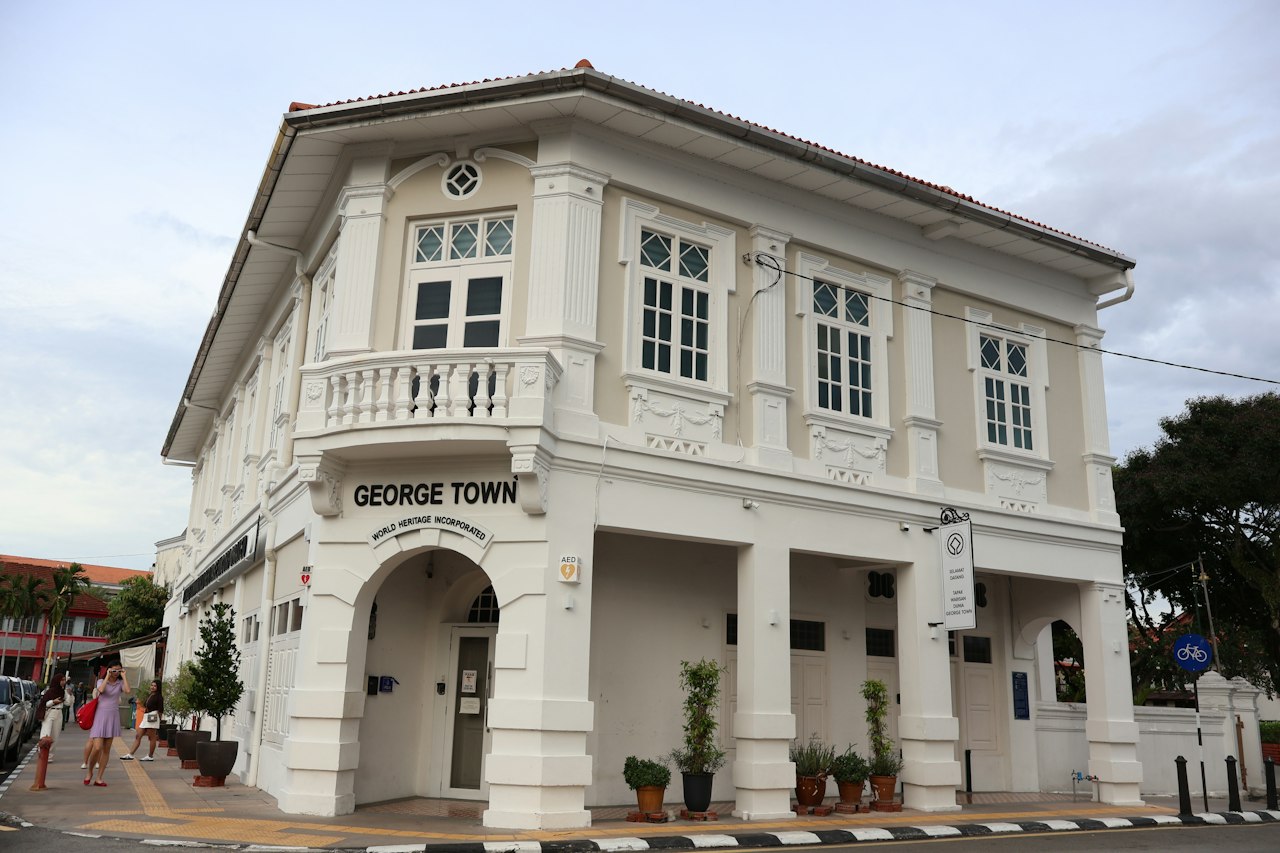
It is usually easier to take in in the quieter parts of the day, when you can stand outside and read the façade without competing with a crowd. Most people spend a short visit here before or after walking the nearby streets of the old town. It sits well with Armenian Street, the surrounding clan houses, and other heritage buildings in the core of George Town.
Armenian Street (Lebuh Armenian)
Armenian Street is one of the old streets in the heritage core, lined with shophouses, small storefronts, and buildings that show the layered history of George Town. What you actually see is not one landmark but a street scene: narrow five-foot ways, painted façades, and a mix of preserved architecture and everyday use. The detail worth noticing is how the street reads differently from block to block, with old textures sitting next to contemporary businesses and street art.
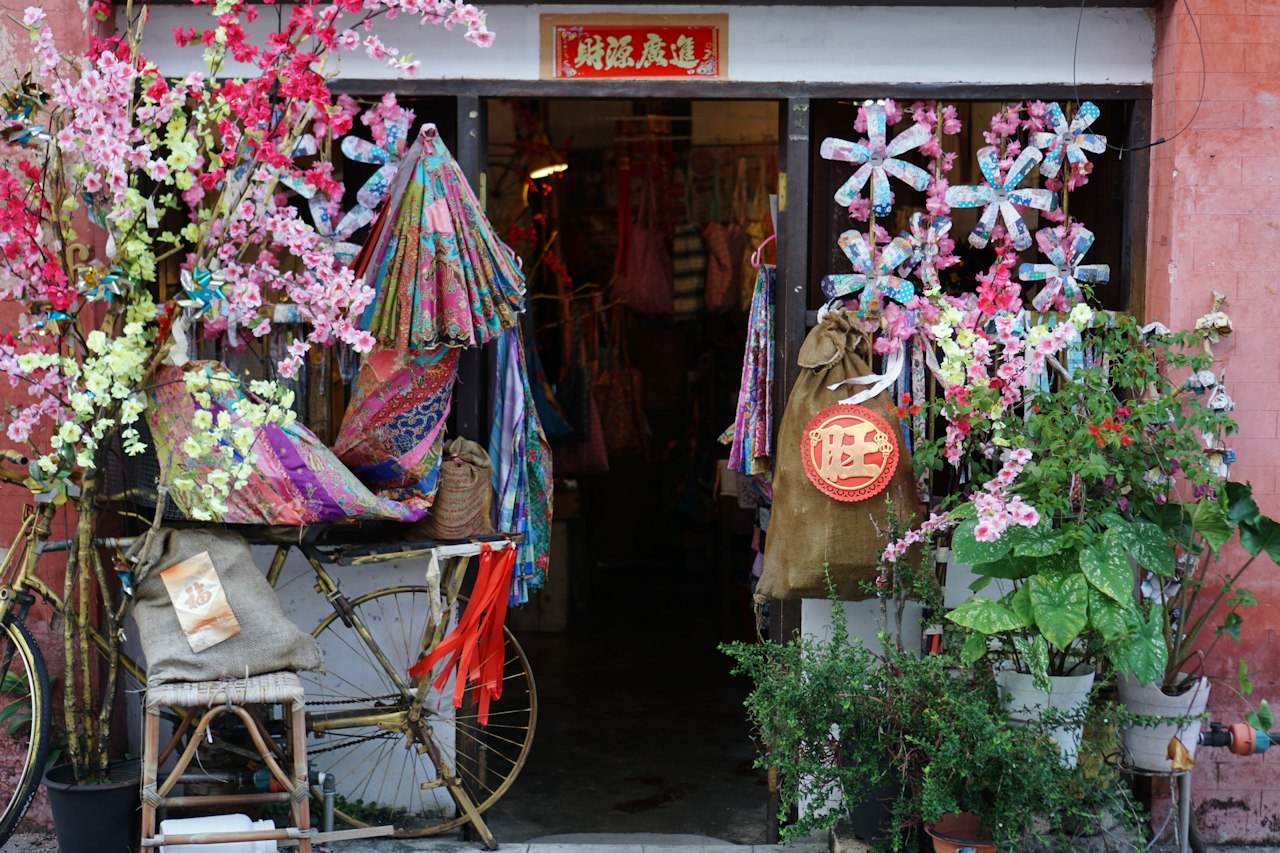
It is often busier in the daytime, especially where visitors stop for photos and to look into the shops and cafés. People usually spend as long as it takes to walk the length of the street and pause at a few façades or murals. It connects easily to the Khoo Kongsi area and other nearby heritage streets, so it works well as part of a walking route.
Kapitan Keling Mosque (Masjid Kapitan Keling)
Kapitan Keling Mosque is one of the major historic mosques in George Town, set back from the road with a whitewashed prayer hall and a domed profile. From the outside, you see the minaret, the main dome, and a spacious compound that gives the building room to breathe among the surrounding streets. The detail worth noticing is the way the mosque sits as part of the city’s long multi-religious landscape, rather than as an isolated monument.
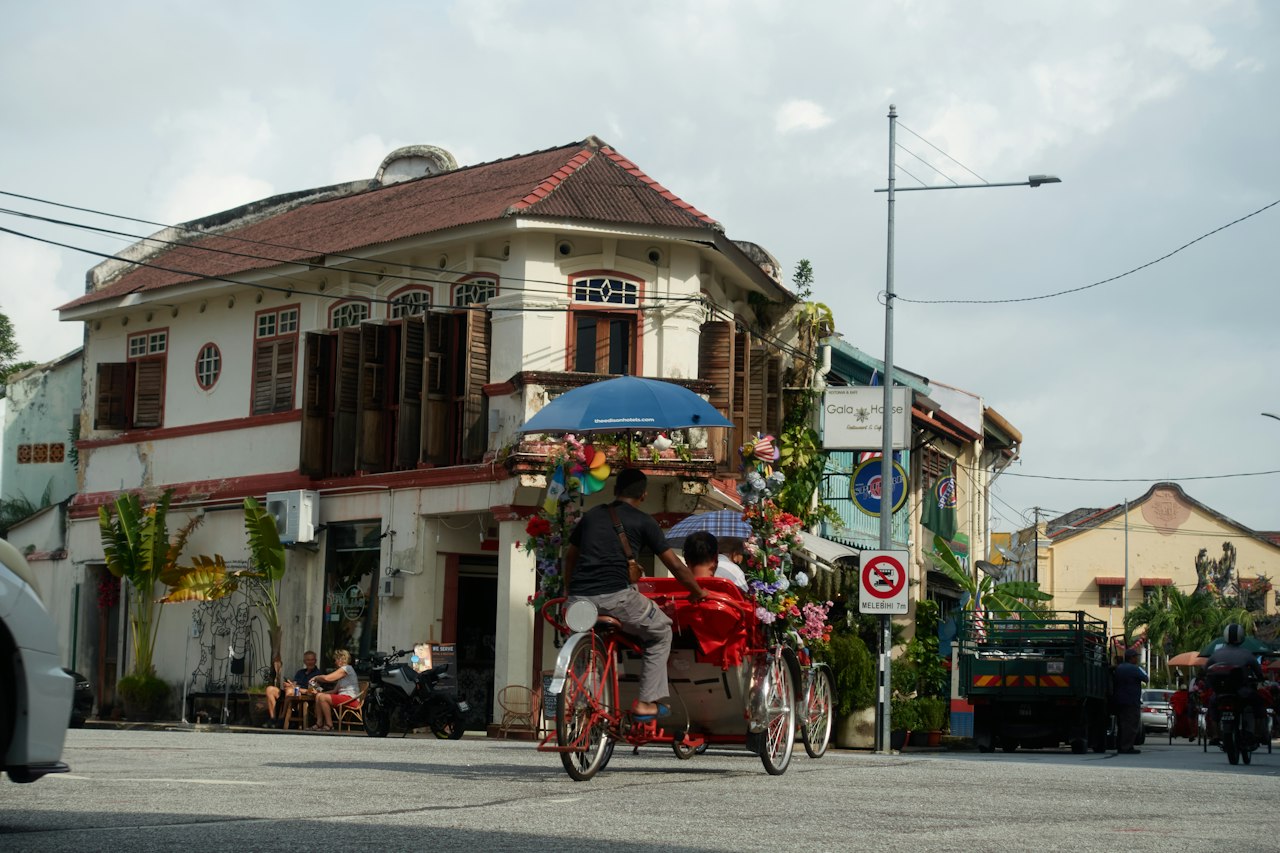
It can feel calm between prayer times, though the area around it is active and the streets nearby are always in use. A visit is usually brief unless you spend time observing the compound and the surrounding streets. It is close to Little India, St. George's Church, and other central heritage sites, so it fits easily into a broader walking loop.
Sri Mahamariamman Temple
Sri Mahamariamman Temple is a Hindu temple in the center of George Town, known for its ornate entrance tower and busy, layered decoration. What you actually see is a compact temple front with sculptural figures, bright color, and a street-facing presence that contrasts with the quieter interior space beyond. The detail worth noticing is the richness of the surface work, where every section of the façade seems filled with narrative figures and ornament.
It is usually most active around worship times and festivals, when the street outside can feel crowded and lively. Many visitors spend only a short time looking at the façade and courtyard before continuing on foot through the nearby streets. It is well placed for a route that includes Kapitan Keling Mosque, Little India, and other central heritage buildings.
St. George's Church
St. George's Church is a colonial-era church in George Town, with a restrained neoclassical form that feels very different from the surrounding temples and clan houses. From outside, what you notice is the white exterior, the orderly proportions, and the sense of a freestanding civic building from an earlier colonial period. The detail worth noticing is its simplicity: the building does not rely on ornament, so the shape and symmetry carry the interest.
It is often quieter than the busier commercial streets around it, so it is easy to pause outside for a few minutes and take in the setting. Most people combine it with nearby heritage sites rather than making a long stop. It sits within walking distance of the Esplanade, Fort Cornwallis, and the central historic district.
Pinang Peranakan Mansion
Pinang Peranakan Mansion is a restored house museum associated with Peranakan culture, with a grand street façade and an interior that reflects a wealthy domestic world. From the outside, you see a large historic house; inside, what stands out is the layered mix of furniture, decoration, and domestic spaces that tell a story of status and hybrid culture. The detail worth noticing is how the house uses architecture and furnishings together, so the building feels like a record of family life as much as a display of objects.
It tends to draw steady visitor traffic during the day, especially from people moving through the heritage core. A visit usually takes longer than a quick street stop because the interior is the main point. It connects naturally with the nearby old streets and clan houses, so it fits into a walking route through the center of George Town.
Kuan Yin Temple (觀音亭 Goddess of Mercy)
Kuan Yin Temple is a Chinese temple dedicated to the Goddess of Mercy, with incense, altars, and a compact entrance set into the street edge. What you actually see is a working temple rather than a display piece: people praying, smoke from incense, and decorative details that become clearer the longer you look. The detail worth noticing is the lived-in quality of the place, where worship and everyday movement continue alongside visitors.
It can be busy at devotional times and more subdued at other hours, though the street around it remains active. Most people stop for a short visit, often while walking between nearby heritage sites. It is easy to combine with Armenian Street, Little India, and other central places in the old town.
Esplanade Road (Jalan Padang Kota Lama)
Esplanade Road runs along the waterfront edge of George Town near the open green of the Padang and the sea-facing side of the city. What you actually see is a broad public frontage with views out to the water, space to walk, and a line of historic civic buildings nearby rather than a single monument. The detail worth noticing is the contrast between open space and dense old-town streets, which makes this part of the city feel more spacious than the blocks inland.
It is often used throughout the day for walking, sitting, and passing through, with more activity in the cooler parts of the day and in the evenings. People usually spend from a few minutes to longer if they are strolling along the waterfront or looking back toward the heritage district. It connects directly to Fort Cornwallis and the historic civic buildings around the Padang.
Fort Cornwallis
Fort Cornwallis is a colonial fort by the sea, with old defensive walls, open grounds, and a layout that makes its military purpose easy to read. What you actually see is not a dramatic fortress in the modern sense but a walled historic site with cannon, ramparts, and open interior space. The detail worth noticing is how exposed it feels now, which makes the contrast between its original defensive role and its current surroundings especially clear.
It is usually a straightforward stop for people walking the waterfront and nearby civic area, and it can feel quieter than the busier shopping streets inland. A visit often takes a short amount of time unless you want to linger over the layout and the edges of the fort. It sits next to the Esplanade and close to St. George's Church, so it fits naturally into a coastal heritage walk.
Cheong Fatt Tze Mansion (張弼士故居)
Cheong Fatt Tze Mansion is a large historic townhouse known for its indigo-blue exterior and its blend of Chinese, European, and local building influences. From the street, you see a striking façade with repeated openings, decorative details, and a scale that marks it out from the surrounding shophouses. The detail worth noticing is the careful balance of symmetry and ornament, which makes the house feel formal without being purely Western or purely Chinese.
It can be busy with guided visits and photo stops, but the street outside is usually manageable if you arrive outside peak visitor flow. Most people spend enough time to look at the exterior and, if admitted, to move through the interior at a measured pace. It is close to the old-town grid, so it fits easily with nearby heritage streets and clan houses.
Seeing Them in One Walk
The route: George Town
The places above in a sensible order on foot; skip any of them and the rest still joins up.
- Leong San Tong Khoo Kongsi (龍山堂邱公司)
- Armenian Street (Lebuh Armenian)
- Kapitan Keling Mosque (Masjid Kapitan Keling)
- Sri Mahamariamman Temple
- St. George's Church
- Pinang Peranakan Mansion
- Kuan Yin Temple (觀音亭 Goddess of Mercy)
- Esplanade Road (Jalan Padang Kota Lama)
- Fort Cornwallis
- Cheong Fatt Tze Mansion (張弼士故居)
Paste it into the agent chat in Votura and it will build the map and the audio guide.
How to Start Your George Town Tour with Votura
- Open Votura and tap Explore
- Search for George Town or let the app detect your location
- Browse available tours or tap Generate to create a custom tour
- Hit Play and follow the audio guide stop by stop
All tours include audio narration, a route map, and estimated stop times. Download any tour for offline access before you travel.
Sources
- Top Landmarks - George Town World Heritage Incorporatedgtwhi.com.my
- Melaka and George Town, Historic Cities of the Straits of Malacca - UNESCO World Heritage Centrewhc.unesco.org
- ATTRACTIONSmypenang.gov.my
- Best Attractions in George Town - Visit Penangvisitpenang.com
- Official Tourist Information Centrepenang360.my
Frequently Asked Questions
What are the best places to visit in George Town’s heritage core?
The post highlights Leong San Tong Khoo Kongsi and Armenian Street as two of the most notable stops in George Town’s heritage core. It also points to nearby clan houses, heritage buildings, murals, and old streets that can be explored on the same walk.
Where is Leong San Tong Khoo Kongsi located in George Town?
Leong San Tong Khoo Kongsi sits in the old town area near Armenian Street and other heritage buildings. The post describes it as part of the historic core of George Town, making it easy to combine with a nearby walking route.
How long should I spend at Armenian Street in George Town?
The post says people usually spend as long as it takes to walk the length of the street and pause at a few façades or murals. It is best treated as a flexible stop rather than a fixed-length attraction.
When is the best time to visit Leong San Tong Khoo Kongsi?
It is usually easier to appreciate Leong San Tong Khoo Kongsi during the quieter parts of the day. That way, you can stand outside and take in the façade and decorative details without competing with a crowd.
Can I combine Armenian Street with other nearby attractions on one walk?
Yes, the post says Armenian Street connects easily to the Khoo Kongsi area and other nearby heritage streets. It works well as part of a walk through George Town’s historic core.
Hear this city out loud
Votura turns the places in this guide into a self-guided audio tour you can follow at your own pace.