Ottawa Travel Guide: Top Spots with AI Audio Tours
Your AI-powered guide to Ottawa — covering top attractions, local favourites, and off-the-beaten-path discoveries with Votura.

Ottawa blends national landmarks, riverfront scenery, and neighbourhood charm in a way that feels both polished and approachable. From Parliament Hill and the Rideau Canal to bustling ByWard Market and the museums along the Ottawa River, the city rewards travellers who like to connect history, culture, and walkable urban views in a single trip.
Getting to Know Ottawa
This guide is built for curious visitors who want more than a checklist of sights: it helps you experience Ottawa at your own pace, whether you’re on foot, using transit, or planning a quick stop between attractions. Votura AI generates audio tours matched to your available time, transport preference, and chosen theme, so you can focus on exploring while the commentary adapts to the kind of visit you want.
Ottawa at the Heart of the Nation: Independence & Celebration Walk
This walk strings together Ottawa’s ceremonial core, from the security perimeter around Parliament Hill to the canal at the edge of downtown. It follows streets, riverfront paths, and museum fronts through the federal district, with long views to the Ottawa River and several places where public memory is literally built into the landscape. The route makes sense over two days because the stops are spread out enough to feel like a city itinerary rather than a single sightseeing loop. It earns the time by showing how government, war remembrance, archives, and public celebration sit close together in the capital.

It begins at the Security Check Point near Parliament Hill, where bollards, fencing, and the formal approach set the tone for the precinct. Parliament Hill itself is all limestone, carvings, and open lawns, and the Peace Tower remains the fixed point as you move west toward the Supreme Court of Canada, a severe modern building with deep overhangs and a stone forecourt. From there, Library and Archives Canada / Bibliothèque et Archives Canada and then the Garden of the Provinces & Territories shift the mood from national institutions to a quieter landscaped edge, with the garden’s provincial and territorial plantings easy to notice if you slow down. The Canadian War Museum | Musée Canadien de la Guerre changes scale again: the angular roofline, broad concrete surfaces, and river-facing setting feel purpose-built for reflection, and the IMAX Theatre, Canadian Museum of History follows on the opposite bank with its curved, low profile and the view back across the Ottawa River. Later, the National Gallery of Canada stands out for its glass-and-granite geometry and the bronze spider outside, before Major’s Hill Park opens onto slopes, paths, and one of the best places to see the river corridor. Bytown Museum, tucked beside the locks, gives a close look at the stonework and water control of the Rideau Canal, and the route finishes at Confederation Square and the National War Memorial before the canal itself takes over as the last long, linear view.
The route
Plan on about 2 days, walking from Parliament Hill westward and then looping back along the river and canal.
- Security Check Point, Parliament Hill
- Supreme Court of Canada
- Library and Archives Canada / Bibliothèque et Archives Canada
- Garden of the Provinces & Territories
- Canadian War Museum | Musée Canadien de la Guerre
- IMAX Theatre, Canadian Museum of History
- National Gallery of Canada
- Major's Hill Park
- Bytown Museum
- Confederation Square
- National War Memorial
- Rideau Canal
Paste it into the agent chat in Votura and it will build the map and the audio guide.
Before you go
Starting in the morning helps because the security area around Parliament Hill is simplest to take in before the day crowds build, and the light is better for the river and stone façades. The walking is moderate rather than strenuous, but the route covers a lot of ground and includes steps, crossings, and some stretches exposed to wind off the river. Museum hours and access can vary, and some parts of the Parliament precinct can be restricted or interrupted by events, so it is worth expecting occasional detours. A water bottle, comfortable shoes, and a layer for cold or damp weather make the day easier, especially near the canal and the river.
Ottawa Independence Walk: Monuments, Memory, and National Pride
This is a long downtown Ottawa walk that strings together the city’s political center, memorials, riverfront paths, and major cultural institutions. It runs from the Parliament precinct through Confederation Square, past the Rideau Canal and the core of the Arts District, then out to the museum and monument landscape around the river. The route is less about one continuous street than about moving between public spaces that tell Canada’s national story in stone, bronze, and civic buildings. It earns the time because the places are close enough to walk, but different enough in scale and mood that the day keeps changing.
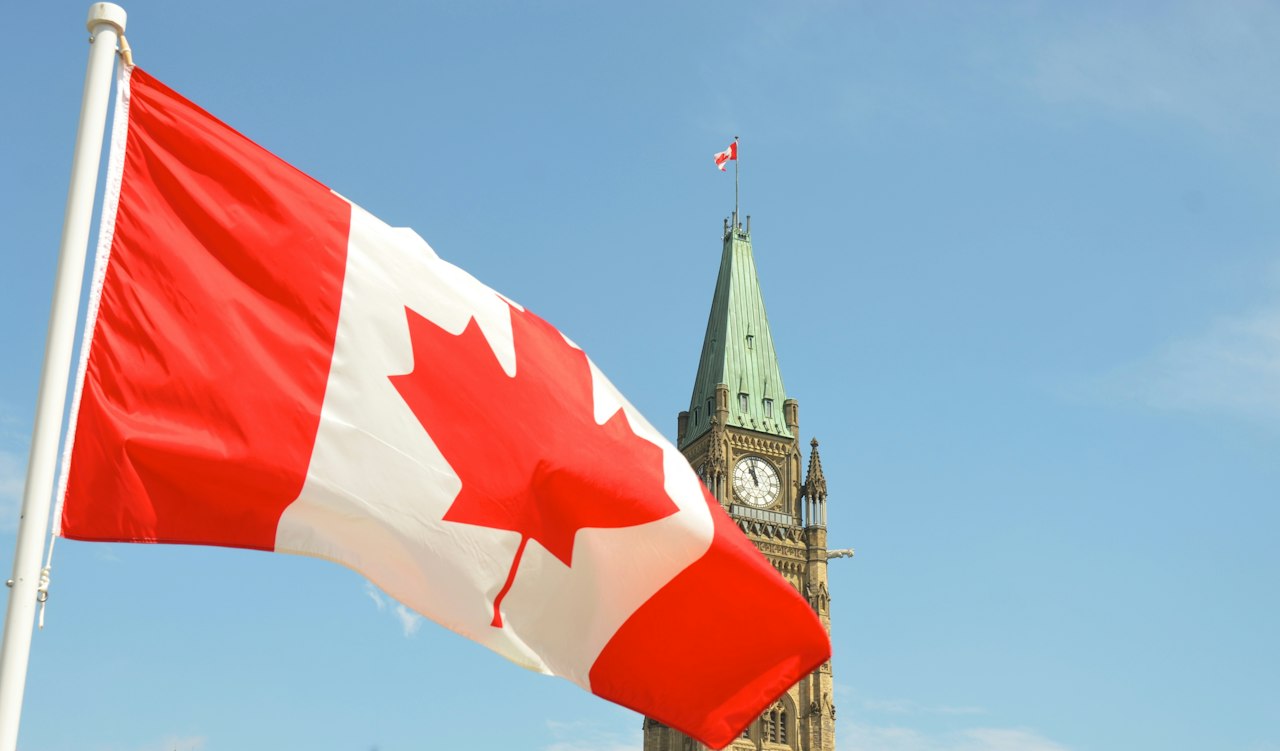
It begins at the Security Check Point near Parliament Hill, where the guarded approach sets the tone before the lawn and towers open up. On Parliament Hill, the Peace Tower and the limestone facades dominate, and the change of surface from street to broad lawns is the first thing I noticed. The National War Memorial in Confederation Square is all about the stillness of the arch and the Tomb of the Unknown Soldier, with traffic moving around a space that feels intentionally paused. From the Rideau Canal, the route picks up the waterline and the locks, with the stonework and canal edge doing most of the visual work. The National Arts Centre - Centre National des Arts is a strong contrast, with its angular mass and broad plaza; nearby, the Canadian Tribute to Human Rights / Monument canadien pour les droits de la personne rises in a way that is easy to miss until you are close, when the etched surfaces and vertical forms become legible. The Canadian Museum of Nature stands out for the old stone castle look, with the central tower and heavy mass feeling different from the modern government buildings behind you. Later, Major's Hill Park gives a quieter break, with open slopes and long views back toward the Hill and over the river, and the Confederation Table Map is worth a stop for the way it condenses the country into a single sculptural surface. The National Gallery of Canada arrives as glass and green patina, with the spider sculpture out front often pulling the eye before the building itself does, and the Royal Canadian Mint adds a fortified, industrial edge. The Canadian Museum of History closes the route across the river, where the curved lines and huge river-facing façade end the walk on a more expansive note.
The route
Plan on a long day; walk it south-to-north through the city core for the easiest flow between stops.
- Security Check Point, Parliament Hill
- National War Memorial
- Rideau Canal
- National Arts Centre - Centre National des Arts
- Canadian Tribute to Human Rights / Monument canadien pour les droits de la personne
- Canadian Museum of Nature
- Major's Hill Park
- Confederation Table Map
- National Gallery of Canada
- Royal Canadian Mint
- Canadian Museum of History
Paste it into the agent chat in Votura and it will build the map and the audio guide.
Before you go
Starting in the morning helps because the route is long and many of the public spaces feel more open before the midday crowds build around Parliament Hill, the National War Memorial, and the museum district. The walking itself is straightforward but steady, with several stretches of stairs, slopes, and long pavement sections, so it feels like a full day rather than a casual stroll. Security screening, special events, or occasional closures can affect access around Parliament Hill and nearby federal buildings, and some interiors on the route may not be open when you pass. Comfortable shoes, water, and weather layers matter, especially because much of the day is exposed to wind along open squares and the river.
Ottawa Independence Trails: Parliament, Monuments & Celebration Routes
This route links the formal center of Ottawa with the riverfront and the institutions that helped define Canada’s public memory. It runs from the Parliament Hill area down past the bank and archive buildings, over to the ByWard Market edge, then west and east through the government district, memorial spaces, and the museum precinct. The walk earns its time because the distance between stops is part of the story: every stretch shifts from power, to record-keeping, to commemoration, to public display. It feels less like sightseeing in a sequence than like reading the capital in order.
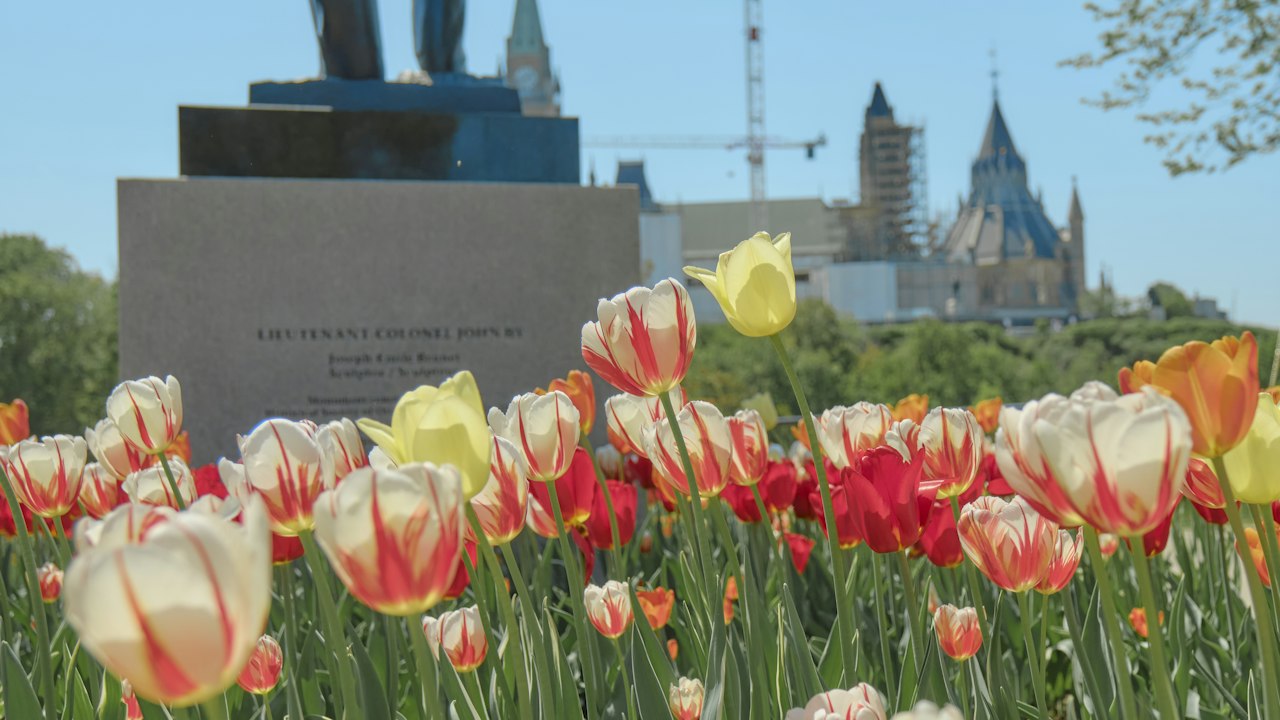
At the Security Check Point and then Parliament Hill, the first thing to notice is the weight of the setting: the lawns, stonework, and flagpoles frame the center of federal power. At Bank of Canada Museum, the building is more restrained, and the focus shifts to money, trust, and the design of symbols that circulate nationwide. Library and Archives Canada / Bibliothèque et Archives Canada and then Bytown Museum bring in paper, photographs, and the older river town story, with the canal-side location making the shift from capital to settlement feel immediate. Major's Hill Park opens the view back toward Parliament and across the river valley, while Confederation Table Map gives a compact overview of the city’s geography before the walk turns toward the National Gallery of Canada. The gallery’s sharp glass and the bronze spider outside stand in contrast to the adjacent Royal Canadian Mint, where the fortress-like exterior is the detail that stays with you. The Rideau Canal, National War Memorial, National Aboriginal Veterans Monument, and Canadian Tribute to Human Rights / Monument canadien pour les droits de la personne cluster a set of very different public messages into a small area: waterway, sacrifice, Indigenous military service, and civic rights, all within a few blocks. The route ends at the Canadian Museum of History across the river, where the view back toward downtown neatly closes the loop on the city’s ceremonial landscape.
The route
Best walked over 2 days, starting at Parliament Hill and finishing at the Canadian Museum of History.
- Security Check Point, Parliament Hill
- Bank of Canada Museum
- Library and Archives Canada / Bibliothèque et Archives Canada
- Bytown Museum
- Major's Hill Park
- Confederation Table Map
- National Gallery of Canada
- Royal Canadian Mint
- Rideau Canal
- National War Memorial
- National Aboriginal Veterans Monument
- Canadian Tribute to Human Rights / Monument canadien pour les droits de la personne
- Canadian Museum of History
Paste it into the agent chat in Votura and it will build the map and the audio guide.
Before you go
Starting in the morning helps most, partly for daylight and partly because the parliamentary and museum areas are easier to read before the busiest part of the day. The walking is moderate rather than strenuous, but it is spread across two days if you want time at the stops and breaks between them. Some of the institutions on the route may have variable access, security screening, or closed areas, especially around Parliament Hill and the museum buildings, so it is worth checking current conditions before going. Comfortable shoes, water, and a plan for weather matter, because the route includes long exposed stretches along open streets, parks, and the canal.
Royal Echoes & Parliament: A 6-Stop Private Car Tour Through Ottawa's ByWard Market and the Parliamentary Precinct
This route is a car-based sweep through Ottawa’s political core and its older ceremonial addresses, moving from Parliament Hill eastward and then down Sussex Drive toward the river. It begins at Parliament of Canada - East Block and Parliament of Canada - Centre Block, cuts through ByWard Market, then continues to Laurier House, Rideau Hall, and Rideau Falls. The trip earns its time because it links the city’s federal buildings with the residences and streets that shaped them, all within a compact part of downtown and New Edinburgh.
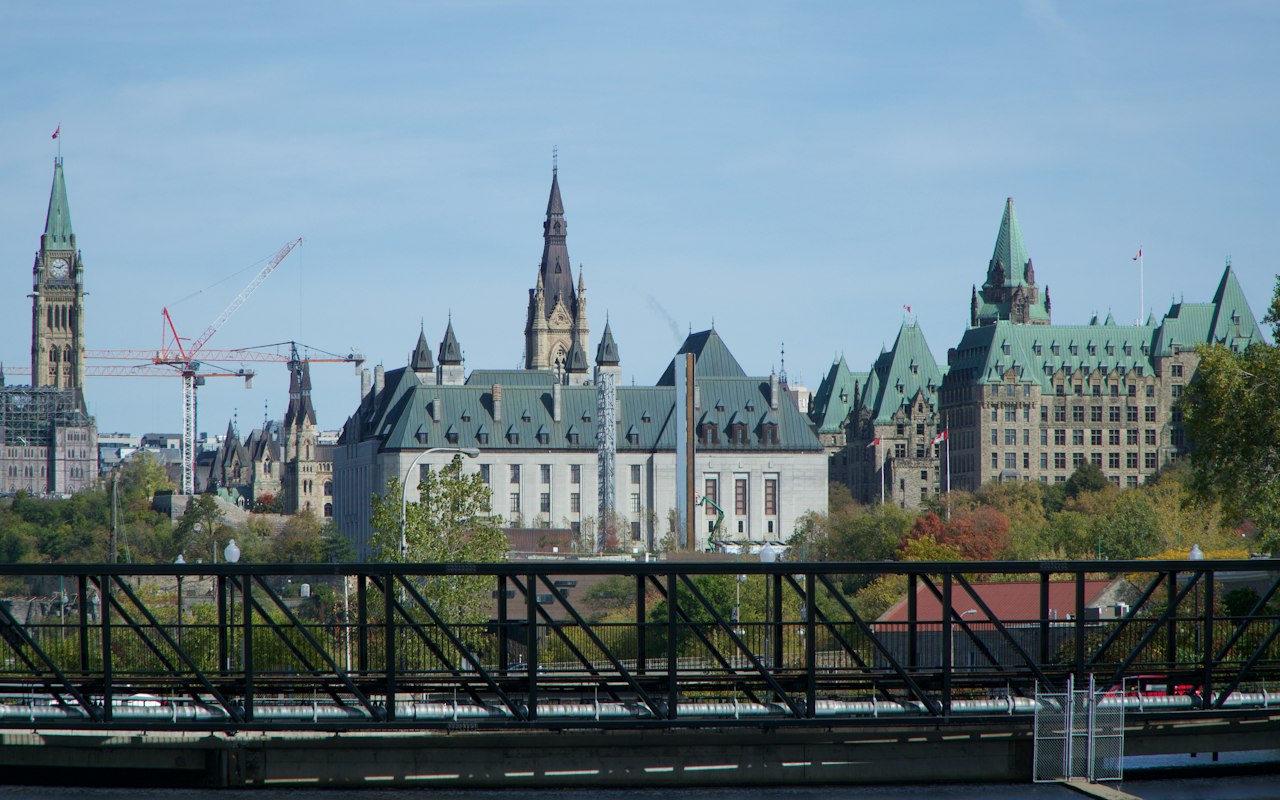
At Parliament of Canada - East Block, the Gothic Revival stonework feels closest to the hill’s original 19th-century government campus, and the narrow windows and towers still read as defensive rather than ceremonial. Parliament of Canada - Centre Block dominates the view with its Peace Tower and the open space of Parliament Hill, where the building’s silhouette matters as much as the details. Byward Market shifts the mood abruptly: around the market building and the surrounding streets, the stone facades give way to low shopfronts, sidewalks, and a busier street grid. Laurier House is a quieter stop, and what stands out is the domestic scale of the house itself, tucked behind a fence on a residential stretch of Sussex Drive. Rideau Hall is more expansive, with its long drive, formal grounds, and the contrast between the residence and the open lawns around it. Rideau Falls closes the route with moving water and a clear view of where the Ottawa River drops at the edge of the city’s government precinct.
The route
Plan on a full day, driving east to west from Parliament Hill toward Rideau Falls.
- Parliament Of Canada - East Block
- Parliament of Canada - Centre Block
- Byward Market
- Laurier House
- Rideau Hall
- Rideau Falls
Paste it into the agent chat in Votura and it will build the map and the audio guide.
Before you go
Starting in the morning helps because Parliament Hill and Sussex Drive are less crowded before the middle of the day, and the light is better for the stonework and river views. The walking itself is moderate rather than strenuous, but the route involves city sidewalks, crossings, and some standing around each stop. ByWard Market is usually the busiest part of the day, while access around Parliament and Rideau Hall can be affected by security, events, or construction. Comfortable shoes and a layer for wind off the river are enough for most of it, especially if you are lingering at the outdoor stops.
How to Start Your Ottawa Tour with Votura
- Open Votura and tap Explore
- Search for Ottawa or let the app detect your location
- Browse available tours or tap Generate to create a custom tour
- Hit Play and follow the audio guide stop by stop
All tours include audio narration, a route map, and estimated stop times. Download any tour for offline access before you travel.
Sources
- Top 10 things to do in Ottawaottawatourism.ca
- Visit Canada's Parliamentrts.parl.ca
- Rideau Canal National Historic Siteparks.canada.ca
- The Rideau Canal Promenadecanada.ca
- Museums and historic sitesottawa.ca
Frequently Asked Questions
What are the best places to see on an Ottawa trip from this guide?
The guide highlights Parliament Hill, the Rideau Canal, ByWard Market, and the museums along the Ottawa River as key places to visit. It also recommends the Ottawa at the Heart of the Nation: Independence & Celebration Walk for a deeper look at the capital’s national landmarks and riverfront scenery.
Where does the Ottawa at the Heart of the Nation: Independence & Celebration Walk start?
The walk begins at the Security Check Point near Parliament Hill. From there, it moves through the federal district toward the Supreme Court of Canada, Library and Archives Canada, and other nearby sites.
How long does the Independence & Celebration Walk in Ottawa take?
The guide says this route makes sense over two days because the stops are spread out. It is designed more like a city itinerary than a single sightseeing loop.
Can I explore Ottawa at my own pace with this travel guide?
Yes. The guide is designed for visitors who want to explore on foot, using transit, or during a quick stop between attractions, and Votura AI generates audio tours based on your available time and transport preference.
Why does the guide recommend audio tours for Ottawa?
The audio tours adapt to your time, transport choice, and theme, so the commentary fits the kind of visit you want. That makes it easier to focus on exploring while still learning about the city’s history, culture, and landmarks.
Hear this city out loud
Votura turns the places in this guide into a self-guided audio tour you can follow at your own pace.