Free Things to Do in Carcassonne: A Self-Guided Walking Guide
The best genuinely free attractions in Carcassonne — parks, viewpoints, markets, and landmarks — ordered into a self-guided walking route you can follow today.

Carcassonne makes it easy to enjoy the city without spending a cent: the ramparts, lanes, viewpoints, and market scenes all unfold in the open air, and much of the medieval atmosphere can be absorbed just by walking the streets. From the hilltop fortress to the lower town, the real pleasure is in the details you can see from the outside—stone walls, towers, squares, and lively corners that feel built for wandering.
Why Carcassonne Rewards Travellers on a Zero Budget
This guide focuses on those free experiences, from panoramic viewpoints and public spaces to architectural highlights visible from the street, so you can explore at your own pace and still get a rich sense of the city. If you want a more tailored way to follow along, Votura AI generates audio tours matched to the traveller’s time, transport preference, and chosen theme.
Cité de Carcassonne ramparts and viewpoints
The ramparts are the defensive walls that ring the medieval Cité, with towers, battlements, and long stretches of stone walkways and parapets. From outside or from the lower viewpoints, you mainly see the layered walls, the round towers, and the hilltop silhouette of the old fortress. What stands out is how the city reads as a complete fortified system rather than a single monument, with different lines of defense and careful stonework that become more obvious the longer you look.
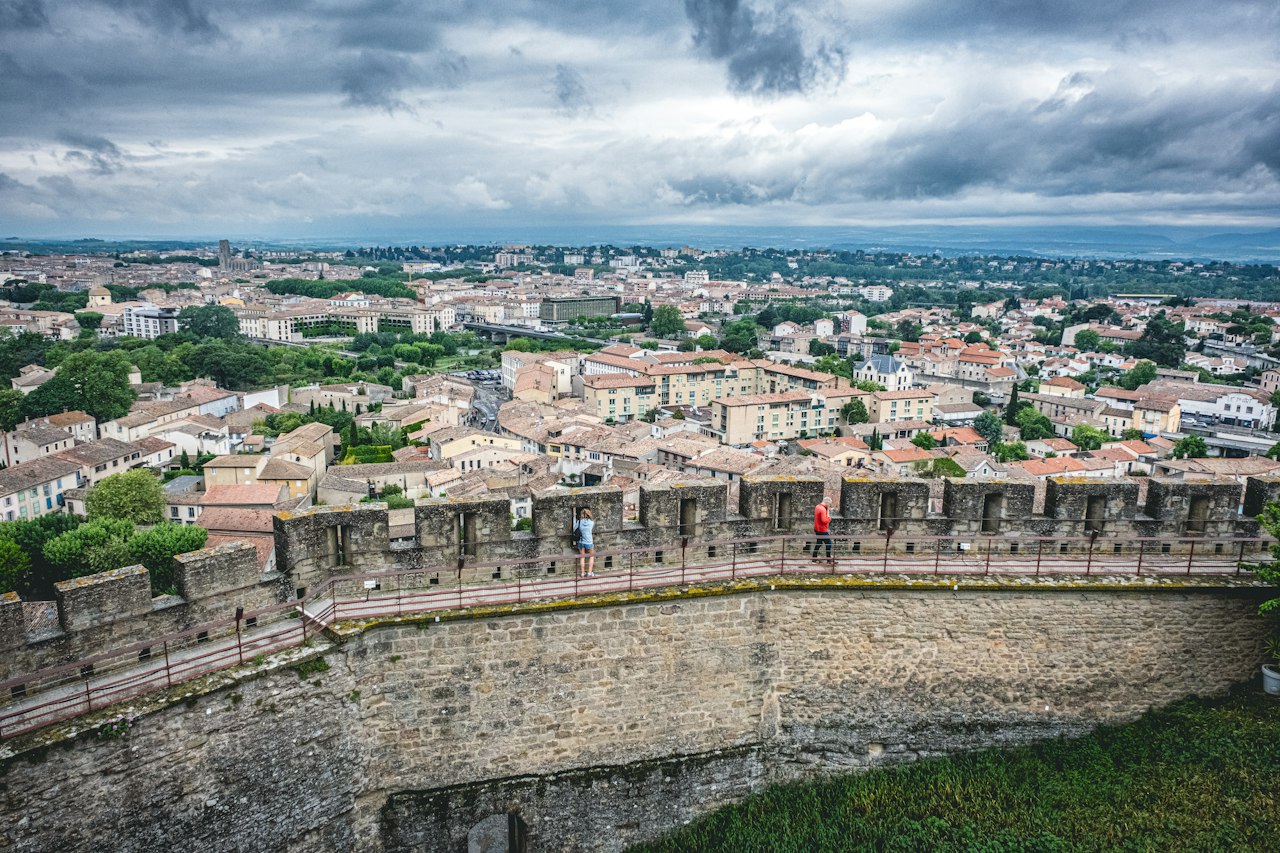
It is usually busiest in the middle of the day, especially in good weather, while early morning and later afternoon are quieter for standing and looking. People often spend 20 to 45 minutes at a viewpoint, longer if they walk around the walls or pause for photos. The ramparts connect directly to the rest of the Cité, so they are easiest to combine with a slow circuit through the old streets.
Place Carnot
Place Carnot is the main square in the lower town, a broad open space with cafés, trees, and a central fountain. You see everyday Carcassonne here more than monuments: people meeting, sitting for coffee, crossing the square, and the regular traffic of a lived-in center. The detail worth noticing is the mix of formal square and ordinary neighborhood life, which gives a clearer sense of the modern town than the Cité alone.
It is generally busier around lunch and early evening, when the terraces fill and local life is most visible. Many people only stop for a few minutes to cross or sit down, though a café break can easily make it a longer pause. It sits in the Bastide Saint-Louis area, so it works well as a starting point for the surrounding streets.
Canal du Midi
The Canal du Midi runs through Carcassonne as a straight, tree-lined waterway with towpaths, bridges, and moored boats. What you actually see is calm water under plane trees and the geometry of the canal cutting across the city’s edges. The detail worth noticing is the contrast between the canal’s slow, engineered landscape and the older stone city nearby.
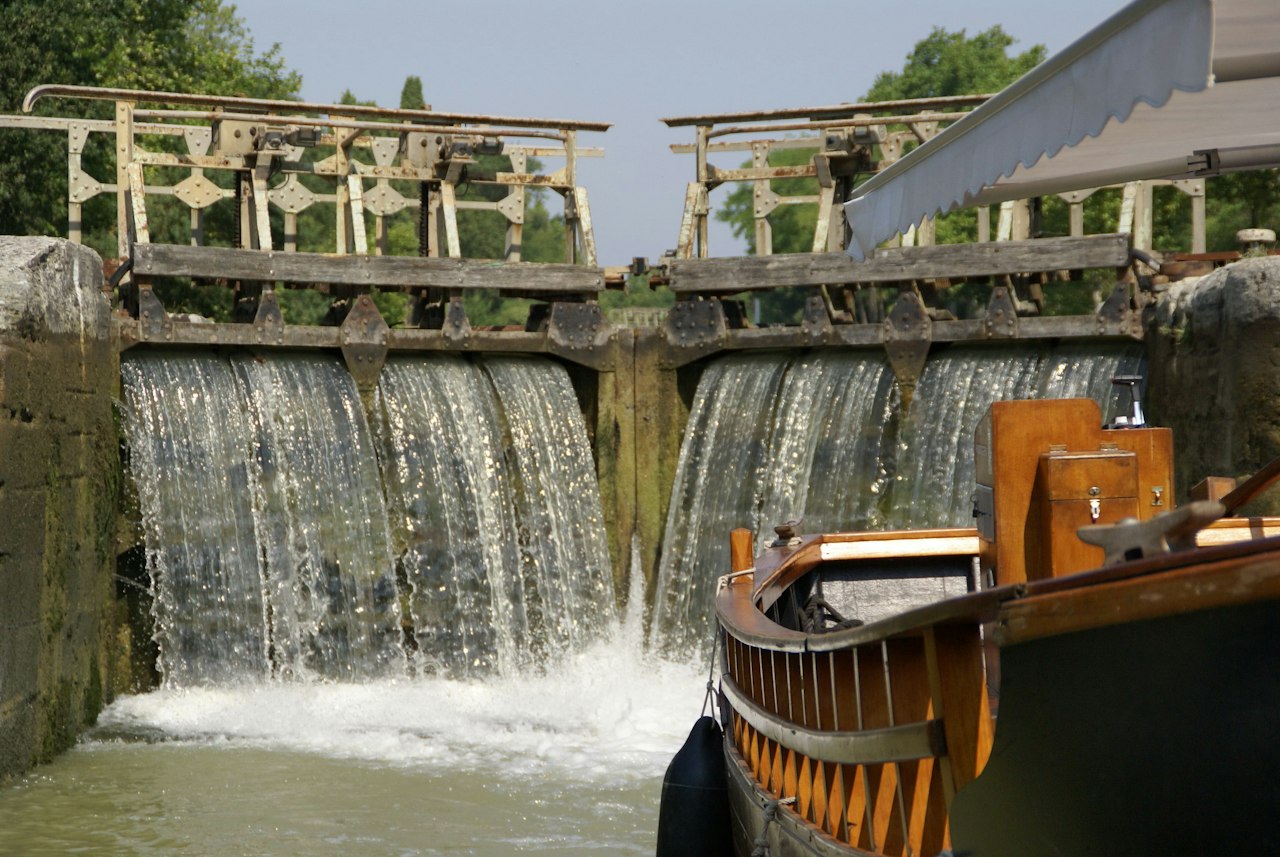
It is quieter along the banks in the morning and in the evening, while weekends and pleasant afternoons bring more walkers and cyclists. People usually spend 20 to 40 minutes along a stretch of canal, longer if they stop for a walk by the water. It connects naturally with the station side and the lower town, and it gives a useful break between the Cité and the Bastide.
Bastide Saint-Louis streets
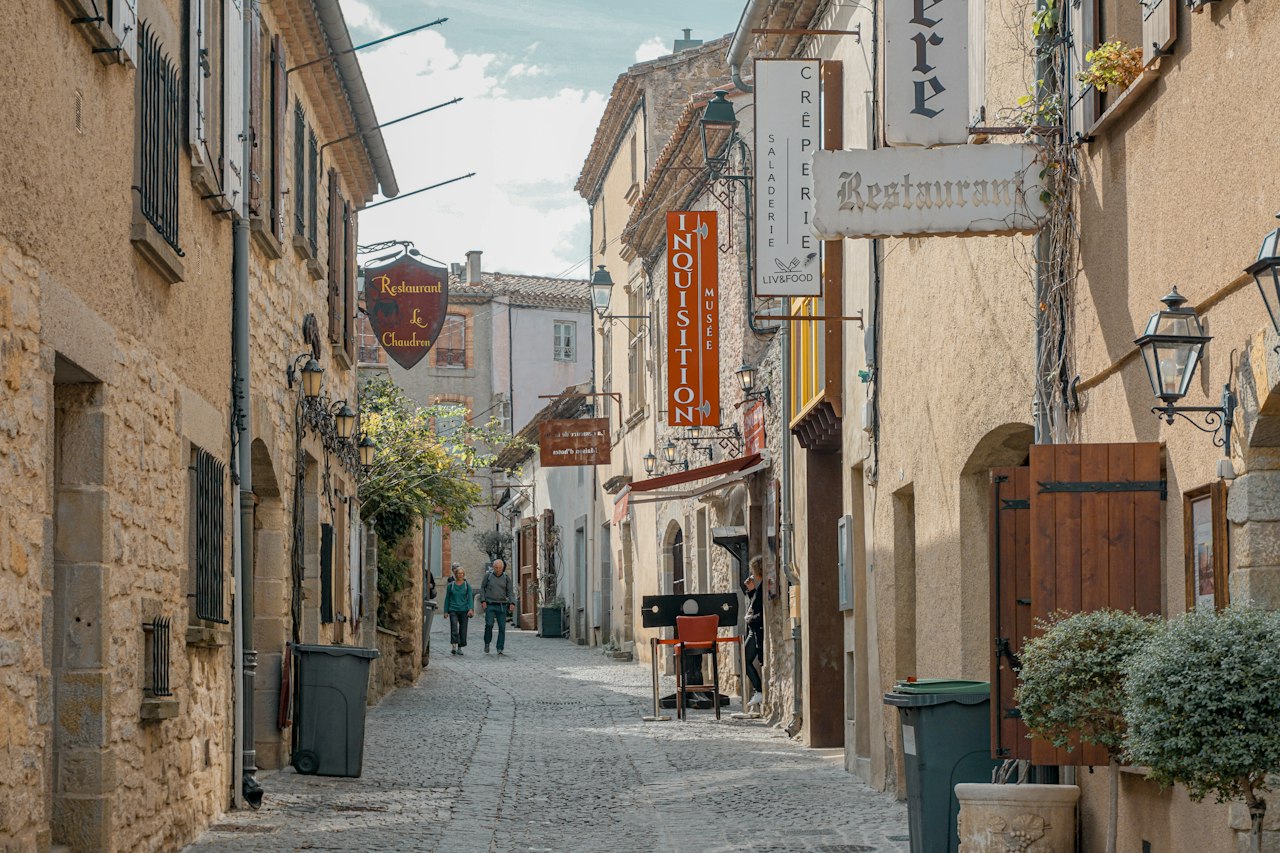
The streets of Bastide Saint-Louis form the grid of Carcassonne’s lower town, with straight blocks, narrow sidewalks, shops, and residential façades. You see a working city rather than a historic set piece: shutters, balconies, small businesses, and the everyday rhythm of traffic and pedestrians. The detail worth noticing is the contrast between the rational street plan and the varied 19th- and 20th-century building fronts that have filled it over time.
These streets are busiest when shops are open and people are moving between Place Carnot, the station, and nearby cafés. A walk through them can take 20 minutes or an hour depending on how much you pause for side streets and storefronts. They connect the main square, the canal, and the route toward the Cité, so they are useful for moving between the city’s different layers.
Église Saint-Vincent
Église Saint-Vincent is a large parish church in the lower town, known for its tall tower that dominates the surrounding streets. From outside, you see its stone mass, its vertical proportions, and the way it rises above the surrounding buildings. The detail worth noticing is the tower’s presence in the cityscape, which makes it a landmark even before you step inside or learn its history.
It is usually quiet outside of services and local events, with more activity during the day in the surrounding streets. Most visitors spend 10 to 20 minutes looking at the exterior unless they are going inside. It is close enough to the Bastide streets and Place Carnot to fit into a short walking circuit through the lower town.
Église Saint-Gimer
Église Saint-Gimer stands near the edge of the medieval city and is closely associated with the area below the Cité. What you see is a modest church in stone, set against a landscape shaped by the fortified hill above it. The detail worth noticing is how the church sits in relation to the walls and slopes, making the boundary between old fortress and newer neighborhood visible at a glance.
It is generally a quiet stop, with far fewer people than the Cité itself unless a service is taking place. Most people spend only a few minutes outside, often while walking between the ramparts and the lower streets. It connects well with the edge of the old city and with viewpoints around the fortified hill.
Square André Chénier
Square André Chénier is a small public green space in the lower town, with paths, trees, seating, and a more relaxed feel than the surrounding streets. You see a neighborhood square used for resting, passing through, and brief pauses away from traffic. The detail worth noticing is its role as a pause point in the urban fabric, a small pocket of green that softens the hard grid of the Bastide.
It is usually calm outside peak hours, with a little more movement from local residents than from tourists. People often stay only a short time, from a few minutes to perhaps half an hour, depending on whether they are resting or crossing through. It is close to the Bastide Saint-Louis streets, so it fits naturally into a walk between Place Carnot and the rest of the lower town.
A Free Self-Guided Walking Route Through Carcassonne
The route: Carcassonne
This route is about 3–4 km on foot and works best in the late afternoon into sunset, when the lower town is quieter and the Cité is at its most photogenic.
- Place Carnot
- Bastide Saint-Louis streets
- Square André Chénier
- Canal du Midi
- Église Saint-Vincent
- Église Saint-Gimer
- Cité de Carcassonne ramparts and viewpoints
Paste it into the agent chat in Votura and it will build the map and the audio guide.
Want the Stories Behind Each Stop?
Everything above is free to do on your own. If you want the history and local context narrated as you walk, Votura's AI audio tours of Carcassonne guide you stop by stop — at your own pace, offline if you like.
Frequently Asked Questions
What are the best free things to do in Carcassonne?
The post highlights walking the ramparts and viewpoints around the Cité de Carcassonne, strolling Place Carnot, and following the Canal du Midi towpaths. It also suggests exploring the streets of Bastide Saint-Louis and visiting churches such as Église Saint-Vincent and Église Saint-Gimer.
Where can I get the best views of Carcassonne for free?
The best free views are from the exterior viewpoints around the Cité de Carcassonne, especially near the gates and lower rampart edges. The fortress is especially photogenic at sunrise and sunset when the stone towers stand out against the skyline.
How can I explore Carcassonne without spending money?
The post recommends seeing the city on foot and focusing on public spaces, exterior architecture, and free walking routes. You can wander the Bastide Saint-Louis streets, enjoy Place Carnot, and walk along the Canal du Midi towpaths for a full free experience.
What is Place Carnot in Carcassonne good for?
Place Carnot is the main square in Bastide Saint-Louis and is free to visit at any time. It is a good spot for people-watching, cafés and fountains, and for getting a feel for everyday city life.
Is Église Saint-Vincent free to enter?
Yes, the post says Église Saint-Vincent is typically free to enter. It is described as a calm place to pause, with a soaring tower, stained glass, and a cool interior that is especially welcome on a hot day.
Sources
- Welcome to the castle and ramparts of the city of Carcassonneremparts-carcassonne.fr
- Historic Fortified City of Carcassonne - UNESCO World Heritage Centrewhc.unesco.org
- Carcassonne - Audeaudetourisme.com
Hear this city out loud
Votura turns the places in this guide into a self-guided audio tour you can follow at your own pace.