Free Things to Do in Tashkent: A Self-Guided Walking Guide
The best genuinely free attractions in Tashkent — parks, viewpoints, markets, and landmarks — ordered into a self-guided walking route you can follow today.

Tashkent is a city that rewards slow, curious walking: broad Soviet boulevards, tiled metro entrances, leafy parks, and monumental buildings all give you plenty to see without spending a soum. Even some of its best moments — the bustle of Chorsu Bazaar, the sweep of Amir Timur Square, and the façades of old and modern landmarks — can be enjoyed entirely from the street.
Why Tashkent Rewards Travellers on a Zero Budget
This guide focuses on free sights you can experience at your own pace, from public squares and viewpoints to markets and architecture best appreciated from outside. If you want a more structured way to explore, Votura AI generates audio tours matched to your time, transport preference, and chosen theme.
Amir Temur Square
Amir Temur Square is a large central plaza in Tashkent built around the equestrian statue of Amir Temur, with paths, lawns, and surrounding civic buildings. From the edges you mainly notice the scale of the open space and the formal layout rather than a single crowded landmark. The detail many people miss is how the square is used as a pause point in the city, with benches, trees, and long sightlines that make it feel very open compared with the streets around it.
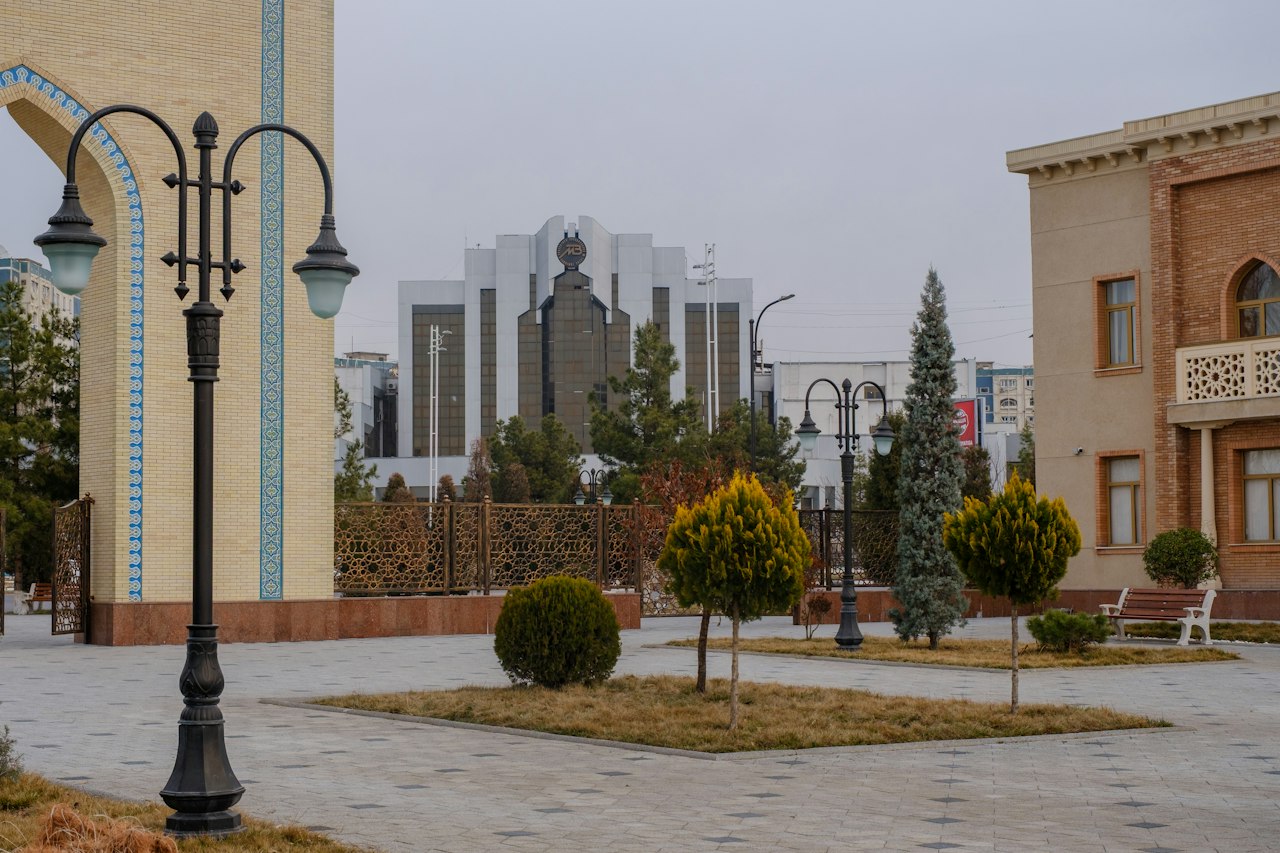
It is usually quieter early in the day and around sunset, while weekends and public holidays bring more visitors and families. People often spend 15 to 30 minutes here, longer if they are walking on toward nearby central streets or stopping for photos. It sits in a part of the city where several other central sights are within reach, so it often works as a starting point rather than a destination on its own.
Alisher Navoiy National Park
Alisher Navoiy National Park is a large green recreational area with paths, water features, trees, and open spaces for walking and sitting. What you actually see is less a single monument and more a broad urban park with regular landscaping and places where people come for shade and exercise. A detail worth noticing is how much daily life happens here: people walking, chatting, and resting under the trees rather than moving quickly through it.
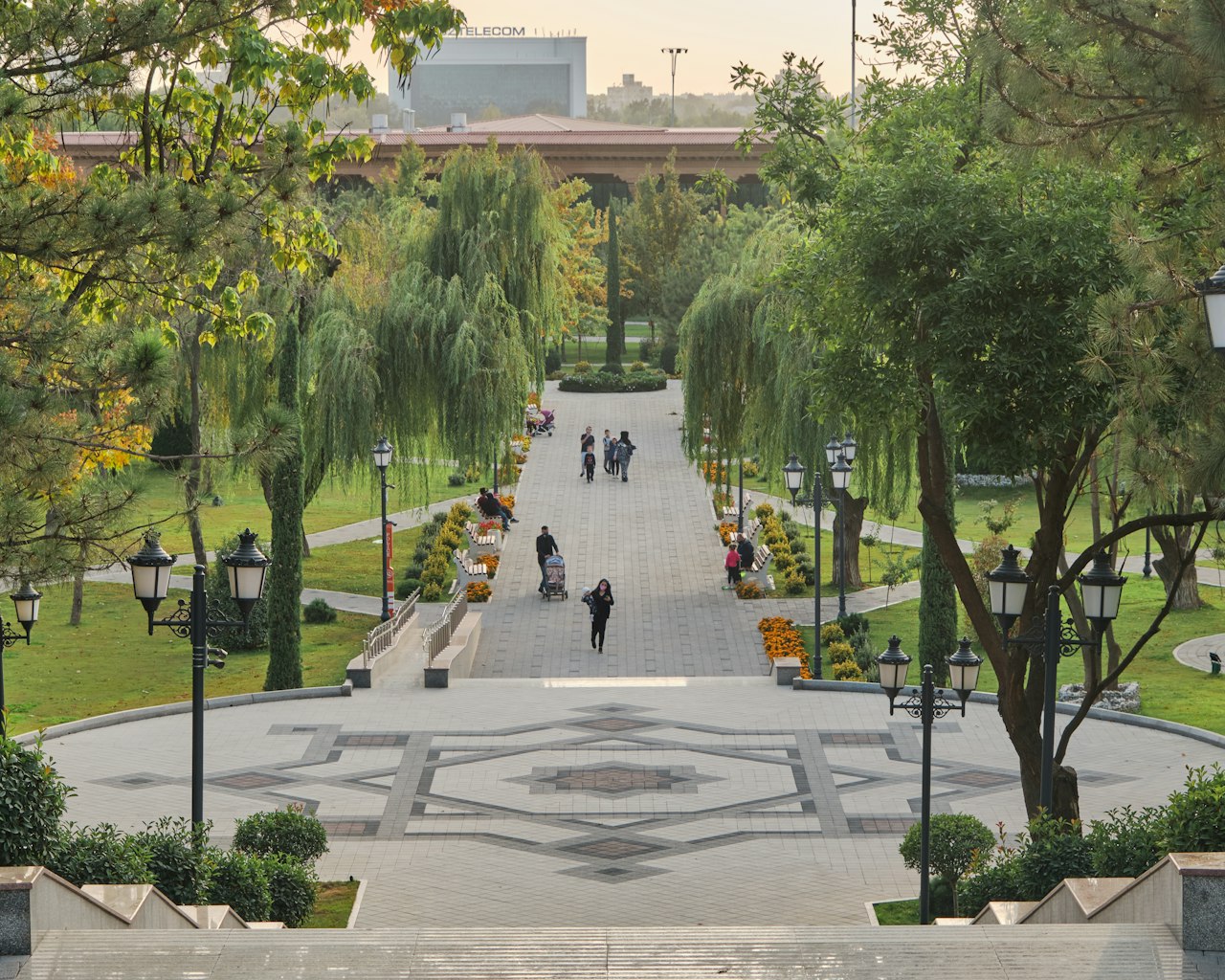
The park is generally busiest in the late afternoon and on weekends, while mornings are calmer. Many visitors stay 20 to 40 minutes, though people who want a longer walk or a quiet break may spend more time. It is close to central Tashkent, so it often fits naturally with nearby museums, squares, and other city-center stops.
Mustaqillik Square
Mustaqillik Square is one of Tashkent's main ceremonial spaces, laid out with wide paved areas, fountains, gardens, and official monuments. From the front, you see a very ordered public space rather than a market or a casual plaza. The detail that stands out is the contrast between the formal geometry of the square and the soft planting around it, which gives the space a calm, deliberate feel.
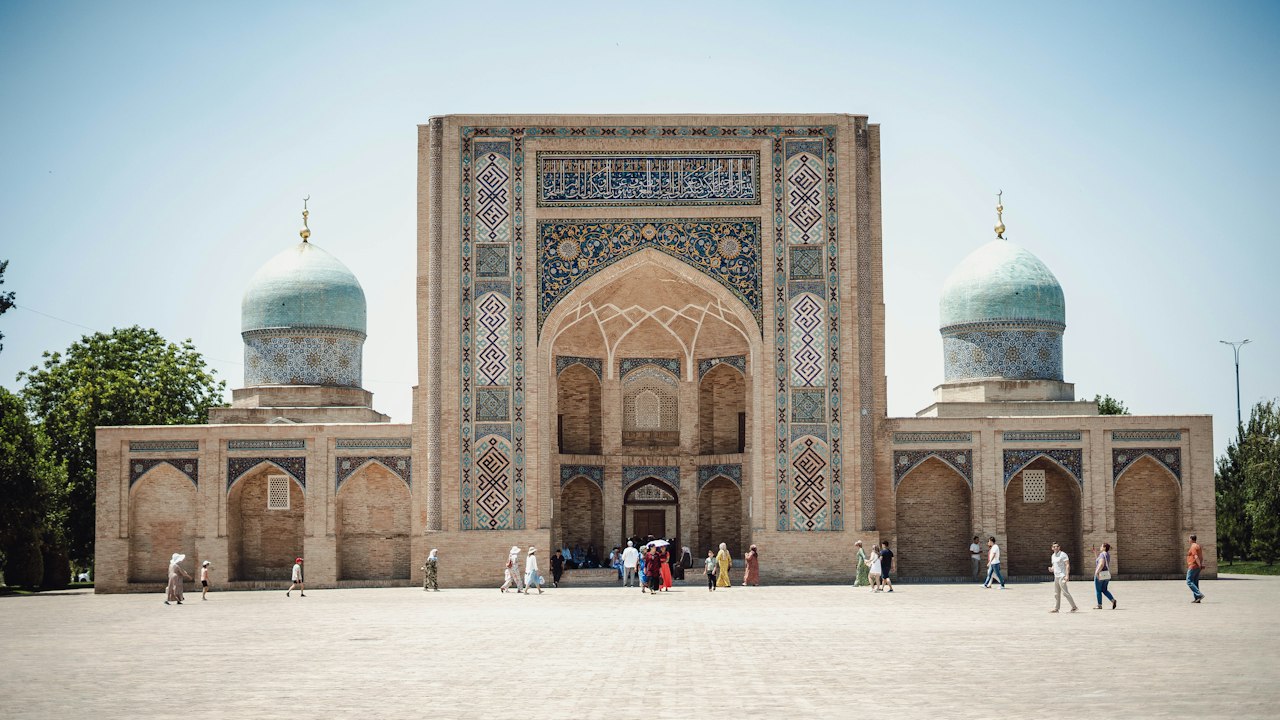
It is usually more active in the late afternoon and on weekends, while parts of the day can feel very quiet because of the open scale. A typical visit may take 20 to 30 minutes, especially if you are walking through at a relaxed pace. It connects easily with other central government and memorial areas, so it is often visited together with nearby parks and squares.
Broadway Alley (Sailgoh Street)
Broadway Alley, or Sailgoh Street, is a pedestrian street known for its open-air atmosphere, street art, souvenir stalls, and casual performers. What you actually see is a long walkable strip rather than a single landmark, with people browsing, sketching, or stopping for portraits. The small detail worth noticing is the mix of everyday city life and public art, where the street itself becomes the attraction.
It tends to be liveliest in the evening and on weekends, when more people come out to stroll, sell art, or sit along the way. A visit often lasts 20 to 45 minutes, depending on whether you are just walking through or lingering to look at the stalls and drawings. It is close to other central Tashkent sights, so people often pass through it between a square, a park, or a museum.
Tashkent Metro Art Stations
Tashkent's metro stations are known for their decorated interiors, with patterned ceilings, chandeliers, mosaics, marble, and distinctive Soviet-era design. What you actually see varies by station, but the common feature is that each platform feels more like a public hall than a plain transit stop. The detail worth noticing is the craftsmanship in the materials and lighting, which changes how the station feels from one line to another.
Stations are naturally busiest during commute times and quieter between peak hours, though some are busy throughout the day because people ride them for sightseeing as well as travel. A stop to look around one or two stations often takes 20 to 30 minutes, depending on how much you want to photograph or move between lines. They connect the city very efficiently, so they are easiest to combine with central places such as Amir Temur Square, Broadway Alley, or Chorsu Bazaar.
Minor Mosque
Minor Mosque is a modern white mosque in Tashkent with clean lines, pale marble, and a bright blue dome. From the front, what you see is an orderly, reflective building set beside water and landscaped paths, rather than an old dense historic complex. The detail many people notice first is the brightness of the stone and the way the mosque's symmetry is emphasized from a distance.
It can be quiet outside prayer times and busier around prayer hours, especially with worshippers and visitors arriving together. Many people spend 15 to 30 minutes here, enough to walk around the exterior and look at the setting by the canal. It is not far from other parts of central Tashkent, so it is often visited as part of a short loop rather than by itself.
Hazrati Imam Complex
Hazrati Imam Complex is a religious and historical ensemble that includes mosques, madrasas, courtyards, and important Islamic heritage buildings. What you actually see is a calm series of tiled facades, domes, arches, and open courtyards rather than a single building. The detail worth noticing is the layered atmosphere: it is both an active spiritual place and a site where manuscripts, architecture, and everyday visitors all share the same space.
It is generally busier during prayer times and with tour groups in the middle of the day, while early morning can be quieter. People often spend 30 to 60 minutes here, especially if they enter more than one part of the complex. It connects naturally with nearby old-city areas, so many visitors pair it with Chorsu Bazaar or a wider walk through historic Tashkent.
Chorsu Bazaar
Chorsu Bazaar is one of Tashkent's main markets, with a large blue-domed hall and surrounding open stalls selling produce, bread, spices, meat, textiles, and household goods. What you actually see is a working market, not a staged attraction: sellers weighing goods, buyers comparing prices, and constant movement through the aisles. The detail that stands out is the rhythm of the place, especially the smell, color, and sound around the food sections and the bread stalls.
It is busiest in the morning and around midday, when the selection is active and many locals come to shop, while later in the day it can feel less crowded. A visit often takes 30 to 60 minutes, longer if you want to browse or eat nearby. It sits in the old city, so it fits well with Hazrati Imam Complex and nearby streets if you are moving through that part of Tashkent.
A Free Self-Guided Walking Route Through Tashkent
The route: Tashkent
This is a sensible central-to-old-town route of roughly 7–9 km on foot if combined with short metro rides; late afternoon into evening is the best time for cooler temperatures and livelier street scenes.
- Amir Temur Square
- Broadway Alley (Sailgoh Street)
- Mustaqillik Square
- Hazrati Imam Complex
- Chorsu Bazaar
- Tashkent Metro Art Stations
Paste it into the agent chat in Votura and it will build the map and the audio guide.
Want the Stories Behind Each Stop?
Everything above is free to do on your own. If you want the history and local context narrated as you walk, Votura's AI audio tours of Tashkent guide you stop by stop — at your own pace, offline if you like.
Frequently Asked Questions
What are the best free things to do in Tashkent?
The post highlights Amir Temur Square, Alisher Navoiy National Park, Mustaqillik Square, Broadway Alley, Tashkent Metro art stations, and the exterior of Minor Mosque. These places can all be enjoyed without paying an entrance fee, mostly by walking and sightseeing from public spaces.
Where can I go for a free walking tour in central Tashkent?
A good self-guided walk can include Amir Temur Square, Broadway Alley, Mustaqillik Square, and nearby metro stations known for their architecture. The post describes these as central sights that connect well on foot and work well for a slow, curious stroll.
How can I see Tashkent Metro art stations for free?
The article says that riding the metro is inexpensive and that station-hopping becomes a free public-space experience once you are inside the system. Several central stations are noted for their mosaics, chandeliers, marble finishes, and decorative architecture.
When is the best time to visit Mustaqillik Square or Minor Mosque?
The post specifically recommends Mustaqillik Square as especially worth seeing during an evening walk. Minor Mosque is described as particularly photogenic in late afternoon light, when the marble glows.
Why is Tashkent good for budget travelers?
Tashkent is described as a city that rewards slow walking, with many of its best sights visible from the street or public spaces. Broad boulevards, parks, squares, markets, and metro stations give travelers plenty to experience without spending money.
Sources
- Tashkent Modernist Architecture. Modernity and Tradition in Central Asia — UNESCO World Heritage Centrewhc.unesco.org
- Visit Tashkent — Travel & Tourism Hub for Uzbekistan's Capital Cityvisittashkent.uz
- Attractions — Government Portal of the Republic of Uzbekistangov.uz
- Uzbekistan Travel — Tashkentuzbekistan.travel
Hear this city out loud
Votura turns the places in this guide into a self-guided audio tour you can follow at your own pace.