Hidden Gems of Verona: A Self-Guided Audio Tour
Go beyond the tourist trail in Verona. Discover secret courtyards, local favourites, and lesser-known landmarks with Votura's AI-powered audio tours.

Verona is more than Romeo and Juliet balconies and Roman amphitheaters—it’s a city of quiet courtyards, tucked-away churches, and narrow lanes where local life still sets the pace. This self-guided audio tour leads you beyond the famous sights to hidden corners like artisan workshops, shady riverside paths, and overlooked piazzas with stories most visitors never hear.
What Makes Verona a Hidden Gem Hunter's Paradise
Designed for curious travelers, the route can take you from secret viewpoints on the hills to neighborhood trattorias and unexpected fragments of Verona’s past that sit just a few steps from the crowds. Votura AI generates audio tours matched to the traveller’s time, transport preference, and chosen theme, so you can explore Verona at your own rhythm and discover the city’s lesser-known side.
Verona Resonance: A 2-Day Music Festival Heritage Walk
This route is a city walk stitched together from Verona’s performance spaces, music institutions, and the streets that connect them. It runs from the Arena di Verona and Piazza Bra through the civic and cultural core, then across to Castelvecchio, the conservatory site at Casa Boggian, and onward into the older riverfront quarter by Ponte Pietra and the Teatro Romano. It works as a full day on foot because the distance is manageable, but the stops reward unhurried pauses for façades, squares, and the places where music has been organized, performed, and remembered. What makes it worth the time is the way Verona’s stage history and everyday street life overlap instead of sitting in separate districts.
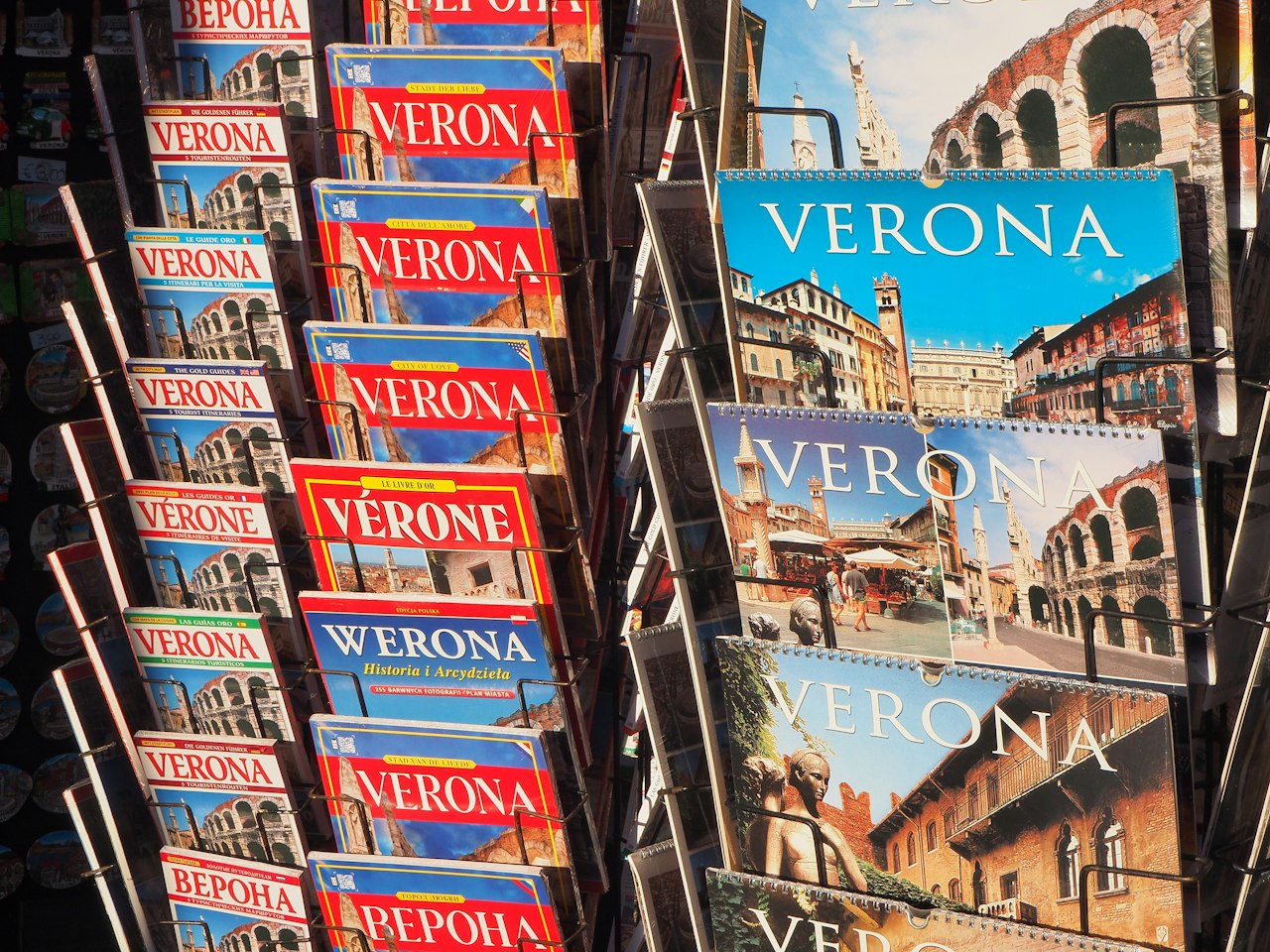
The route begins at the Arena di Verona, where the outer stone ring and arched openings still dominate Piazza Bra and set the tone immediately. In Piazza Bra, the wide pavement and the constant movement around the arena give a sense of Verona as a public, lived-in performance space rather than a sealed monument. At the Accademia Filarmonica di Verona, the interest is in the institution itself and the sense of a long musical tradition concentrated behind a quieter façade. Teatro Filarmonico follows with a more formal theater frontage, a good contrast to the open scale of the Arena. Castelvecchio breaks the sequence with its fortress walls and bridge, and then Casa Boggian, home to the Conservatorio Statale di Musica F.E. Dall'Abaco Succursale, adds a more academic note to the walk. The final stretch past Casa di Giulietta, Piazza delle Erbe, Ponte Pietra, and Teatro Romano shifts into narrower streets and older stonework, where the balcony crowd near Casa di Giulietta, the market-filled square, the river view from Ponte Pietra, and the Roman ruin each leave a different trace of the city’s layered past.
The route
One long day on foot, best walked from the Arena toward Teatro Romano.
- Arena di Verona
- Piazza Bra
- Accademia Filarmonica di Verona
- Teatro Filarmonico
- Castelvecchio
- Conservatorio Statale di Musica F.E. Dall'Abaco Succursale Casa Boggian
- Casa di Giulietta
- Piazza delle Erbe
- Ponte Pietra
- Teatro Romano
Paste it into the agent chat in Votura and it will build the map and the audio guide.
Before you go
Start in the morning so there is time to linger in Piazza Bra, cross the center before the busiest midday crowds, and still reach the river and Teatro Romano without rushing. The walking is moderate rather than strenuous, but the day adds up because the route threads through busy streets, squares, and a few slower detours around the historic center. The most crowded stretches are usually around the Arena, Casa di Giulietta, and Piazza delle Erbe; some interiors on the route may close or have limited access without warning, especially outside performance or teaching times. Comfortable shoes, water, and a bit of patience for cobbles and shared pedestrian space make the walk easier.
Verona Festival Heritage Walk: Arenas, Composers & Jazz-Folk Trails
This walk links Verona’s main performance spaces with the streets and squares that frame them, moving from the Arena di Verona through the center and over to the Roman quarter by the Adige. It is less a sightseeing loop than a path through the city’s musical and theatrical layers: Roman remains, civic squares, scholarly institutions, opera houses, and the older hillside stage by Teatro Romano. The route earns its time because the distance is short enough to walk comfortably, but the pauses add up into a clear picture of how Verona’s festival life sits inside its historic core.
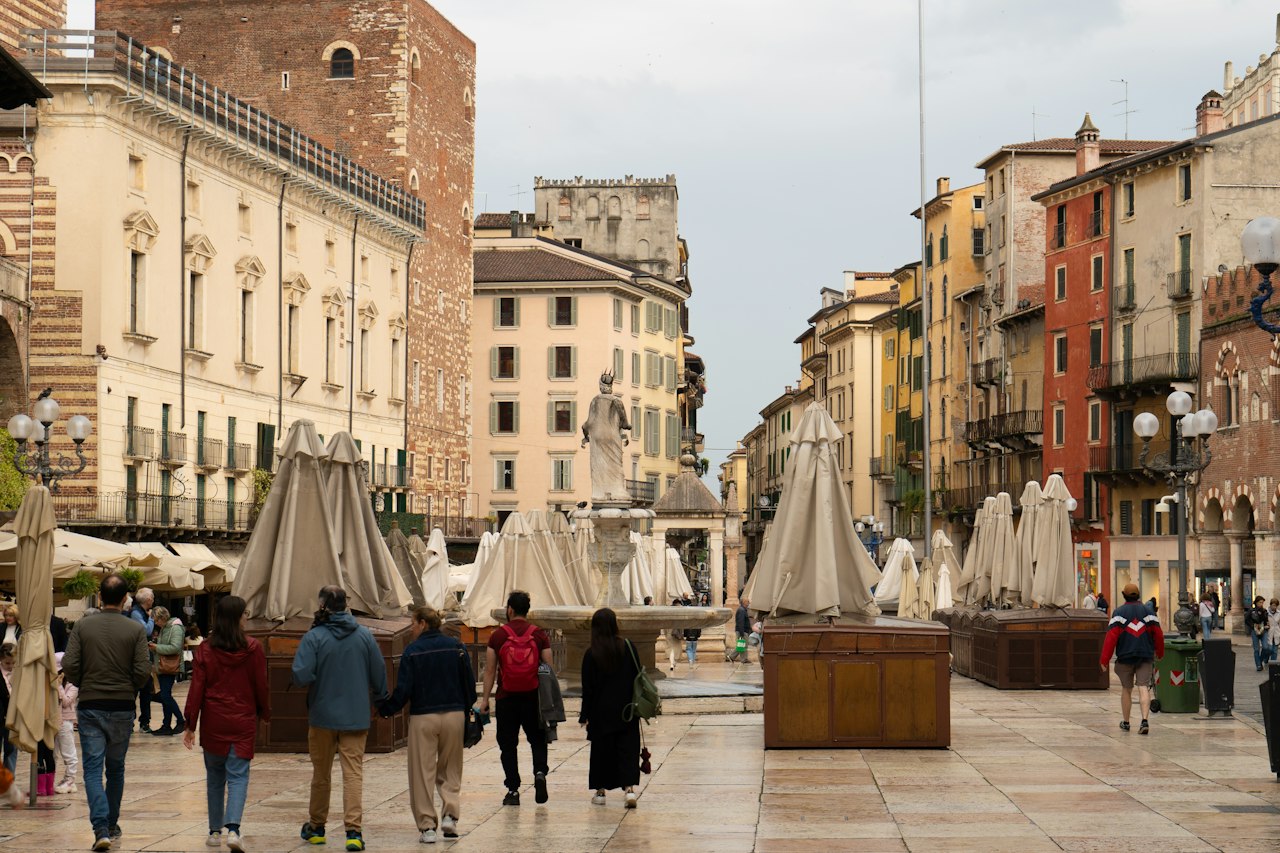
The Arena di Verona comes first, and its stone arcades set the tone immediately; the scale is still the main event, especially when the piazza opens out around it. Piazza Bra follows with its broad sweep, café fronts, and the constant movement around the arena walls, then the Museo Lapidario Maffeiano gives a quieter turn with carved stones and inscriptions that slow the pace. At the Accademia Filarmonica di Verona, the interest is in the setting as much as the collection, because the institution’s long musical history is part of the address; nearby, the Teatro Filarmonico shows the more formal face of that tradition with its restrained façade. Piazza delle Erbe and Piazza dei Signori bring the walk back into the oldest civic center, where the painted facades, market activity, and stonework around the squares are worth watching more than any single monument. Casa di Giulietta is crowded and compact by comparison, with the balcony and courtyard drawing the eye, before Ponte Pietra opens the route toward the river and the Roman side of the city; from there, Teatro Romano, set into the slope, makes the archaeological layer obvious, and Tomba di Giulietta ends the walk with a quieter, more restrained site that feels separated from the busier legend around it.
The route
Best walked in one day, from Arena di Verona toward Tomba di Giulietta.
- Arena di Verona
- Piazza Bra
- Museo Lapidario Maffeiano
- Accademia Filarmonica di Verona
- Teatro Filarmonico
- Piazza delle Erbe
- Piazza dei Signori
- Casa di Giulietta
- Ponte Pietra
- Teatro Romano
- Tomba di Giulietta
Paste it into the agent chat in Votura and it will build the map and the audio guide.
Before you go
Starting in the morning works best, when the center is still moving at an easier pace and the day leaves room for indoor stops and a longer break around lunch. The walk itself is straightforward but long, with uneven stone surfaces in places, short climbs near the river and Teatro Romano, and enough pauses that the total day stretches out. Piazza Bra, Piazza delle Erbe, Piazza dei Signori, and Casa di Giulietta tend to be the busiest parts of the route, while museum and venue opening hours can vary, so it is better not to plan tightly around them. Comfortable shoes, water, and a little flexibility for detours or closed rooms make the day easier.
Verona Soundscapes: 2-Day Music Festival Heritage Walk
This is a two-day walk through Verona’s concert and performance landscape, stitched together by Roman remains, civic squares, and the places where music has long been staged, heard, and remembered. It starts at Arena di Verona and works outward through Piazza Bra, the old center around Piazza delle Erbe and Piazza dei Signori, then crosses to the Roman theatre side and finishes west of the Adige at Piazza San Zeno. The route earns its time because it links the city’s best-known landmark with quieter layers of musical and theatrical history that are easy to miss if you stay on the usual sightseeing loop.
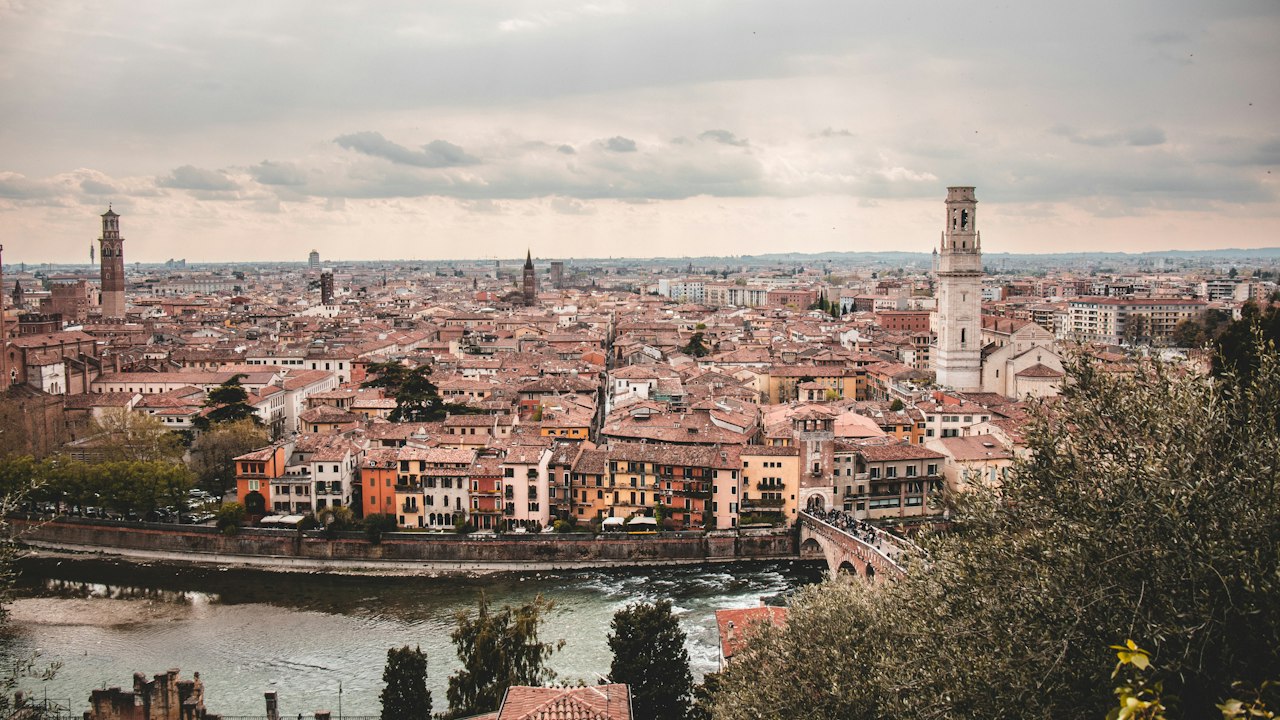
At Arena di Verona, the first thing to notice is the scale of the pink stone outer wall still standing around the amphitheatre. Piazza Bra opens immediately outside it, and the long edge of the square lets you read the Arena against the cafés and traffic of daily Verona. Via Teatro Filarmonico shifts the focus to the city’s theatre tradition, with the street leading toward the area associated with the Teatro Filarmonico and the old performance quarter. Arco dei Gavi and Museo di Castelvecchio bring the Roman and medieval layers close together; the arch stands like a fragment of a vanished road, while the castle museum’s bridge and brickwork give the walk a stronger defensive, less theatrical tone. Piazza delle Erbe and Piazza dei Signori are the busiest historic rooms on the route, with painted façades, the market life of the former forum, and the more formal, enclosed feeling of the Signori square. Casa di Giulietta is a short change of pace, with the courtyard crowd gathered around the balcony and the worn stone of the passageway making it clear how much of the site is modern ritual rather than old domestic life. Teatro Romano rises more steeply, with the steps, excavated seating, and river backdrop making the performance connection literal again; the nearby Museo degli Affreschi "G.B. Cavalcaselle" is quieter, and the frescoes feel especially close at hand after the open-air ruin. Piazza San Zeno finishes the walk in a broad, calmer square where the basilica façade and the wide paving give the day a more settled ending.
The route
Allow two days; walk from the Arena toward Piazza San Zeno, with the centre first and the Roman theatre side later.
- Arena di Verona
- Piazza Bra
- Via Teatro Filarmonico
- Arco dei Gavi
- Museo di Castelvecchio
- Piazza delle Erbe
- Piazza dei Signori
- Casa di Giulietta
- Teatro Romano
- Museo degli Affreschi "G.B. Cavalcaselle"
- Piazza San Zeno
Paste it into the agent chat in Votura and it will build the map and the audio guide.
Before you go
Starting in the morning works best, especially on the first day, because the central squares and the Arena area are easier to read before the afternoon crowds build. The walking itself is moderate rather than hard: the route is mostly flat, but there are long stretches of cobbles and a few uneven surfaces around Castelvecchio and the Teatro Romano. Piazza Bra, Piazza delle Erbe, Piazza dei Signori, and Casa di Giulietta tend to be the busiest; parts of museums and theatres can have separate opening days or reduced access, so it is worth checking the current status before setting out. Comfortable shoes, water, and a bit of flexibility for pauses in cafés or churches make the day simpler.
Verona Festival Echoes: A Two-Day Music Heritage Walk
This route is a two-day walk through Verona’s performance history, beginning at the Roman Arena and ending at the Teatro Romano. It threads together theatres, squares, civic buildings, and literary landmarks rather than following a single straight line, so the walk feels like a slow crossing of the city’s public life. The connection between stops is less about one continuous musical story than about seeing where festivals, concerts, and civic gatherings have repeatedly used Verona’s spaces. It earns the time because the route keeps shifting from monumental stone to narrow lanes and open piazzas, and those shifts are exactly what gives Verona its rhythm.
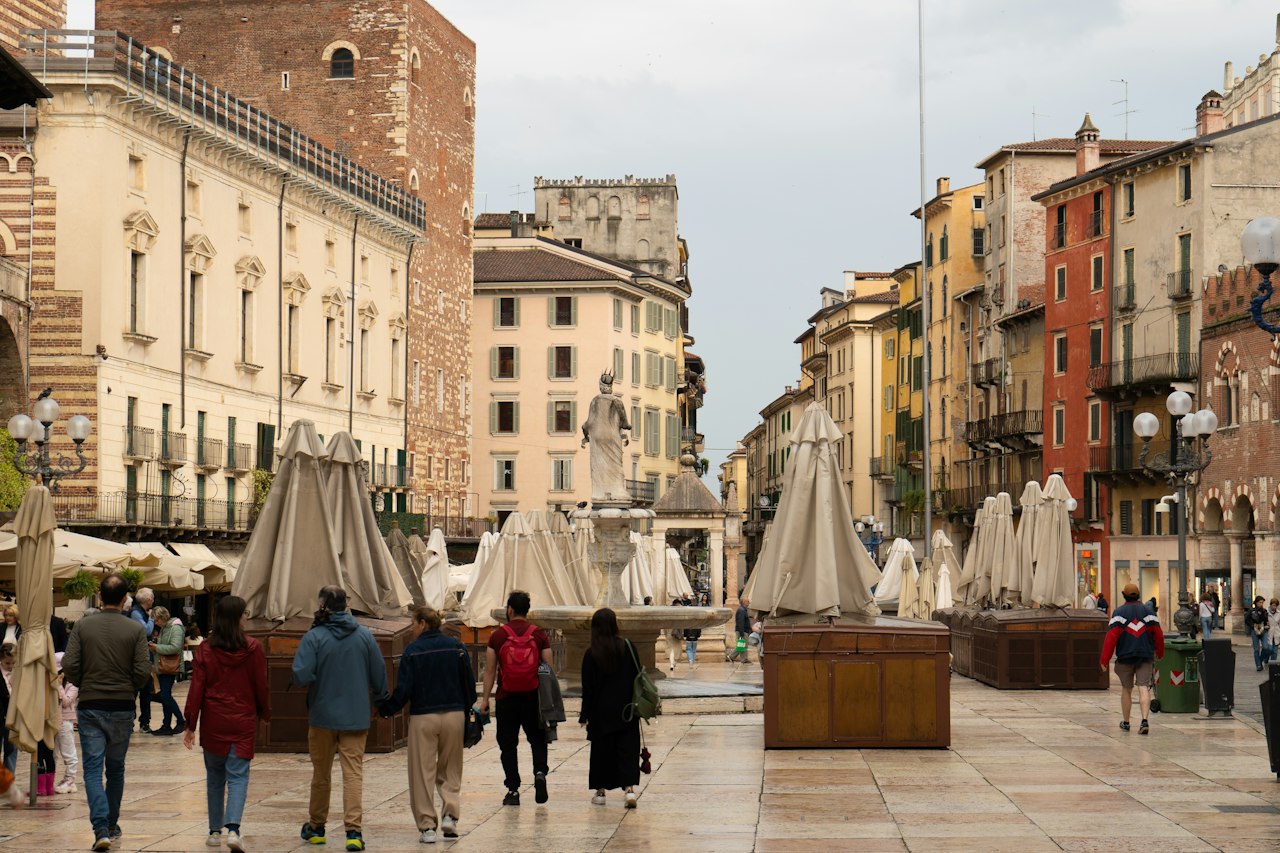
The Arena di Verona sets the tone immediately: the worn stone seats and huge oval interior still make sense as a place for voices to carry. At the Teatro Filarmonico, the exterior is restrained, but the building’s role as one of the city’s main music houses is the point, and it sits in sharp contrast to the Arena’s antiquity. Castelvecchio breaks the mood with brick walls and the bridge over the Adige; the most memorable detail is how much of the complex feels defensive rather than theatrical. In Piazza delle Erbe, the frescoed façades and market stalls make a noisy pause in the route, while Palazzo della Ragione and its tower bring the civic scale back into view. Piazza dei Signori feels more enclosed and formal, then Casa di Giulietta shifts the walk into a more literary register before the route turns toward the quieter rooms around Biblioteca Civica and the church-lined Piazza S. Anastasia. Piazza Duomo is calmer still, with the cathedral complex giving the day a more reflective pause, and the final approach to Teatro Romano, with the hillside behind it and the river nearby, closes the walk in a place that still feels built for performance.
The route
About two days on foot, best walked from the Arena di Verona toward Teatro Romano.
- Arena di Verona
- Teatro Filarmonico
- Castelvecchio
- Piazza delle Erbe
- Palazzo della Ragione
- Piazza dei Signori
- Casa di Giulietta
- Biblioteca Civica
- Piazza S. Anastasia
- Piazza Duomo
- Teatro Romano
Paste it into the agent chat in Votura and it will build the map and the audio guide.
Before you go
Starting early helps at the Arena and again in the late afternoon, when the squares feel less crowded and the light is better on the stone and façades. The walking itself is moderate rather than difficult, but the route includes uneven pavements, some gentle rises near the river and Teatro Romano, and enough stops that it works better when spread over two days. Piazza delle Erbe, Piazza dei Signori, Casa di Giulietta, and the Arena area tend to be the busiest parts of the route, while museums and churches may have limited access or be closed at certain times. Comfortable shoes, water, and a little flexibility for detours or pauses are useful, since the best part of this walk is the time spent standing still in the places between the music references.
Verona's Quiet Revolutions: A 5-Stop Women's History Walk
This walk is a day-long sweep through central Verona and across the Adige into Veronetta, following places tied to women’s political, cultural, and working lives rather than the usual Roman-and-Opera itinerary. It begins in Piazza Bra, moves to Biblioteca Civica, continues through Piazza Isolo and over Ponte Pietra, then finishes in Veronetta. The route earns its time because the shifts in the city are visible on foot: formal squares, river crossings, and the denser streets east of the old center all carry different parts of the story.
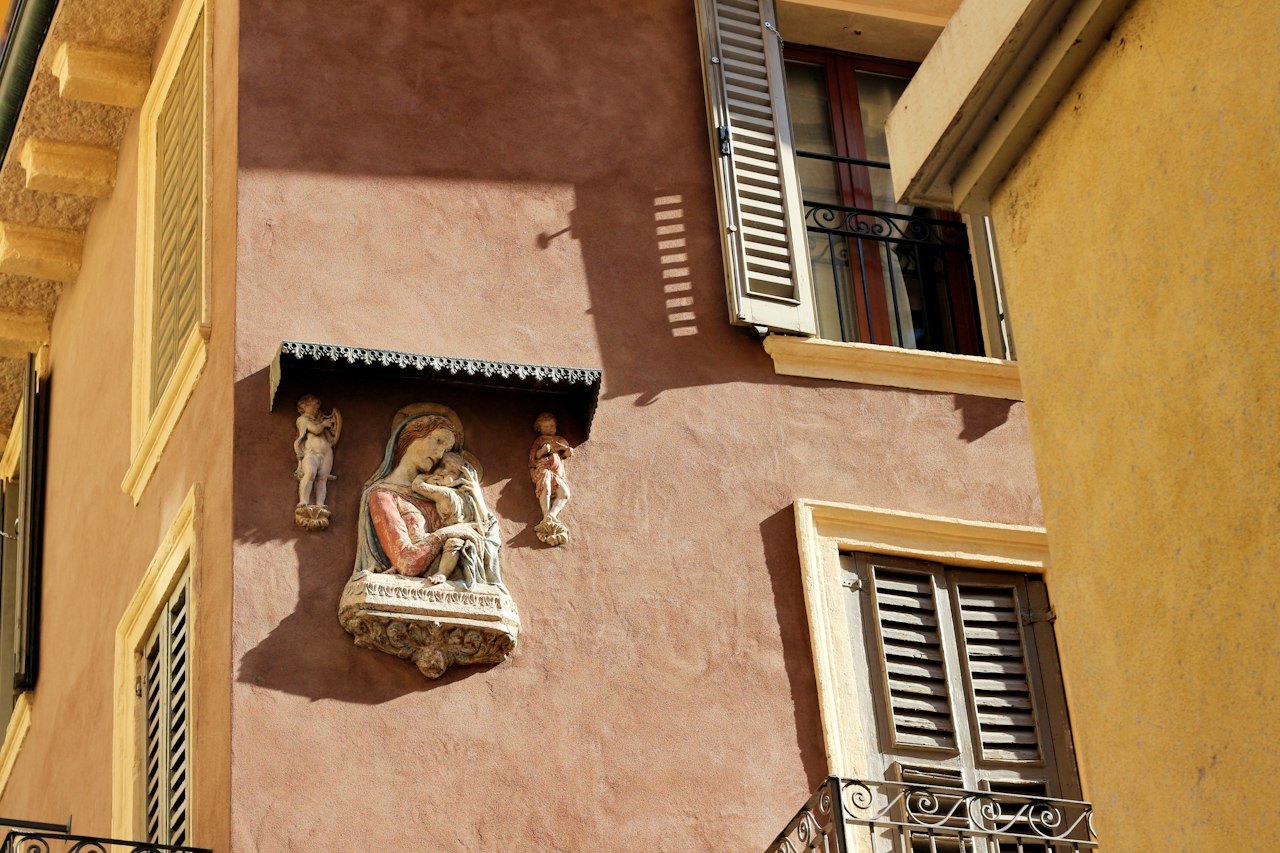
In Piazza Bra, the scale changes immediately: the arena dominates, but the square also feels like a civic stage where rallies and public speech would have been visible and audible. At Biblioteca Civica, the interest is inside and around the building itself, where the library’s calm rooms and archive atmosphere fit a history of meetings, reading circles, and organizing. Piazza Isolo feels more residential and less ceremonial; the water, the bridge edges, and the older masonry give it a quieter, workaday character that suits the route’s attention to lived experience. Ponte Pietra is the most direct visual break in the walk, with the river below and the layered stonework reminding you how often Verona has had to rebuild and cross itself. Veronetta feels denser and more lived-in than the center, with narrower streets, student life, and small-scale commerce that make the final stretch feel grounded rather than monumental.
The route
A long day on foot: walk it from Piazza Bra toward Veronetta, keeping the river crossing at Ponte Pietra near the end.
- Piazza Bra
- Biblioteca Civica
- Piazza Isolo
- Ponte Pietra
- Veronetta
Paste it into the agent chat in Votura and it will build the map and the audio guide.
Before you go
Starting in the morning makes sense, because the route is long enough that you benefit from daylight across both banks of the Adige and from arriving at Veronetta before late-afternoon fatigue sets in. The walking itself is moderate, but the day is long and includes pauses; the crossings and some uneven paving around the river and older streets make comfortable shoes important. Piazza Bra is busy almost whenever the city is awake, and Ponte Pietra can feel crowded in good weather; Biblioteca Civica may also have limited access depending on the day or season, so it is worth checking before setting out. Water, a layer for shade or wind near the river, and time for a café break help more than rushing does.
How to Start Your Verona Tour with Votura
- Open Votura and tap Explore
- Search for Verona or let the app detect your location
- Browse available tours or tap Generate to create a custom tour
- Hit Play and follow the audio guide stop by stop
All tours include audio narration, a route map, and estimated stop times. Download any tour for offline access before you travel.
Sources
- VisitVerona.it | DMO Verona Official Tourist Board sitevisitverona.it
- City of Verona — UNESCO World Heritage Centrewhc.unesco.org
Frequently Asked Questions
What is a self-guided audio tour of Verona focused on hidden gems?
It is a route that takes you beyond Verona’s famous sights to quieter courtyards, tucked-away churches, narrow lanes, artisan workshops, and overlooked piazzas. The tour is designed for curious travelers who want to discover the city’s lesser-known side at their own pace.
Where does the Verona Resonance music heritage walk start?
The route begins at the Arena di Verona in Piazza Bra. From there, it moves through Verona’s civic and cultural core before continuing toward Castelvecchio, Casa Boggian, Ponte Pietra, and the Teatro Romano.
How long does the Verona Resonance route take?
The post says the route works as a full day on foot because the distance is manageable. It is also described as a 2-day music festival heritage walk, so it can be experienced with unhurried pauses or spread out more slowly.
Can I customize a Votura AI audio tour for Verona?
Yes. Votura AI generates audio tours matched to the traveler’s time, transport preference, and chosen theme. That means you can explore Verona at your own rhythm.
Why is Verona described as a hidden gem hunter’s paradise?
Because the city offers more than the major tourist landmarks: it has secret viewpoints, neighborhood trattorias, riverside paths, and fragments of history close to the crowds. The tour highlights how everyday local life and historic places overlap throughout the city.
Hear this city out loud
Votura turns the places in this guide into a self-guided audio tour you can follow at your own pace.