Milan Self-Guided Tour: A Route You Can Start Today
Take a self-guided tour of Milan on your own schedule — Votura's AI narrates each stop as you walk, with no group, no fixed start time, and no guide to wait on.

Milan works beautifully as a self-guided city because its highlights are spread across walkable pockets, tram stops, and piazzas that invite you to pause on your own terms. You can step into the Duomo square, wander toward the Galleria, then detour into quieter streets for a coffee without worrying about missing a group or racing a clock.
Why Go Self-Guided in Milan
That freedom is the point: no fixed schedule, no keeping pace with strangers, and no need to book weeks ahead just to see the city properly. With Votura AI, you can generate audio tours matched to your available time, preferred transport, and chosen theme, so your route fits the day you actually have.
Milan Art & History Walking Odyssey
This walk threads together a compact slice of central Milan, moving from the southwestern edge of the old city toward the Duomo and the Galleria. It starts at Santa Maria delle Grazie, crosses to the Castello Sforzesco area, then follows a path through the heart of the city to the cathedral square. It earns the time because it links Milan’s major works of art, civic power, and public space in a way that makes the city’s history feel geographically real rather than abstract.
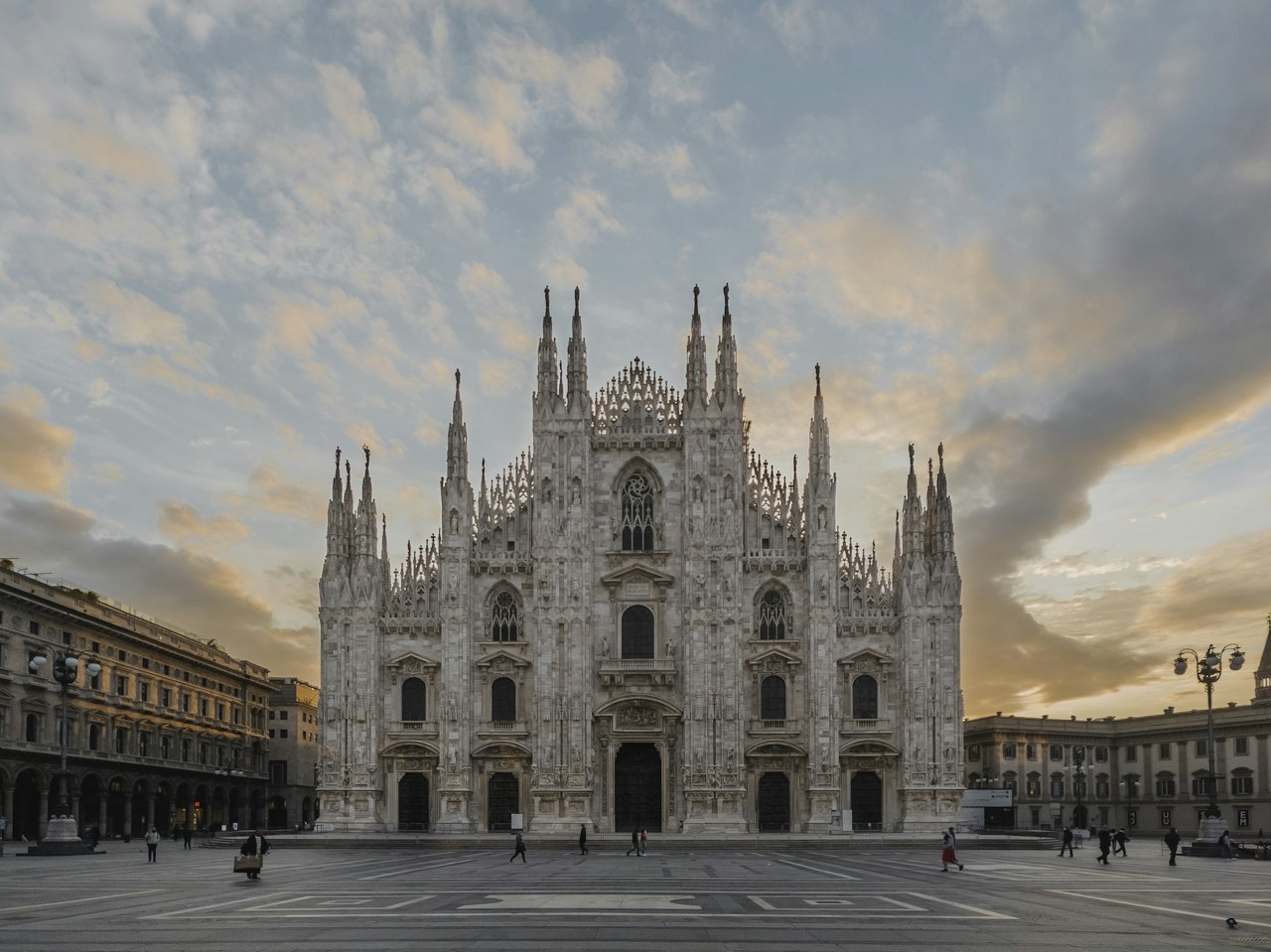
At Santa Maria delle Grazie, the main thing to notice is the church’s calm brick exterior before the traffic and crowds pull you back into the street. Musei Castello Sforzesco comes next, where the castle’s red brick walls and towers are the point as much as the museums inside. Teatro Alla Scala is all about the square and façade rather than the stage itself, with the nearby statue of Leonardo da Vinci anchoring the scene. Museo del Novecento gives a different rhythm, and the view back toward the Duomo from its upper levels is one of the clearest ways to understand the route. Milan Cathedral rises piece by piece as you approach, and the marble lacework on the façade is worth slowing down for before you step into the open space of Piazza del Duomo. The final stretch through Galleria Vittorio Emanuele II is a change from stone to iron and glass, with the patterned floor and domed crossing making the passage feel like an interior street.
The route
Allow a full day and walk it from Santa Maria delle Grazie toward the Duomo and Galleria Vittorio Emanuele II.
- Santa Maria delle Grazie
- Musei Castello Sforzesco
- Teatro Alla Scala
- Museo del Novecento
- Milan Cathedral (Duomo di Milano)
- Galleria Vittorio Emanuele II
Paste it into the agent chat in Votura and it will build the map and the audio guide.
Before you go
Starting in the morning helps, both to fit the whole route into a single day and to leave time for any interior visits before the busiest periods. The walking itself is straightforward, mostly flat and urban, but the pace can slow around the Duomo and the Galleria where crowds are heaviest. Museums and churches along the way can have different opening hours or timed entry, so it is worth checking the specific places you plan to enter. Bring comfortable shoes, water, and something for rain or sun, since much of the route is exposed between stops.
Milan Marvels: A Stroll Through History
This walk links Milan’s central monuments in a line that moves from the Duomo area through the shopping arcades and civic squares to Brera, the Sforza Castle, and finally Sant’Ambrogio. It is mostly an urban stroll, with frequent pauses for buildings, courtyards, and museum stops rather than long stretches of parkland. The route works because it shows how Milan changes from Gothic stone and glittering glass to Renaissance courtyards and quieter ecclesiastical streets. Walking it takes a half day if you actually stop inside a few places.
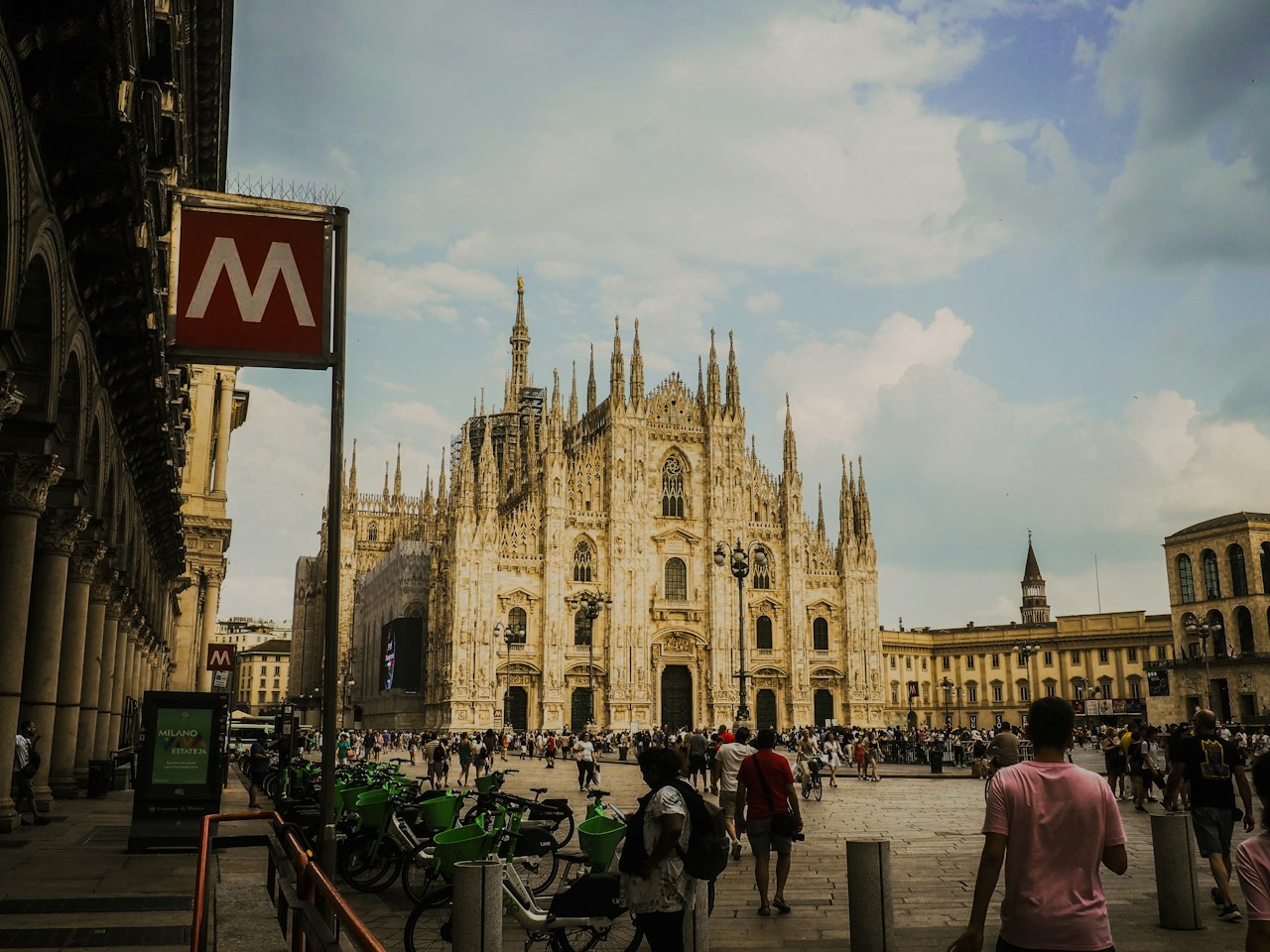
The route begins at the Duomo di Milano, where the white marble facade, spires, and crowded piazza give you the city’s most concentrated first impression. From there, the Galleria Vittorio Emanuele II opens in a grand iron-and-glass cross, and it is worth noticing the mosaics underfoot and the domed crossing overhead before stepping out toward Piazza della Scala. In Piazza della Scala, the square feels more restrained; the theater front and the statue in the middle make a short, formal pause between the commercial center and the older civic streets. Pinacoteca di Brera changes the tone again, with the Brera district’s narrower lanes and the museum complex’s calm courtyard atmosphere before the walk continues west. Musei Castello Sforzesco arrives in a very different scale, with the brick fortress, towers, and broad forecourt making the approach feel almost defensive, and the straight axis through the entrance is the detail that stays with you. The walk ends at Basilica di Sant'Ambrogio, where the Romanesque brickwork, twin towers, and enclosed courtyard give the route a quieter, older ending than the center where it began.
The route
About a half day, best walked from the Duomo toward Sant'Ambrogio.
- Duomo di Milano Chiesa
- Galleria Vittorio Emanuele II
- Piazza della Scala
- Pinacoteca di Brera
- Musei Castello Sforzesco
- Basilica di Sant'Ambrogio
Paste it into the agent chat in Votura and it will build the map and the audio guide.
Before you go
Starting in the morning helps avoid the heaviest crowds around the Duomo and Galleria Vittorio Emanuele II, and it leaves more time for any interior visits before closing times become an issue. The walking itself is straightforward and mostly flat, though the pace can slow in the densest central streets and around museum entrances. The busiest spots are usually the Duomo area, the Galleria, and the approach to Castello Sforzesco; parts of the museums and churches may have separate opening rules or be closed to visitors during services or on certain days. Comfortable shoes, water, and a light layer are sensible, since you will be alternating between bright open squares and cooler interiors.
Milan in Silk and Stone: The Elite Geography of Power, Fashion, and Access
This route is a two-day walk through Milan’s old centers of power: the commercial arcade, the opera district, the fashion streets, the Brera quarter, and the civic institutions around Porta Venezia. It starts under the glass roof of the Galleria Vittorio Emanuele II and moves outward through Piazza della Scala, Via Monte Napoleone, Via della Spiga, and the gardens and museums east of the center before ending at Casa Milan in the northwest. The sequence makes sense on foot because it follows how elite Milan expanded from courtly and bourgeois prestige to fashion, culture, and modern corporate identity. It earns the time because the distance between one address and the next is part of the story: each stop changes the social code without ever leaving the city’s polished surface.
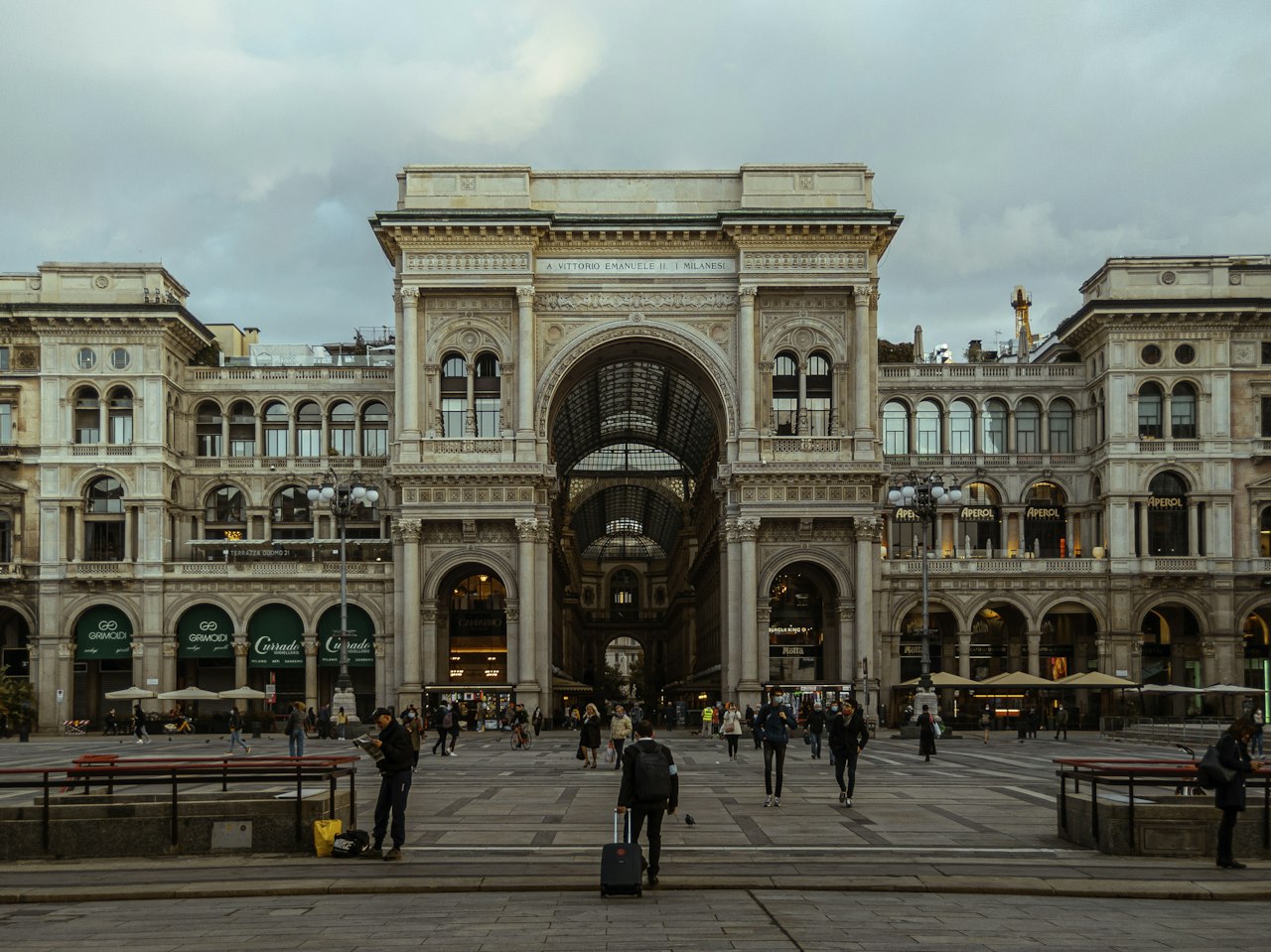
In the Galleria Vittorio Emanuele II, the mosaics, iron-and-glass vaulting, and the tiled floor under the central octagon do most of the work; it feels like a public interior designed for display. Piazza della Scala opens the scene with the statue of Leonardo and the sober facade of Palazzo Marino opposite La Scala, whose restrained exterior hides the ceremonial weight of the theatre. At Museo Poldi Pezzoli, the sequence of rooms matters as much as the collection, especially the domestic scale and the careful framing of furniture, textiles, and armor. Via Monte Napoleone and then Palazzo Morando turn the walk into a study of frontage: polished shop windows, then a noble house that still reads as an urban residence rather than a museum block. Via della Spiga is quieter and more compressed, and Villa Necchi Campiglio changes the register again with its garden wall, pool, and Art Deco surfaces that feel decisively modern beside the older palazzi. Farther east, Museo Civico di Storia Naturale, GAM Galleria d’Arte Moderna di Milano, the Indro Montanelli Gardens, Palazzo Dugnani, and the Pinacoteca di Brera sit in a tight cluster where the route shifts from fashion address to civic culture; in Brera, the courtyard of Palazzo di Brera and the museum galleries give the walk a more institutional finish before the long final reach to Museo Casa Milan.
The route
Best walked over two days, from the Galleria toward Casa Milan, with Brera and Porta Venezia grouped together.
- Galleria Vittorio Emanuele II
- Piazza della Scala
- La Scala (Teatro alla Scala)
- Museo Poldi Pezzoli
- Via Monte Napoleone
- Palazzo Morando
- Via Della Spiga
- Villa Necchi Campiglio
- Museo Civico di Storia Naturale
- GAM Galleria d'Arte Moderna di Milano
- Indro Montanelli Gardens (Giardini Indro Montanelli)
- Palazzo Dugnani
- Pinacoteca di Brera
- Palazzo di Brera
- Museo Casa Milan
Paste it into the agent chat in Votura and it will build the map and the audio guide.
Before you go
Start early enough to pass the Galleria and Piazza della Scala before the day crowds thicken, then leave the museum-heavy eastern section for the middle of the route when openings line up more naturally. The walking is mostly flat, but the route is long and better handled in two days, especially if you stop inside a few buildings rather than treating it as a straight transit line. The busiest points are the Galleria, Via Monte Napoleone, Brera, and the area around La Scala; some interiors also close one day a week or keep reduced hours, so the route works best with a flexible museum plan. Comfortable shoes, water, and a charged phone are enough for the street portions; a light layer helps because several of the best pauses are in courtyards, galleries, or shaded gardens.
Milan’s Civic Style Circuit: Fashion, Theatres & Postwar Design Heritage (2 Days on Foot)
This route is a two-day walk through central Milan that ties together retail architecture, aristocratic interiors, theatre culture, and the city’s postwar design identity. It runs from the Duomo edge and Via Manzoni through Brera, then west toward Cadorna and the Zona Tortona side at La Triennale and Armani/Silos. The sequence makes sense on foot because each stop leads into the next social layer of the city: public spectacle, private collecting, fashion streets, and then the design institutions that shaped Milan’s modern image. It earns the time because the interest is in the transitions as much as the buildings themselves.
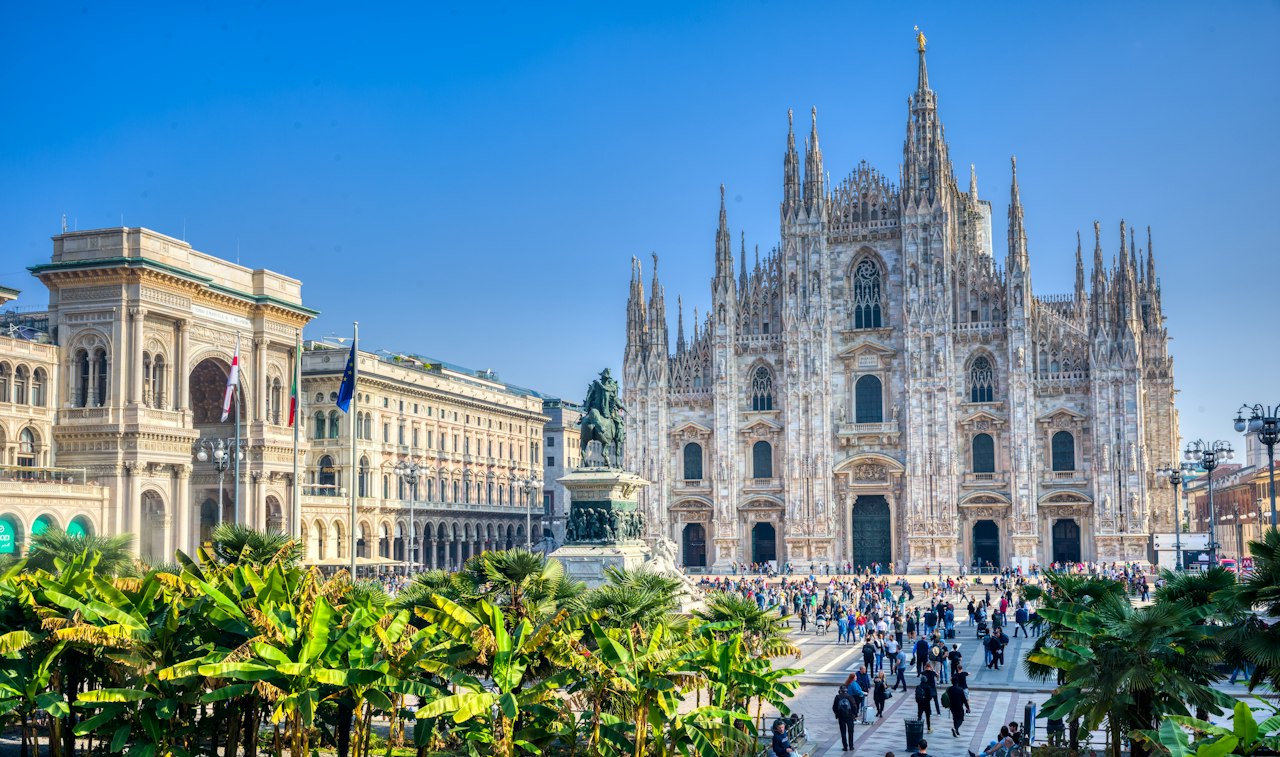
At Galleria Vittorio Emanuele II, the iron-and-glass roof and mosaic floor set the tone immediately, especially the central octagon where the crossing lines of the arcade meet. Museo Teatrale alla Scala follows with portraits, costume drawings, and a close view of how the theatre’s machinery and celebrity culture were built. Casa del Manzoni feels quieter; the point is the sober facade and the literary address rather than ornament, and it anchors the route in civic memory. Museo Poldi Pezzoli is worth lingering in for the density of rooms and the contrast between armor, paintings, and decorative objects that still read like a private collection. Via Monte Napoleone changes the mood completely, with polished windows, controlled storefronts, and the street’s narrow scale making the luxury trade feel compressed rather than grand. In Brera, the Orto Botanico di Brera offers a compact patch of ordered green behind the institutional buildings, then Palazzo di Brera and the Pinacoteca di Brera bring in the weight of academic and pictorial Milan, with the courtyard and galleries doing most of the work. La Triennale di Milano shifts the route into the twentieth century through its setting in Parco Sempione and its relationship to Italian design exhibitions, and Armani/Silos finishes it with the clean industrial shell and the disciplined display logic that define Giorgio Armani’s house.
The route
About 2 days, walking east-to-west from the Duomo side through Brera to La Triennale and Armani/Silos.
- Galleria Vittorio Emanuele II
- Museo Teatrale alla Scala
- Casa del Manzoni
- Museo Poldi Pezzoli
- Via Monte Napoleone
- Brera Botanical Garden (Orto Botanico di Brera)
- Palazzo di Brera
- Pinacoteca di Brera
- La Triennale di Milano
- Armani/Silos
Paste it into the agent chat in Votura and it will build the map and the audio guide.
Before you go
Starting in the morning works best, especially for the Galleria, the museums around the Duomo area, and the Brera institutions before the day gets crowded. The walking is moderate rather than strenuous, but it adds up across two days because the route crosses several dense city districts and invites slow detours. The busiest stretches are around the Galleria, Via Monte Napoleone, and Brera, while some museums and the Orto Botanico di Brera may have limited hours or closure days, so checking current schedules matters. Comfortable shoes and a small water bottle are enough; the route is mostly urban pavement with benches and cafés scattered along the way.
Milan to Lake Como: Duomo to Lakeside Villas – A 2-Day Road Trip
This route strings together central Milan and the western and eastern shores of Lake Como, starting at the Duomo and ending among the villas in Bellagio and Varenna. The first part stays in the city, moving past the Galleria Vittorio Emanuele II and Sforza Castle before the drive north toward Como. After that, it follows the lake from Como to Tremezzo, Bellagio, and Varenna, mixing urban streets, lakeside promenades, and garden paths. It earns the time because the sequence shows how quickly Milan gives way to stone town squares, silk-town streets, and villa landscapes on the water.
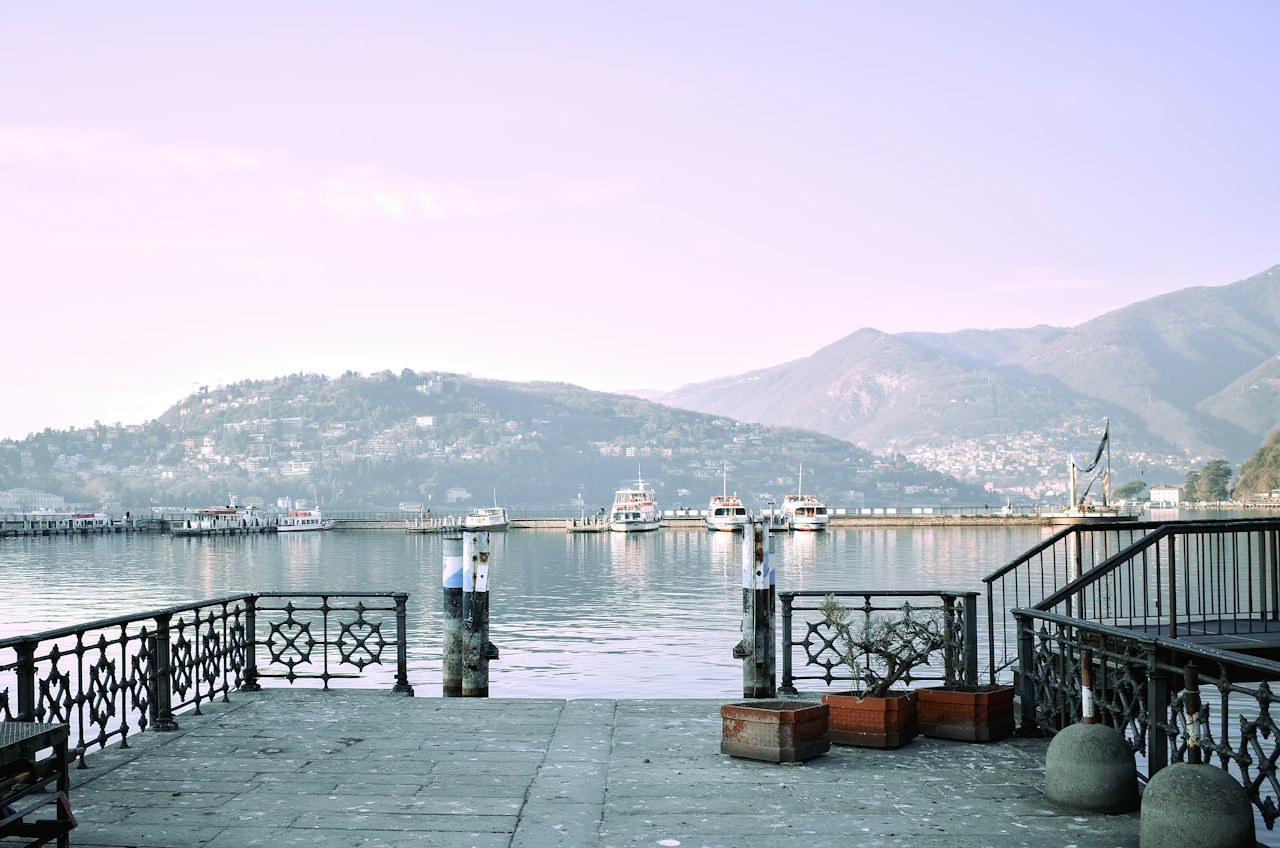
At Milan Cathedral (Duomo di Milano), the marble façade and crowded roofline set the tone, with the cathedral square opening directly into the city’s busiest pedestrian space. Galleria Vittorio Emanuele II is all iron-and-glass ceiling, mosaic floor, and the slow turn around the central octagon beneath the dome. Sforza Castle (Castello Sforzesco) feels heavier and more defensive, with its brick walls, towers, and the broad approach through Parco Sempione. In Como, Museo Civico Como and then Como Centro Storico bring the scale down: the museum gives the town’s civic history, while the old center narrows into stone lanes, arcades, and the cathedral around Piazza del Duomo. Villa Olmo sits at the water’s edge with formal symmetry and a long lakeside perspective, while Villa del Balbianello is remembered for its terraced setting and the way the paths step down toward the peninsula. Villa Carlotta is notable for its garden layout and stairways, Giardini di Villa Melzi for its lakeside planting and long views across the water, and Villa Monastero for the linear garden that hugs the shore in Varenna.
The route
Plan on 2 days, starting in Milan and continuing north to Como, Bellagio, and Varenna.
- Milan Cathedral (Duomo di Milano)
- Galleria Vittorio Emanuele II
- Sforza Castle (Castello Sforzesco)
- Museo Civico Como
- Como Centro Storico
- Villa Olmo
- Villa del Balbianello
- Villa Carlotta
- Giardini di Villa Melzi
- Villa Monastero
Paste it into the agent chat in Votura and it will build the map and the audio guide.
Before you go
Starting early works best, especially for the Milan sections, because the cathedral area and the Galleria are busiest once the city fills up. The walking itself is moderate in the city and light around the lakes, but the full route adds driving, ferry transfers or parking changes, and a fair amount of standing in villas and gardens. The busiest parts are central Milan, Como’s center, and the lakefronts at Bellagio and Varenna; some villas and gardens close on certain days or operate seasonally, so it helps to check ahead. Comfortable shoes, water, and a light layer are useful, since lake breezes and uneven paths can change the feel of the day.
Milan Shopping Highlights Walk
This walk links Milan’s best-known shopping streets with a few places that explain why the city’s center feels so polished and busy. It runs from the Galleria Vittorio Emanuele II by Piazza del Duomo out through Via Monte Napoleone and Via Della Spiga, then farther east to Corso Buenos Aires before looping back through the Quadrilatero della Moda, Casa del Manzoni, Museo del Novecento, and Corso Como. The route is not just about stores; it also threads through historic architecture, quiet side streets, and a couple of landmarks that break up the retail pace. It earns its time if you want a clear picture of Milan’s mix of fashion, history, and everyday foot traffic.
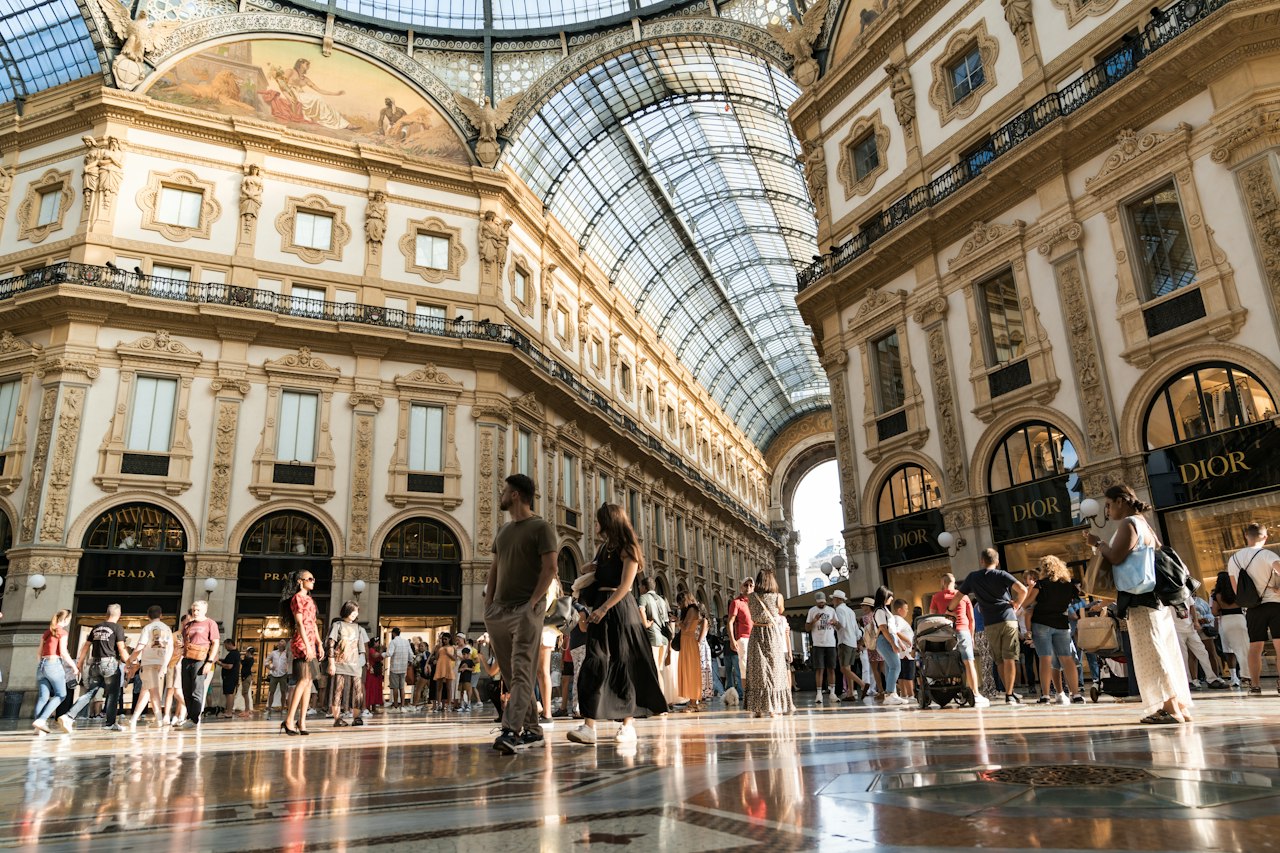
The Galleria Vittorio Emanuele II sets the tone immediately, with its iron-and-glass vaults, mosaic floor, and the famous dome above the crossing at the center. Via Monte Napoleone feels narrower and more formal, with window displays packed into elegant façades and very little street clutter. Via Della Spiga is calmer, and the interest there is in the palazzi-lined stretch and the way the street stays relatively restrained beside the more famous brands. Corso Buenos Aires changes the mood completely: it is longer, wider, and more practical, with dense storefronts and the sense of an ordinary shopping artery rather than a fashion showcase. In the Quadrilatero della Moda, the streets around Via della Spiga, Via Manzoni, and the nearby blocks are worth noticing for their polished stone fronts, discreet entrances, and the constant stream of well-dressed foot traffic. Casa del Manzoni and Museo del Novecento give the route some breathing room, one with literary history and the other with a direct view back toward the cathedral square and the modern art inside.
The route
About a long day on foot, best walked from Galleria Vittorio Emanuele II toward Corso Como.
- Galleria Vittorio Emanuele II
- Via Monte Napoleone
- Via Della Spiga
- Corso Buenos Aires
- Quadrilatero della Moda
- Casa del Manzoni
- Museo del Novecento
- Corso Como
Paste it into the agent chat in Votura and it will build the map and the audio guide.
Before you go
Starting in the morning works well, before the central streets and Galleria get crowded and before the shop windows become harder to see through the reflections. The walking itself is straightforward, but it adds up, and the pace can slow in the fashion district where streets are narrow and people stop often. Corso Buenos Aires tends to stay busy, while some boutiques in the designer quarter close on Sundays or keep shorter hours than the surrounding streets. Comfortable shoes and water make more difference here than on a flatter, quieter route, especially if you are stopping often for cafés or window displays.
How to Start Your Milan Tour with Votura
- Open Votura and tap Explore
- Search for Milan or let the app detect your location
- Browse available tours or tap Generate to create a custom tour
- Hit Play and follow the audio guide stop by stop
All tours include audio narration, a route map, and estimated stop times. Download any tour for offline access before you travel.
Sources
- Accessible itinerary: the heart of the city of Milan — YesMilanoyesmilano.it
- Duomo di Milano — Official websiteduomomilano.it
- Teatro alla Scala — Official Ticket Office – How to purchase ticketsteatroallascala.org
- Triennale Milanotriennale.org
Frequently Asked Questions
What is the best way to explore Milan on your own?
Milan is well suited to a self-guided visit because its main sights are spread across walkable areas, tram stops, and open piazzas. You can move at your own pace, stop for coffee, and avoid the pressure of a fixed group schedule.
Where does the Milan Art & History walking route start?
The route starts at Santa Maria delle Grazie in the southwest part of central Milan. From there, it moves toward the Castello Sforzesco area and continues through the city center to Piazza del Duomo.
How long should I allow for a self-guided Milan tour?
The post recommends starting in the morning so you have enough time to complete the route in one day. That also leaves room for any interior visits before the busiest periods, though the article does not give an exact duration.
When is the best time to begin the Milan walking itinerary?
Morning is the best time to begin because it helps you fit the full route into a single day. It also gives you more flexibility for visiting interiors before the heaviest crowds arrive.
Is the Milan route difficult to walk?
The walking is described as straightforward, mostly flat, and urban. The only part that can slow you down is around the Duomo and the Galleria, where you may want to linger longer.
Hear this city out loud
Votura turns the places in this guide into a self-guided audio tour you can follow at your own pace.