Suzhou City Tour: The Best Self-Guided Route to See It All
A complete city tour of Suzhou — the landmarks, neighborhoods, and views worth seeing, mapped into one route with AI audio narration.

Suzhou is best experienced as a connected city route rather than a checklist of famous stops, because its highlights line up naturally along canals, gardens, old streets, and temple quarters. This guide traces a self-guided path through the city so you can feel how Suzhou’s water-town rhythm, classical beauty, and modern edges fit together in one day.
What a Good City Tour of Suzhou Should Cover
Instead of jumping between disconnected sights, the route helps you move through Suzhou in a way that makes sense on foot, by metro, or by a mix of both, depending on your pace. Votura AI generates audio tours matched to the traveller's time, transport preference, and chosen theme, so you can explore the city in a way that feels tailored and coherent.
Silk & Craft of Suzhou: Living Workshops on a Full-Day Walk
This is a long city walk through Suzhou’s textile, garden, temple, and canal history, linking places that still show how silk money and craft shaped the city. It runs from the Suzhou Silk Museum through the classical core to Humble Administrator's Garden, then on to 报恩寺, Shantang Street, and finally 平门桥. The route makes sense because each stop shows a different part of the same economy: production, display, worship, trade, and canal-side movement. It takes time, but the sequence is coherent on foot and rewards paying attention to details rather than rushing between landmarks.
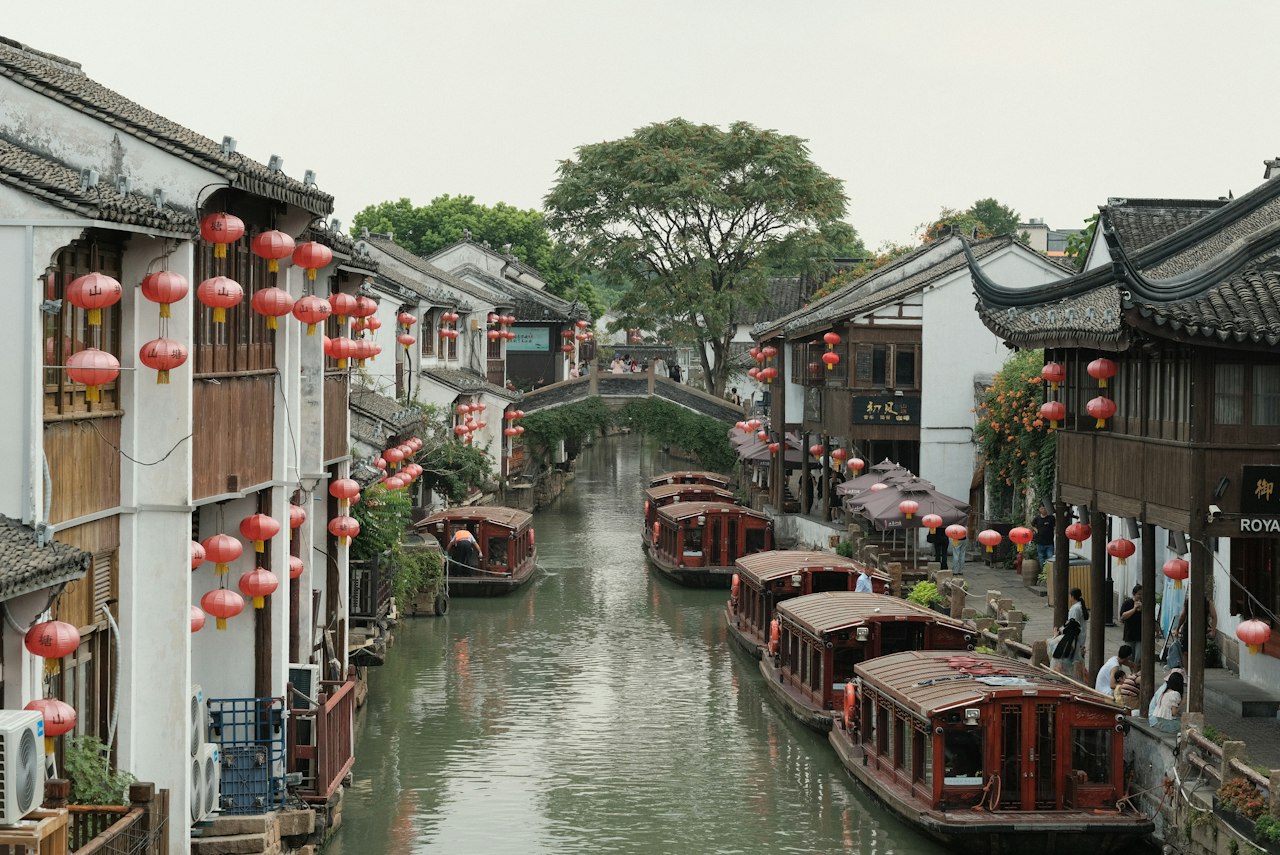
At the Suzhou Silk Museum, the working looms and display cases make the process legible: thread, pattern, dye, and finished fabric are all close enough to compare. In Humble Administrator's Garden, the silk connection is quieter, but the worth-noticing details are the screened views, the refined woodwork, and the way expensive taste is built into the layout. 报恩寺 gives the route a religious edge, and the point is less grandeur than the reminders of reconstruction, incense, and the old link between temple life and patronage. Shantang Street shifts the mood again, with canal frontage, narrow shopfronts, and the kind of traffic where bridges, boats, and pedestrians all share the same frame. By 平门桥, the walk feels like it has reached the edge of the old city’s working waterways, where the canal is the main object and not just a backdrop.
The route
About a long day on foot, best walked from the Silk Museum toward 平门桥.
- Suzhou Silk Museum (苏州丝绸博物馆)
- Humble Administrator's Garden (拙政园)
- 报恩寺
- Shantang Street (山塘街)
- 平门桥
Paste it into the agent chat in Votura and it will build the map and the audio guide.
Before you go
A morning start works best, because the route is long enough to feel better with daylight left for the later canal streets and because museum and garden visits are easier before the day crowds build. The walking is moderate rather than strenuous, but it adds up over a full day because several sections involve dense urban streets, bridge approaches, and time spent standing inside stops. Humble Administrator's Garden and Shantang Street are the places most likely to feel busy, especially on weekends and holidays, and temple or museum access can change with maintenance or events. Bring water, comfortable shoes, and a little flexibility for pauses, because the route is shaped as much by lingering as by distance.
Suzhou in Step: Gardens, Gates & Pagodas by Foot
This is a long, on-foot route through the old core of Suzhou, moving from the modern Suzhou Museum into the lanes, canals, pagodas, and classical gardens that define the city. The line of travel runs roughly southward through the historic center, with the walk linking museum architecture, temple remains, canal streets, and two of Suzhou’s best-known private gardens. It is not a loop, and the distances are spread out enough that the day feels like a sequence of distinct city districts rather than one continuous sightseeing block. It earns the time because the changes in scale are part of the point: public city space, then water-town street, then enclosed garden worlds.
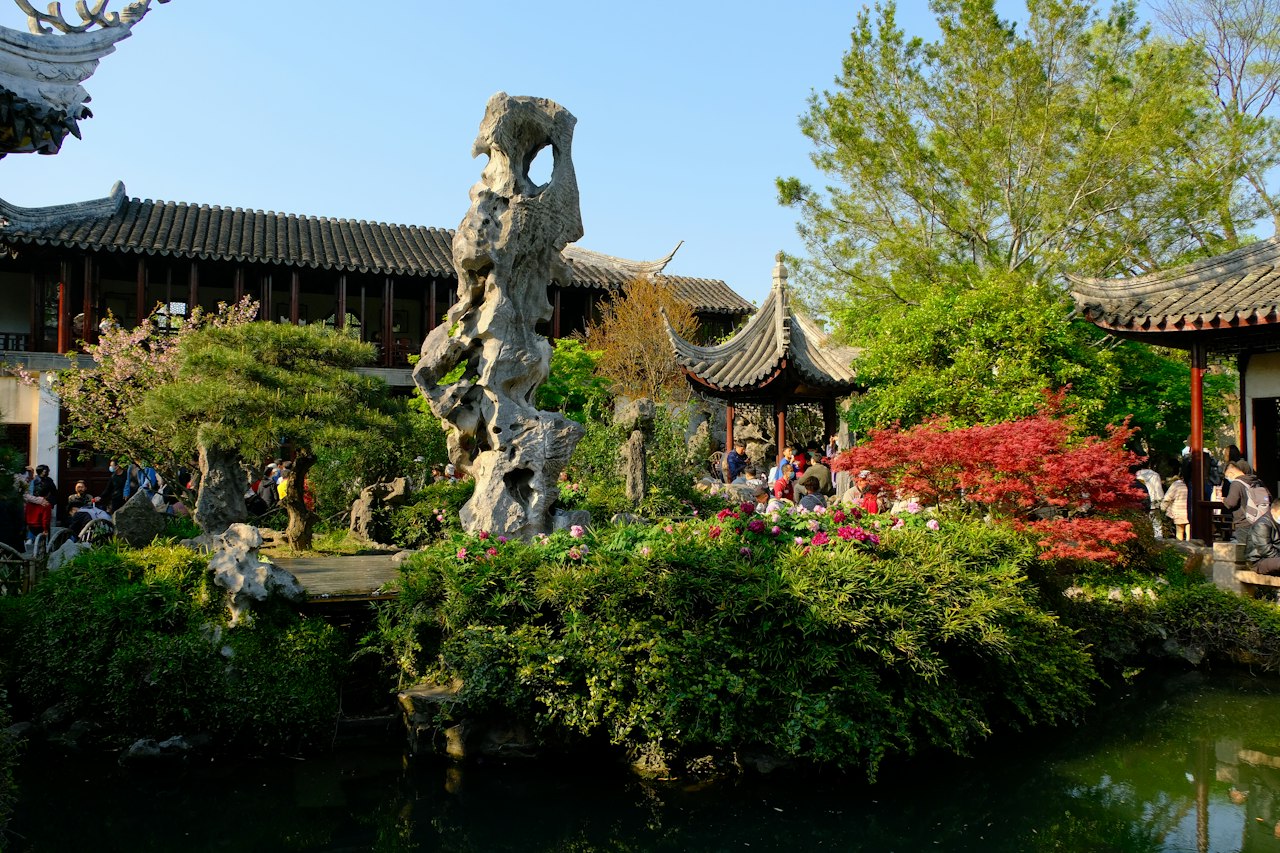
The walk begins at Suzhou Museum (苏州博物馆), where the white walls, dark rooflines, and angled courtyards set a very controlled tone before the older city takes over. From there, the route reaches Beisi Pagoda (北寺塔), whose brick bulk rises suddenly above the surrounding streets and gives the first real sense of Suzhou’s vertical landmarks. Shantang Street (山塘街) comes next, and what stands out is the canal edge itself: low bridges, shopfronts close to the water, and the constant movement of boats and pedestrians in a street that still feels tied to the old transport line. Canglang (Great Wave) Pavilion (沧浪亭) is quieter by comparison, with its rockwork, borrowed views, and small courtyards making the garden feel more enclosed and older in mood than the earlier stops. The route ends at Master of the Nets Garden (网师园), where the scale is especially compact and the arrangement of pond, hall, and zigzag paths is easiest to notice when the rest of the city has already been walked off.
The route
Plan a long day; walk it from Suzhou Museum southward to Master of the Nets Garden.
- Suzhou Museum (苏州博物馆)
- Beisi Pagoda (北寺塔)
- Shantang Street (山塘街)
- Canglang (Great Wave) Pavilion (沧浪亭)
- Master of the Nets Garden (网师园)
Paste it into the agent chat in Votura and it will build the map and the audio guide.
Before you go
Starting in the morning works best, partly because the route is long and partly because the gardens are more comfortable before the day gets hot and crowded. The walking itself is moderate rather than difficult, but the day adds up through repeated stops, road crossings, and time spent moving between separate historic areas. Shantang Street, the museum area, and the gardens can all be busy, especially on weekends and holidays, while some interiors may have timed entry or temporary closures. Bring water, a charged phone or offline map, and footwear that is fine on uneven paving and in garden stone paths.
Suzhou Gardens by Foot: Borrowed Scenery, Stone Labyrinths & Cloud-Crowned Peaks
This is a two-day walk through central Suzhou built around its classical gardens and the streets between them. It runs from the northern cluster near the Humble Administrator's Garden and Lion Grove Garden, past the Suzhou Museum, west to Lingering Garden, then across older city streets to Pingmen Bridge, and on to the Master of the Nets Garden, Canglang Pavilion, and Baodi Temple (报恩寺). The route earns its time because the walk itself keeps changing the scale: formal courtyards, narrow lanes, canal edges, and quiet temple grounds.
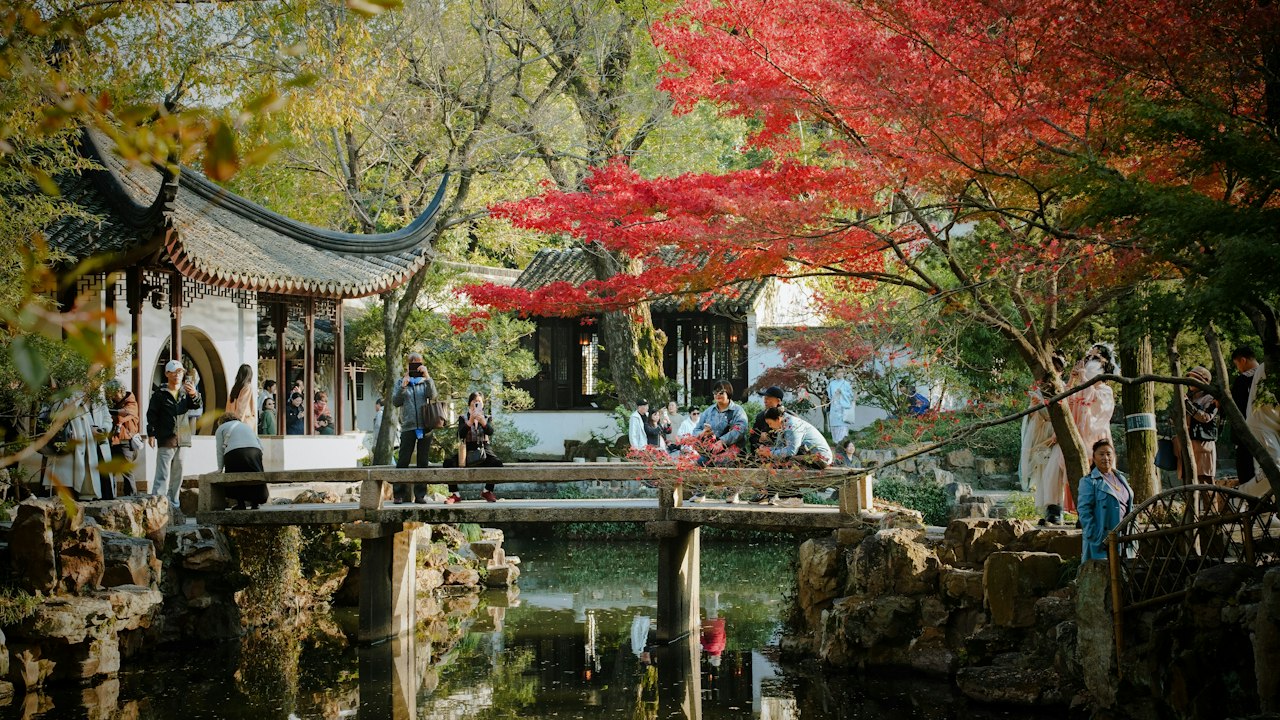
At Humble Administrator's Garden, the first thing that stays in memory is the water, with pavilions and corridors set low against it rather than rising above it. Lion Grove Garden changes the mood completely; the stacked rocks form passages and dead ends that feel like a puzzle rather than a display. The Suzhou Museum, nearby, is worth noticing for the way its pale walls and sharp rooflines reflect the garden logic without copying it, especially around the small courtyards and water basins. Lingering Garden is the place for details: the long corridor, the open windows that frame the garden like hanging pictures, and the famous rockery around Cloud-Crowned Peak. Farther on, Pingmen Bridge gives a brief view of Suzhou as a lived-in water city, and the route then becomes quieter again at the Master of the Nets Garden, where the rooms feel compressed but carefully measured against the pond. Canglang Pavilion closes the walk with a more open, older feeling, where the canal and the slopes outside the garden wall matter as much as the buildings inside, before the final stop at Baodi Temple.
The route
Best walked over 2 days, starting at Humble Administrator's Garden and finishing at Baodi Temple.
- Humble Administrator's Garden (拙政园)
- Lion Grove Garden (狮子林)
- Suzhou Museum (苏州博物馆)
- Lingering Garden (留园)
- 平门桥
- Master of the Nets Garden (网师园)
- Canglang (Great Wave) Pavilion (沧浪亭)
- 报恩寺
Paste it into the agent chat in Votura and it will build the map and the audio guide.
Before you go
Starting early helps, both for cooler walking and for seeing the gardens before they fill with tour groups. The route is not long in distance, but the pace is slow because the stops and the streets between them both deserve time, and a full two days feels more natural than trying to force it into one. The busiest points are the major gardens and the museum, while the stretches between Pingmen Bridge, Canglang Pavilion, and Baodi Temple are calmer but less straightforward to follow without a map. Bring water, comfortable shoes, and a little flexibility for closures or timed entry at individual sites.
Southern Suzhou & Tongli by Car + Walk: Water Gates, Classical Gardens, and Zen Stones
This route threads together southern Suzhou’s canal-side temples and classical gardens before finishing in Tongli Ancient Town and circling back to Lion Grove Garden. It runs from 报恩寺 to Canglang Pavilion, then north to Humble Administrator’s Garden and Master of Nets Garden, out to Tongli, and ends at 狮子林 in the old city. The day works because it keeps alternating between dense garden interiors and older water-town streets, so the scenery changes often without feeling scattered.
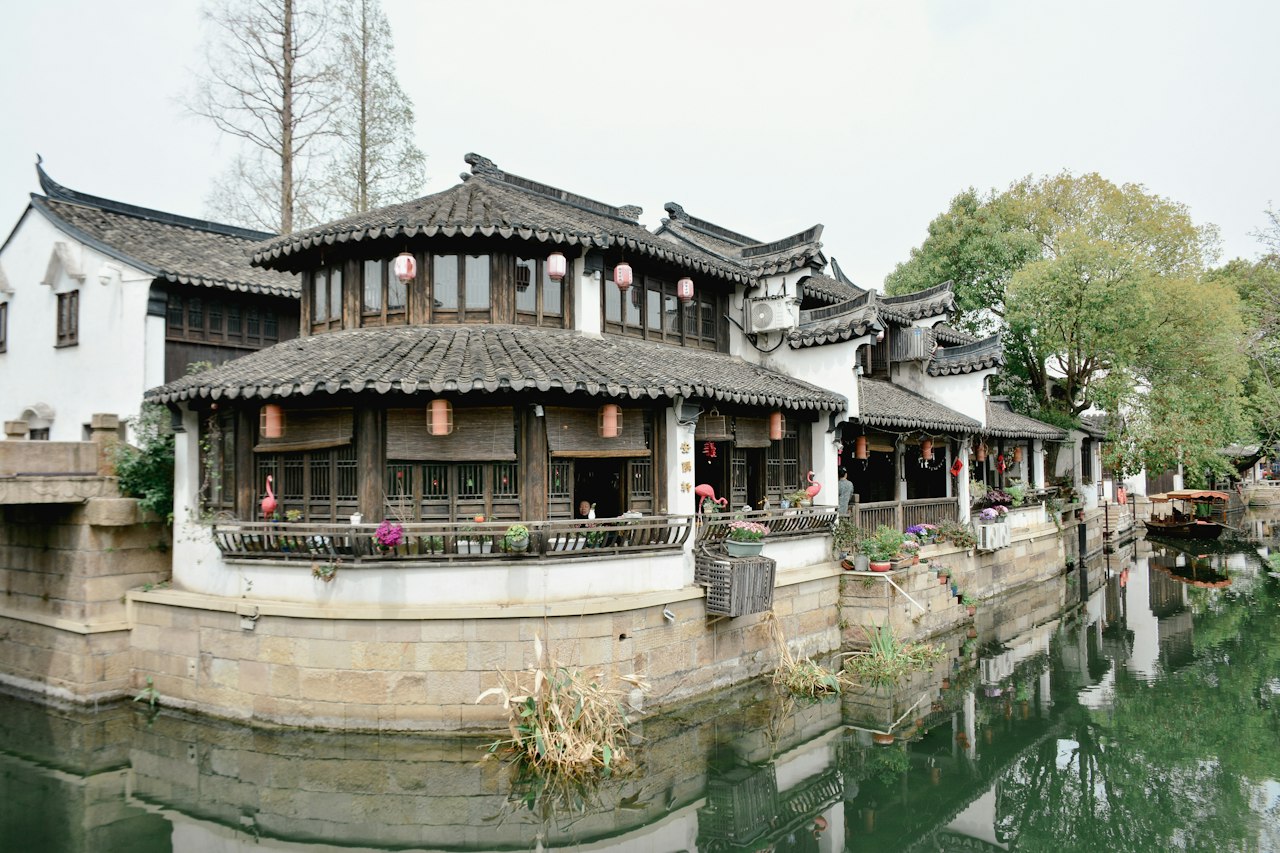
At 报恩寺, the main thing to notice is the transition from city street to temple quiet, especially the contrast between the worn approach and the calmer inner courtyards. Canglang (Great Wave) Pavilion (沧浪亭) feels older and more open to its surroundings; the borrowed scenery through its lattice windows and the water outside the wall are part of the composition. In Humble Administrator’s Garden (拙政园), the long pond and the linked pavilions matter more than any single building, and the views are best when you catch reflections across the water rather than standing in one place. Master of the Nets Garden (网师园) is much smaller and more tightly arranged, with the main memory being how the halls, rockwork, and pond all fit into a few steps. Tongli Ancient Town (同里古镇) changes the pace completely: the 49 stone bridges, low canal banks, and narrow lanes are what stay with you, not any one monument. Back in Suzhou, Lion Grove Garden (狮子林) is about the stacked Taihu rocks, where the caves and passages form a tight maze of stone rather than a broad landscape.
The route
Plan a full day, and walk it from south Suzhou toward Tongli, then back to Lion Grove Garden.
- 报恩寺
- Canglang (Great Wave) Pavilion (沧浪亭)
- Humble Administrator's Garden (拙政园)
- Master of the Nets Garden (网师园)
- Tongli Ancient Town (同里古镇)
- Lion Grove Garden (狮子林)
Paste it into the agent chat in Votura and it will build the map and the audio guide.
Before you go
Starting early helps because the big gardens and Tongli both draw more visitors later in the day, and the route is easier before the heat and crowds build. The walking itself is moderate rather than strenuous, but there is a lot of standing, bridge-crossing, and uneven stone underfoot, especially in Tongli and Lion Grove Garden. The most likely bottlenecks are the main halls and pond-side paths in the major gardens, while some temple spaces may close sections for maintenance or services. Bring water, a charged phone, and shoes that handle wet stone; rain makes the canals and garden paths more slippery.
Suzhou West Sacred Walk: Gardens, Canals & the Stories of 108 Bells
This route is a west-side walk through Suzhou that links a classical garden, old canal streets, temple lore, and the city’s northern pagoda in one line. It runs from Lingering Garden past Pingmen Bridge and Shantang Street, then out to Tiger Hill, Hanshan Temple, and Beisi Pagoda. The path crosses from refined rockeries and courtyards into working waterways, tourist streets, temple grounds, and older suburban edges. It earns the time because each stop shows a different layer of Suzhou’s western edge, and the transitions between them are part of the story.

At Lingering Garden, the route begins with the garden’s tight courtyards, layered windows, and the famous Crown of Clouds Peak stone, which gives the place its vertical center. Pingmen Bridge is a brief but important crossing point, and what stands out there is the change in scale as the canal frontage starts to replace garden walls. Shantang Street runs along the water with low bridges, white walls, and boat traffic; the sections near the canal are worth watching for their reflections and the way the street bends around the water. Tiger Hill shifts the mood again: the slope, the leaning pagoda, and the old sword-related stories make the site feel older and rougher than the canal streets. Hanshan Temple is most memorable for its bell hall and the inscriptions and temple buildings tied to the 108-bell tradition, while Beisi Pagoda finishes the walk with a tall, straightforward climb and broad views over the surrounding roofs, roads, and canal ring.
The route
Best walked west to east over two days, with Tiger Hill and Beisi Pagoda as the last day’s finish.
- Lingering Garden (留园)
- 平门桥
- Shantang Street (山塘街)
- Tiger Hill (虎丘)
- Hanshan Temple (寒山寺)
- Beisi Pagoda (北寺塔)
Paste it into the agent chat in Votura and it will build the map and the audio guide.
Before you go
Starting in the morning makes the most sense, because Lingering Garden and the temple sites are easier to take in before the crowds build and before the light turns flat. The walking itself is moderate rather than difficult: the distance is long, but the ground is mostly level except for Tiger Hill and the pagoda climb at the end. Shantang Street, Tiger Hill, and Hanshan Temple tend to be the busiest parts, especially later in the day and on weekends, while garden interiors and temple halls can have their own closing hours. Water, sunscreen, and a charged phone are useful, and a small amount of cash or a transit card helps if the return is not on foot.
How to Start Your Suzhou Tour with Votura
- Open Votura and tap Explore
- Search for Suzhou or let the app detect your location
- Browse available tours or tap Generate to create a custom tour
- Hit Play and follow the audio guide stop by stop
All tours include audio narration, a route map, and estimated stop times. Download any tour for offline access before you travel.
Sources
- Classical Gardens of Suzhou — UNESCO World Heritage Centrewhc.unesco.org
- Classical Gardens — Suzhou Municipal People’s Governmentenglish.suzhou.gov.cn
Frequently Asked Questions
What is the best way to see Suzhou on a self-guided tour?
The post recommends experiencing Suzhou as a connected city route rather than as a checklist of separate sights. A good tour links canals, gardens, old streets, and temple quarters so the city feels coherent as you move through it.
Where does the Suzhou Silk & Craft route start and end?
The route starts at the Suzhou Silk Museum and ends at 平门桥. Along the way, it passes Humble Administrator's Garden, 报恩寺, and Shantang Street.
How should I get around Suzhou on this city tour?
The route is designed to work on foot, by metro, or with a mix of both, depending on your pace. The post says the sequence is coherent on foot, so it is especially rewarding if you want a long walk through the city.
When is the best time to start the Suzhou self-guided route?
A morning start works best. The post says this gives you enough daylight for the later canal streets and fits better with museum and garden visits.
Why does the post recommend the Silk Museum, garden, temple, and canal stops in one route?
Because each stop shows a different part of the same story: production, display, worship, trade, and canal-side movement. Together, they explain how silk money and craft shaped Suzhou's history and layout.
Hear this city out loud
Votura turns the places in this guide into a self-guided audio tour you can follow at your own pace.