Buenos Aires Highlights: Must-Visit Spots and Hidden Treasures
Explore the very best of Buenos Aires with Votura — from world-famous landmarks to neighbourhood secrets, all in one audio tour.

Buenos Aires mixes grand, well-known landmarks with quiet corners that reward a slower look, making it a city where iconic stops and unexpected discoveries sit side by side. From the elegance of Recoleta and the color of La Boca to tucked-away cafés, leafy courtyards, and neighborhood markets, it offers a vivid first impression and plenty of deeper layers to uncover.
The Best of Buenos Aires at a Glance
That balance is what makes a Buenos Aires trip feel both classic and personal: you can trace the city’s famous boulevards and plazas, then slip into smaller streets for street art, local hangouts, and hidden architectural details. Votura AI generates audio tours matched to the traveller's time, transport preference, and chosen theme, so you can explore the city in a way that fits your pace and interests.
Stone, Law, and Terror: A Two-Day Buenos Aires Dark Justice Walk
This route is a long, north-to-south walk through the civic and memorial core of Buenos Aires, moving from Monserrat into San Telmo and then out toward Retiro and Núñez. It links churches, colonial government buildings, legislative halls, prison and police memory sites, and the city’s main symbolic stage for state power and state violence. The point is not scenery for its own sake but the way the same few streets carry layers of law, rebellion, detention, and public reckoning. It earns the time because the buildings change less than the meaning attached to them, and that change is visible if you keep walking.
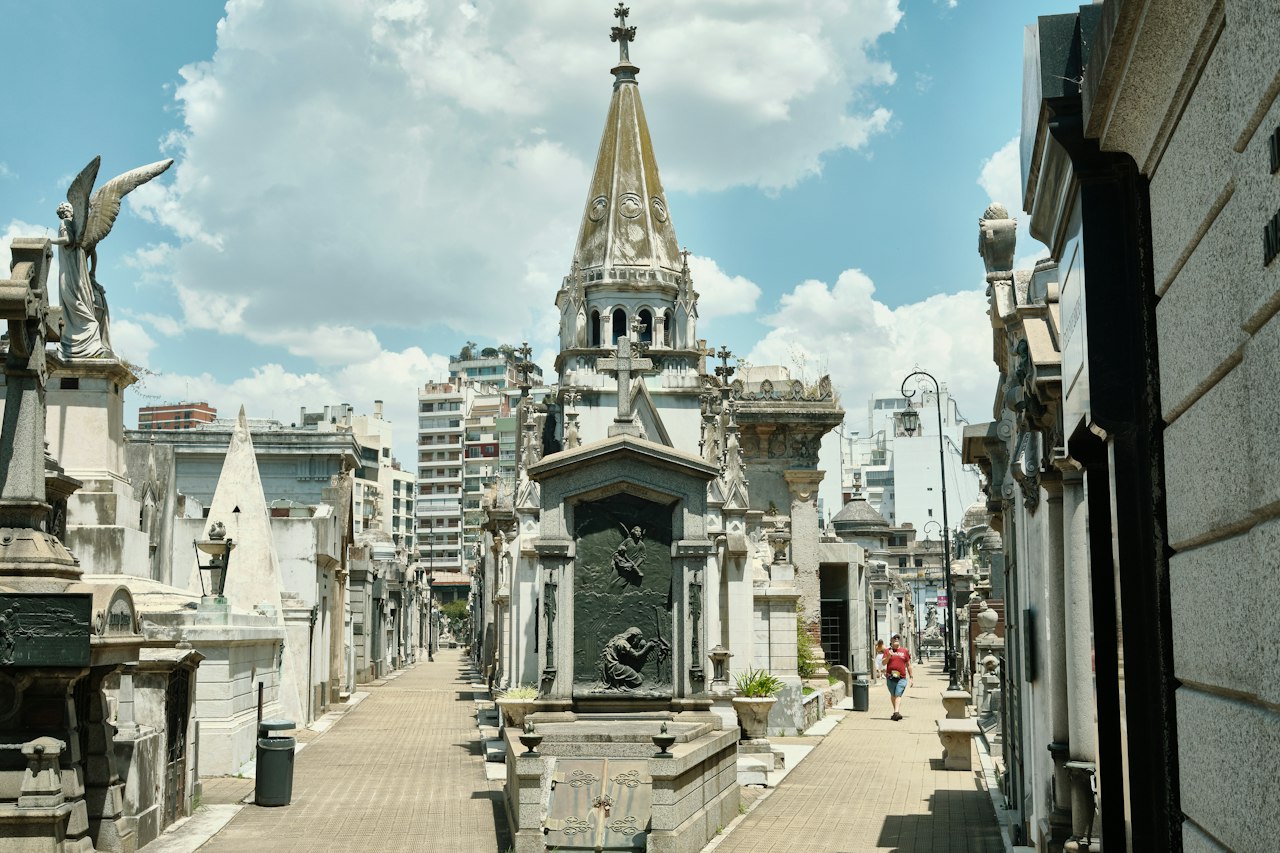
At Catedral Metropolitana de Buenos Aires, the façade reads as a severe classical front rather than a grand cathedral showpiece, and the tomb of San Martín gives the interior its political weight. Cabildo de Buenos Aires comes next, smaller than people expect, with the arcades and whitewashed mass making the colonial past feel compressed rather than distant. Around the Legislatura de la Ciudad Autónoma de Buenos Aires, the block turns institutional and formal, with stonework and traffic giving the building a more administrative than ceremonial presence. The Block Of The Lights Historical-Cultural Complex, Complejo Histórico Cultural Manzana De Las Luces, is worth the courtyards and tunnels under its old Jesuit and colonial structures, where the city’s oldest civic spaces sit almost hidden in plain sight. Plaza de Mayo then opens the route up again, and Casa Rosada adds the pink façade, balconies, and the constant sense that demonstrations and state ritual are part of the same architecture. Espacio Virrey Liniers and the Museo Penitenciario Argentino "Antonio Ballvé" shift the mood sharply, with prison history, confinement artifacts, and the uneasy closeness of police and penal memory. Museo Histórico Nacional and Parque Lezama bring a quieter register, with independence-era objects and the park’s slope toward old city boundaries before the route turns to the monumental scale of the Palacio del Congreso de la Nación Argentina and, finally, the stark, confrontational memory work at Museo Sitio de Memoria ESMA.
The route
Plan on two days, walking from Catedral Metropolitana de Buenos Aires toward ESMA in that order.
- Catedral Metropolitana de Buenos Aires
- Cabildo de Buenos Aires
- Legislatura de la Ciudad Autónoma de Buenos Aires
- Block Of The Lights Historical-Cultural Complex Complejo Histórico Cultural Manzana De Las Luces
- Plaza de Mayo
- Casa Rosada
- Espacio Virrey Liniers
- Museo Penitenciario Argentino "Antonio Ballvé"
- Museo Histórico Nacional
- Parque Lezama
- Palacio del Congreso de la Nación Argentina
- Museo Sitio de Memoria ESMA
Paste it into the agent chat in Votura and it will build the map and the audio guide.
Before you go
Start early, because the central blocks around Plaza de Mayo and the Congreso area are easier to cross before the day fills with commuters, buses, and tour groups. The walking itself is straightforward on flat streets, but the length adds up and the emotional weight of the later sites makes it feel longer than the map suggests. The busiest areas are the immediate Plaza de Mayo zone and the approaches to Congreso; some of the museums and memorial sites keep restricted hours or close on certain days, so the route works best when checked against current opening times in advance. Bring water, sun protection, and a printed or offline map, since the sequence includes long street stretches between dense clusters of stops.
Borges by Foot: A Five-Stop Twilight Walk Through Buenos Aires' Arts District
This is a walking route through central and southern Buenos Aires that starts at Plaza de Mayo, moves into San Telmo, and finishes farther north at the Biblioteca Nacional Mariano Moreno. It follows streets that shift from colonial civic space to neighborhood squares, old parish frontages, and then the broader avenue around Recoleta and Recoleta’s institutional edge. The walk makes sense for someone interested in Borges because it passes through districts that recur in his Buenos Aires: formal squares, narrow older streets, and the city’s layered public buildings. It takes time, but the sequence feels coherent rather than random.
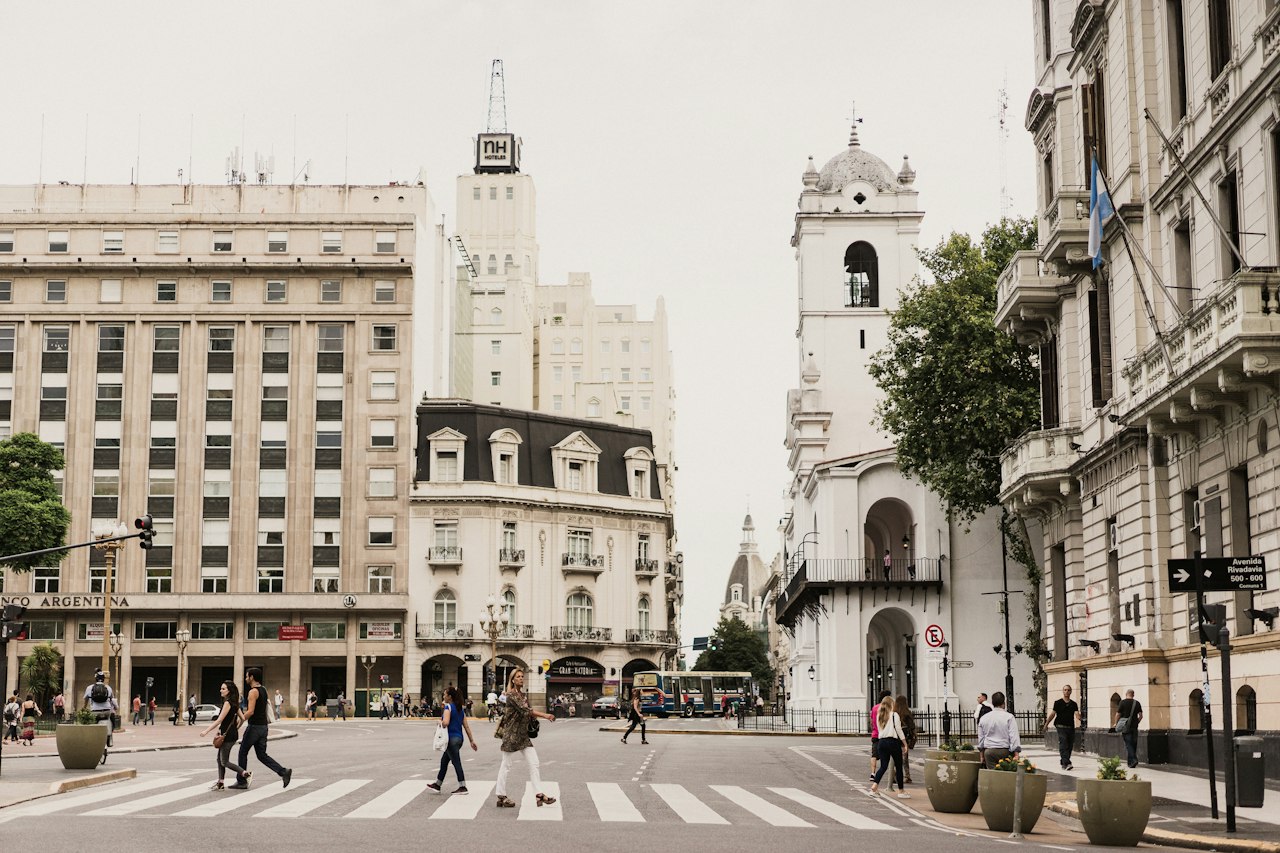
Plaza de Mayo is the opening frame: the Cabildo, Casa Rosada, and Catedral Metropolitana set the scale, and the square’s paving and flags matter as much as the façades. In Parroquia San Pedro Telmo, what stands out is the church’s compact baroque presence and the way it sits inside a neighborhood of low corners and worn stone. Plaza Dorrego changes the mood immediately, with its tile tables, tango posters, and the heavy old facades around the square; the public clock here is less important than the way the plaza still reads as a lived-in neighborhood center. AySA - Palacio de las Aguas Corrientes is the most unexpected building on the route, a huge utility palace dressed in ceramic ornament, and it is worth pausing for the colored tiles and the sheer density of decoration on something that is not a palace at all. At the Biblioteca Nacional Mariano Moreno, the concrete massing and elevated reading rooms pull the route into a very different modern Buenos Aires, with the building stepping up from the street like a platform. If you keep walking the edges around it, the contrast between the library’s hard geometry and the older city you just crossed becomes the point.
The route
About a long afternoon and evening, best walked from Plaza de Mayo toward the Biblioteca Nacional Mariano Moreno.
- Plaza de Mayo
- Parroquia San Pedro Telmo
- Plaza Dorrego
- AySA - Palacio de las Aguas Corrientes
- Biblioteca Nacional Mariano Moreno
Paste it into the agent chat in Votura and it will build the map and the audio guide.
Before you go
Late afternoon is the best time to begin, because Plaza de Mayo, San Telmo, and Plaza Dorrego work well before dark, while the last stretch toward the Biblioteca Nacional Mariano Moreno feels more appropriate at twilight. The walking is straightforward but long, with some uneven pavement in San Telmo and more traffic and crossing points once the route leaves the historic center. Plaza Dorrego is the busiest stop, especially on market days and in the evening; cafés and churches along the route may have limited access, so it is better not to rely on entering every building. Bring water, comfortable shoes, and a layer for the cooler air that settles in after sunset.
Recoleta Revelations: An Elite Buenos Aires Experience
Step into the refined world of Buenos Aires’ Recoleta district on this exclusive full-day walking tour. Explore aristocratic mansions, scandalous elite tales over tea, opulent clubs, and haute couture boutiques, all while savoring medialunas and mate tea along tree-lined avenues. Discover the hidden splendors and rivalries that define this iconic neighborhood in a 16-hour journey through history and elegance.
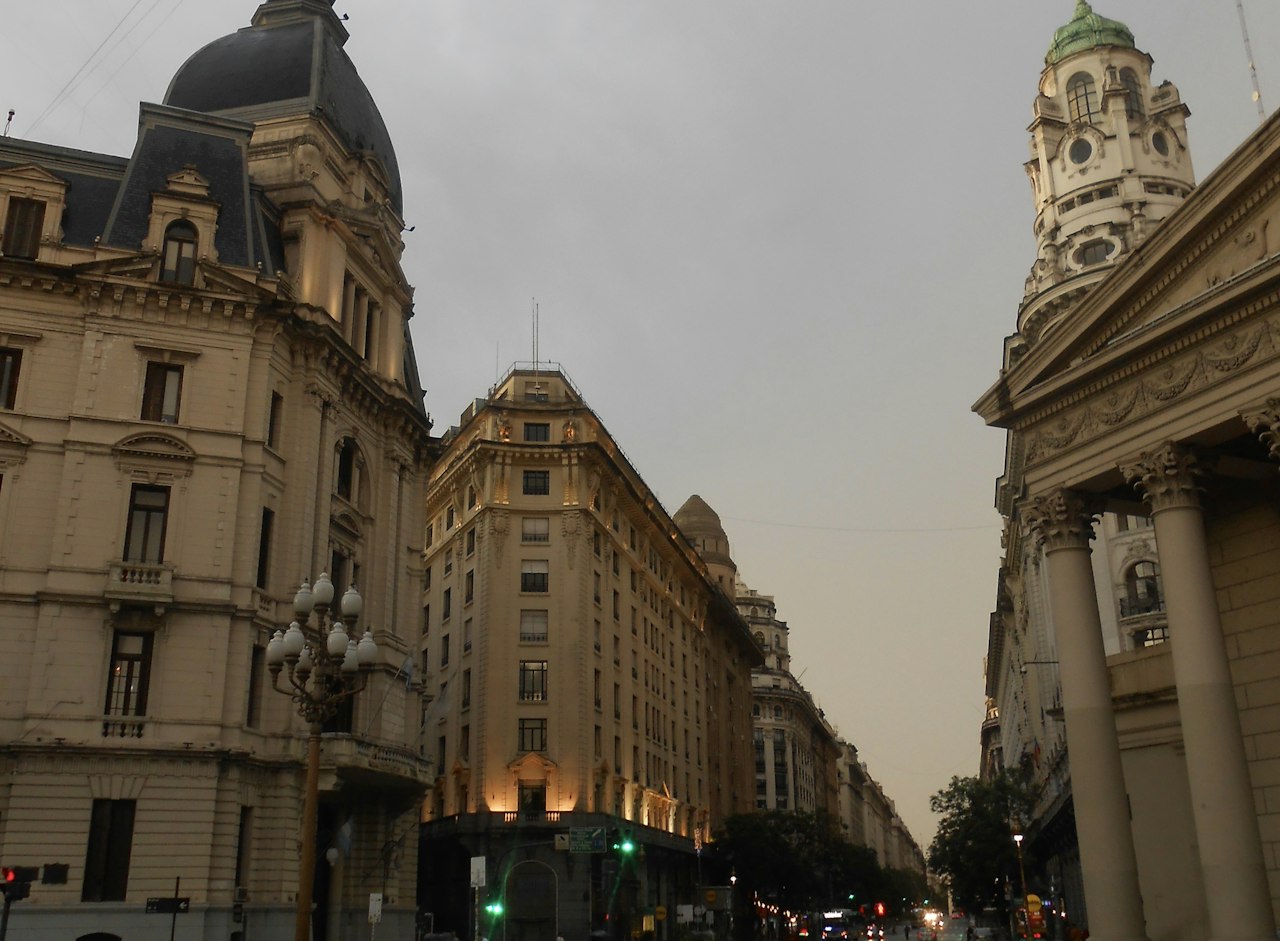
Along the way you pass La Recoleta Cemetery (Cementerio de la Recoleta), Centro Cultural Recoleta, Parque Recoleta, Palacio Atucha and more.
The route
About 6.5 hours with stops.
- La Recoleta Cemetery (Cementerio de la Recoleta)
- Centro Cultural Recoleta
- Parque Recoleta
- Palacio Atucha
- Avenida Alvear
- Jockey Club (sede actual)
- Centro Cultural Matta
- El Ateneo Grand Splendid
Paste it into the agent chat in Votura and it will build the map and the audio guide.
Before you go
About 6.5 hours with stops. The audio guide works offline, so download it before you set off.
Cultural and Historical Highlights of Buenos Aires
This route strings together central Buenos Aires from the Obelisco area through Avenida de Mayo, the Congreso district, Recoleta, and into the parkland along Avenida del Libertador. It is less a straight sightseeing line than a cross-section of the city’s public face: monuments, theaters, bookshops, museums, and one of the major green spaces at the end. The walking is mostly urban and flat, with longish stretches between a few of the stops. It earns the time because the sequence shows how the city changes from dense downtown to grand civic avenues and then to calmer northern neighborhoods.
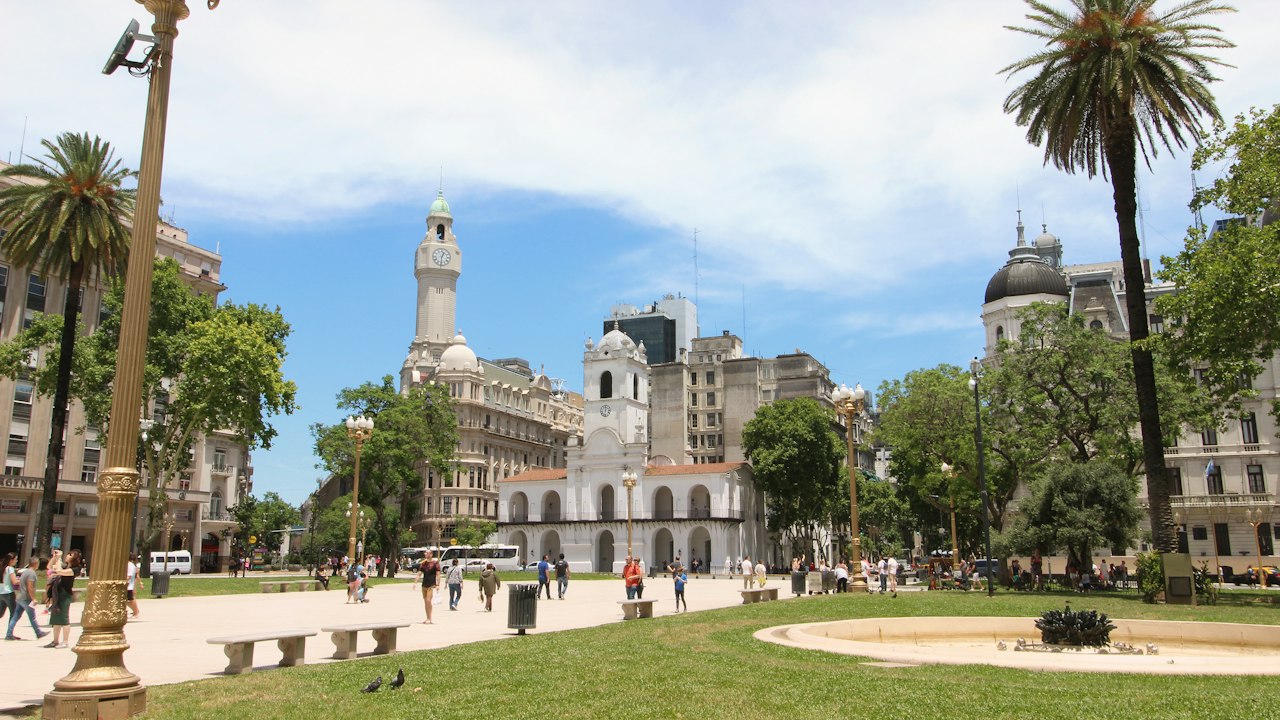
At the Obelisco - Plaza de la República, the first landmark is the traffic circle itself and the scale of Avenida 9 de Julio opening around it. The Escalinatas del Obelisco are worth a look for the elevation and the close-up view of the monument’s concrete shaft. Palacio Barolo stands out for its layered façade and the way its corners and dome keep pulling the eye upward. Palacio del Congreso de la Nación Argentina is best seen from the square in front, where the broad steps and green copper dome frame the avenue. AySA - Palacio de las Aguas Corrientes is memorable less for a typical palace silhouette than for the glazed tile cladding and ornate rooftop details that read almost like decoration on a utility building. El Ateneo Grand Splendid ends the central section with a former theater interior: the painted ceiling, the old balcony boxes, and the stage now holding the café are the things to notice. Paseo de las Artes is a quieter break before the parks, and Parque Carlos Thays opens into planted lawns and tree-lined paths on the way to the National Museum of Fine Arts (Museo Nacional de Bellas Artes (MNBA)); the museum’s classical front sits well with the open square outside. The route finishes at Rose Garden (El Rosedal), where the lake, bridges, and rows of roses give the clearest sense that you have left the office and monument corridor behind.
The route
Walk north from the Obelisco toward the parks; the route makes best sense over a long day.
- Obelisco - Plaza de la República
- Escalinatas del Obelisco
- Palacio Barolo
- Palacio del Congreso de la Nación Argentina
- AySA - Palacio de las Aguas Corrientes
- El Ateneo Grand Splendid
- Paseo de las Artes
- Parque Carlos Thays
- National Museum of Fine Arts (Museo Nacional de Bellas Artes (MNBA))
- Rose Garden (El Rosedal)
Paste it into the agent chat in Votura and it will build the map and the audio guide.
Before you go
Starting in the morning works best, because the central streets are easier before the day fully fills in and the museum area is calmer later in the afternoon. The walk is moderately demanding rather than difficult: the route is long, but the terrain is mostly flat and the pauses at each stop break it up. The busiest stretches are around the Obelisco, Congreso, and Recoleta, and some interior visits can be affected by opening days or private events, especially at El Ateneo and the museums. Water, sun protection, and comfortable shoes matter more than anything else, since there is a lot of pavement and little shelter between some stops.
Buenos Aires in Frames: A 2-Day Photography & Cinema Walk
This route is a two-day walk through Buenos Aires’ civic center, old café culture, San Telmo, and the docklands of La Boca, ending with a side trip to the old Lumiton film world in Munro. It follows the city’s image history as much as its streets: newspaper façades, theater fronts, arcades, plazas, tiled warehouses, and the places where Argentine cinema collected its own memory. The distance is best treated as a slow circuit rather than a straight line, because the value is in the pauses between blocks. It earns the time if you care about how the city looks in side light, in reflected glass, and in the worn surfaces that photographers keep returning to.
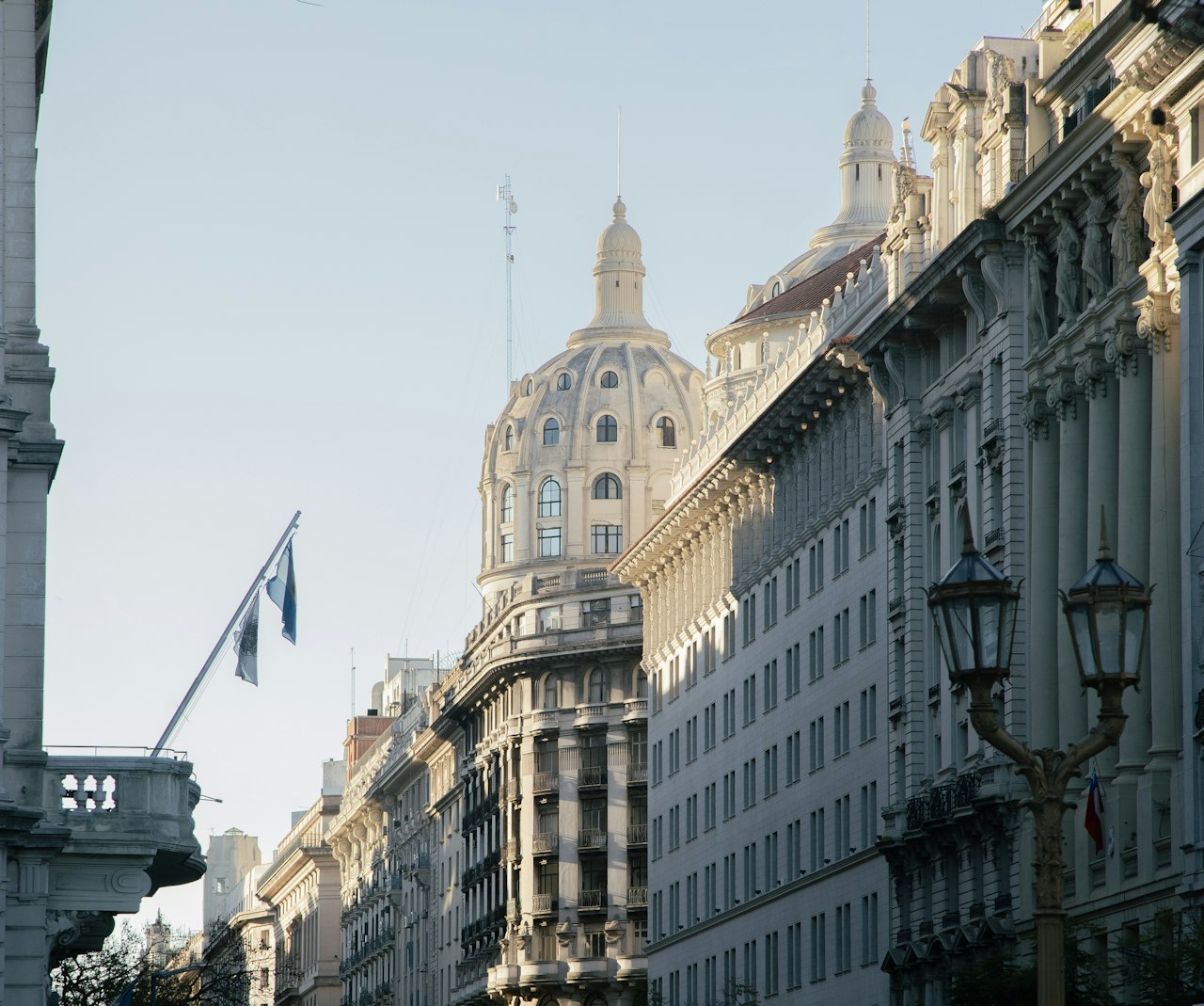
Avenida de Mayo sets the tone with its long perspective, tiled portals, and the repeated balcony lines that make the street feel staged. Gran Café Tortoni still reads as a working café rather than a set, with its dark wood and old mirrors doing most of the talking. At the Block Of The Lights Historical-Cultural Complex, Complejo Histórico Cultural Manzana De Las Luces, the low colonial interiors and courtyards feel cut off from the traffic outside, and the stone passages are worth noticing for how they compress sound and light. Plaza de Mayo opens the route outward: the Casa Rosada, the cathedral façade, and the broad paved center give you the city’s political face in a single frame. San Telmo changes the register immediately, with narrow fronts, ironwork, and uneven paving leading toward Plaza Dorrego, where the square’s fixed perimeter and the nearby market façades are better than any single monument. Pasaje de la Defensa, then Usina del Arte, then the Museo del Cine Pablo Ducrós Hicken, and later Museo Quinquela Martín and Fundación Proa, move the walk into brick, warehouse volumes, and harbor edges; in La Boca, Caminito can be almost too bright, while Vuelta de Rocha is better for the water, the painted hulls, and the pause where the neighborhood meets the Riachuelo. Palacio Barolo closes the loop back in the center, and Museo del Cine Lumiton finishes the route by pointing north to the studio era, where the city’s cinematic memory becomes less street scene than archive.
The route
Best walked over 2 days, starting downtown and ending in Munro after La Boca.
- Avenida de Mayo
- Gran Café Tortoni
- Block Of The Lights Historical-Cultural Complex Complejo Histórico Cultural Manzana De Las Luces
- Plaza de Mayo
- San Telmo
- Plaza Dorrego
- Pasaje de la Defensa
- Usina del Arte
- Museo del Cine Pablo Ducrós Hicken
- Museo Quinquela Martín
- Fundación Proa
- Caminito
- Vuelta de Rocha
- Palacio Barolo
- Museo del Cine Lumiton
Paste it into the agent chat in Votura and it will build the map and the audio guide.
Before you go
Starting early helps most in San Telmo, Plaza Dorrego, and La Boca, where the light is softer and the streets are less crowded. The walking itself is moderate to long, with flat ground in the center and more stop-start movement once the route reaches the docklands; it is not a demanding hike, but the day stretches if you linger for interiors and photographs. Some places on the list are easier to see from the outside if they are closed, and several museums or cultural spaces can have uneven schedules, especially outside standard weekdays. Bring water, a charged phone or camera, and shoes that handle old paving, uneven sidewalks, and a few long crossings between districts.
How to Start Your Buenos Aires Tour with Votura
- Open Votura and tap Explore
- Search for Buenos Aires or let the app detect your location
- Browse available tours or tap Generate to create a custom tour
- Hit Play and follow the audio guide stop by stop
All tours include audio narration, a route map, and estimated stop times. Download any tour for offline access before you travel.
Sources
- Must-see attractions — Official English Website for the City of Buenos Airesturismo.buenosaires.gob.ar
- Teatro Colón — guided tours (official)teatrocolon.org.ar
- Argentina — UNESCO World Heritage Centre (state party page)whc.unesco.org
Frequently Asked Questions
What are the must-visit highlights in Buenos Aires?
The post highlights a mix of famous landmarks and quieter discoveries, including Recoleta, La Boca, Plaza de Mayo, and Casa Rosada. It also points readers toward smaller streets, street art, local hangouts, leafy courtyards, and neighborhood markets.
Where can you see the main civic and historic landmarks in Buenos Aires?
The article’s two-day Dark Justice Walk focuses on Monserrat, San Telmo, Retiro, and Núñez. Along this route you pass Catedral Metropolitana de Buenos Aires, Cabildo de Buenos Aires, the city legislature, Manzana de las Luces, Plaza de Mayo, and Casa Rosada.
How long does the Buenos Aires Dark Justice Walk take?
The post describes it as a two-day walk. It is a long north-to-south route through Buenos Aires’ civic and memorial core.
Why is Manzana de las Luces worth visiting?
It is worth visiting for its courtyards and tunnels under old Jesuit and colonial structures. The article says the city’s oldest civic spaces are almost hidden in plain sight there.
Can you explore Buenos Aires at your own pace?
Yes. The post says Votura AI generates audio tours matched to your time, transport preference, and chosen theme, so you can explore the city in a way that fits your pace and interests.
Hear this city out loud
Votura turns the places in this guide into a self-guided audio tour you can follow at your own pace.