Free Things to Do in Bath: A Self-Guided Walking Guide
The best genuinely free attractions in Bath — parks, viewpoints, markets, and landmarks — ordered into a self-guided walking route you can follow today.

Bath is a city you can enjoy just by walking its streets: elegant Georgian crescents, honey-coloured stone facades, riverside paths, and viewpoints that cost nothing to reach. From the Royal Crescent and The Circus to the Pulteney Bridge area and the open spaces along the Avon, so much of Bath’s character is visible from the pavement.
Why Bath Rewards Travellers on a Zero Budget
This guide focuses on the free side of the city: public squares, market browsing, architectural details, and scenic spots you can explore at your own pace without paying for entry. If you want a more tailored route, Votura AI generates audio tours matched to the traveller’s time, transport preference, and chosen theme, so you can turn a free walking plan into a trip that fits exactly how you like to explore.
Royal Crescent
The Royal Crescent is a long curve of Georgian town houses set around a broad sweep of lawn in Bath. From the front, what you see is the pale stone façade and the strict rhythm of the windows, all designed to look uniform even though the houses are individually owned. The curved line and the scale are the details that stand out most, especially when you notice how the crescent holds its shape against the open green in front of it.
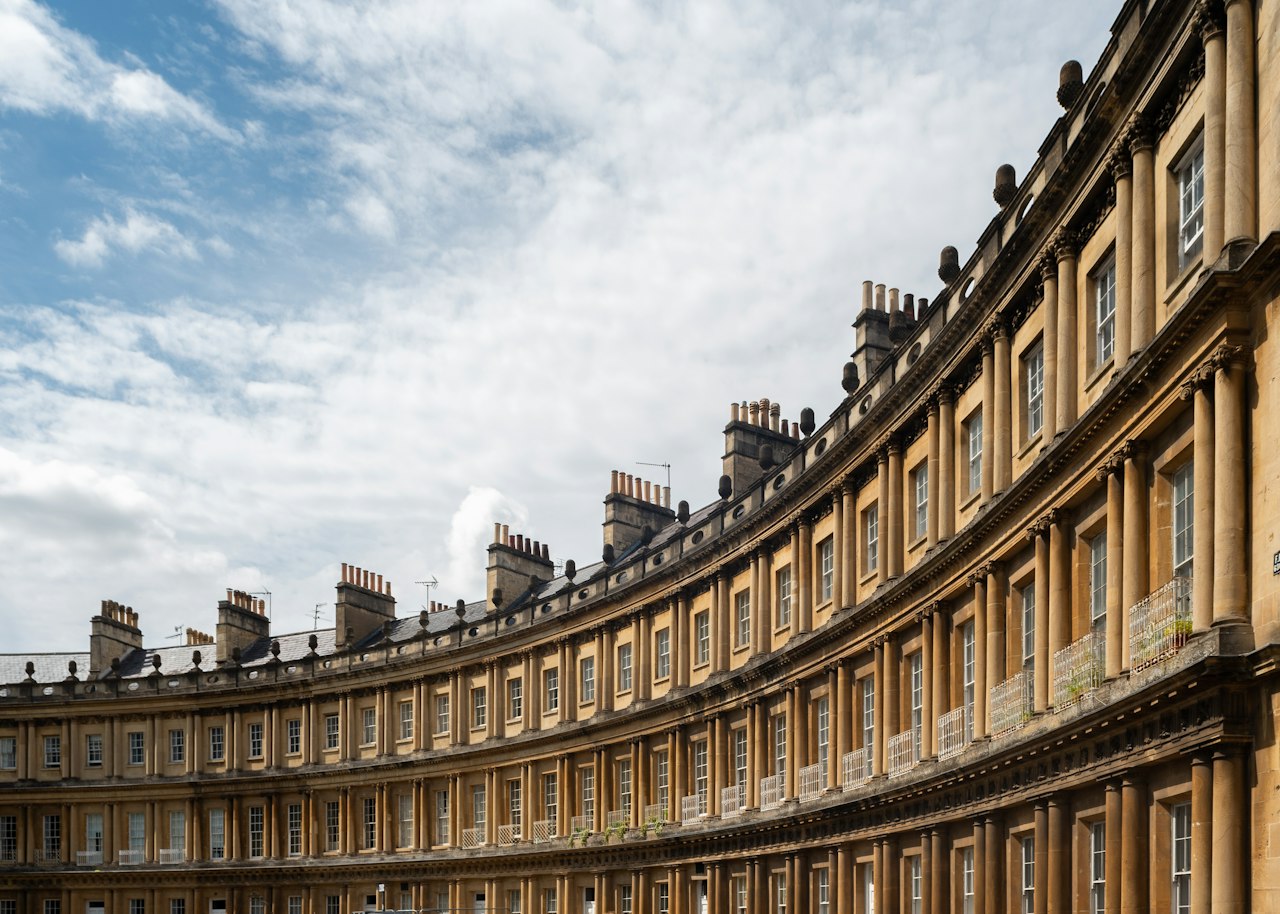
It is usually busiest in daylight hours, especially in good weather when people stop for photos and sit on the grass. Most visitors spend a short time here, often just long enough to walk the length of the crescent and look back from the lawn. It sits within easy reach of The Circus and the wider Georgian centre, so it fits naturally into a walking loop.
The Circus
The Circus is a circular Georgian street made up of three matching curved terraces. Standing in the centre, you mainly see the repeated stone fronts, the carefully balanced proportions, and the way the buildings form a complete ring around the space. A detail worth noticing is the carved motifs above the doors and windows, which give each section its own variation while keeping the overall design disciplined.
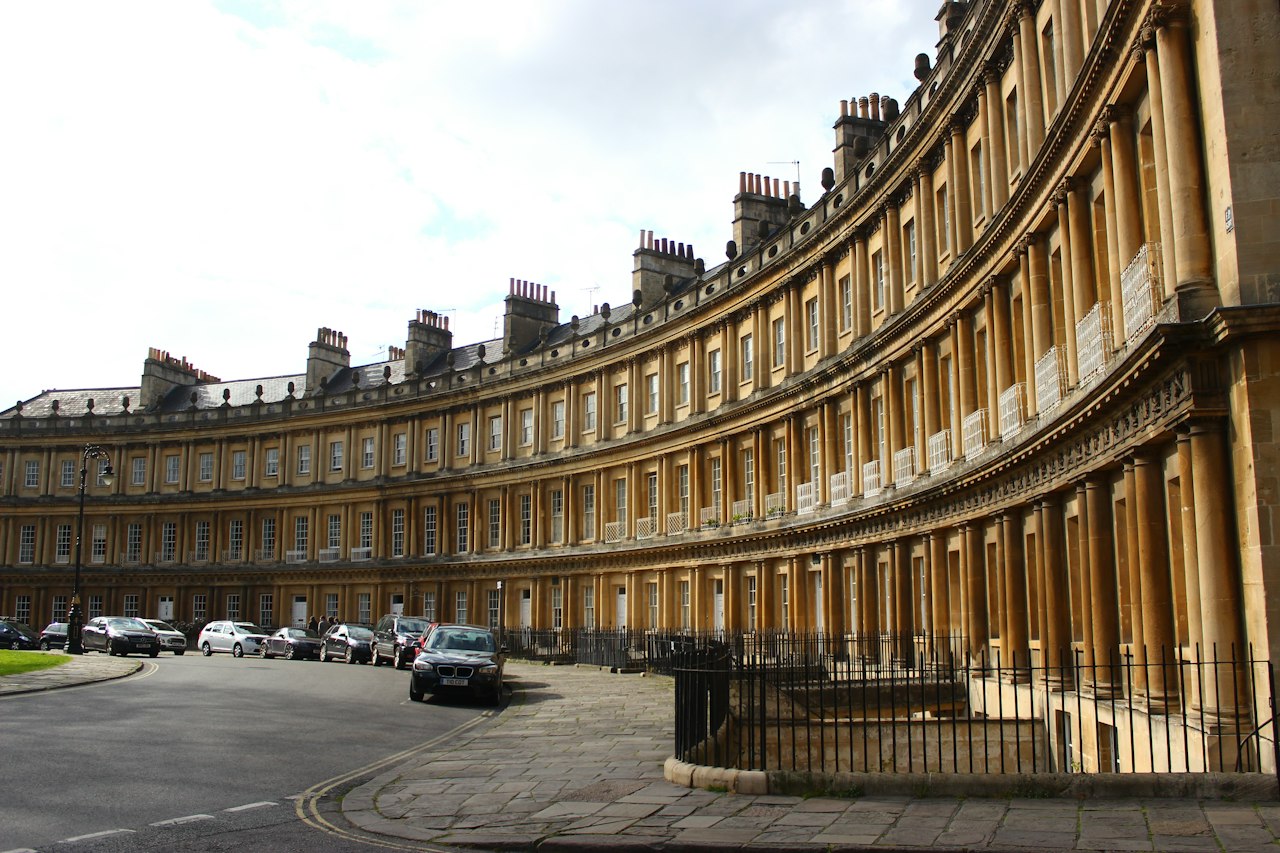
It is generally a short-stop place rather than somewhere people linger for long, though it can be busy with walkers and guided groups. The best time to stand and look is often early or later in the day, when there is less passing traffic and the curve is easier to take in. It is close to Royal Crescent and Queen Square, so people often visit it as part of the same Georgian streets walk.
Queen Square
Queen Square is a formal Georgian square with terraces on three sides and a central green space. What you actually see is not a closed-in plaza but an open, ordered setting where the buildings frame the grass and trees. The sense of symmetry is the main thing to notice, along with the different uses of the buildings around the edges, which make the square feel lived in rather than purely ceremonial.
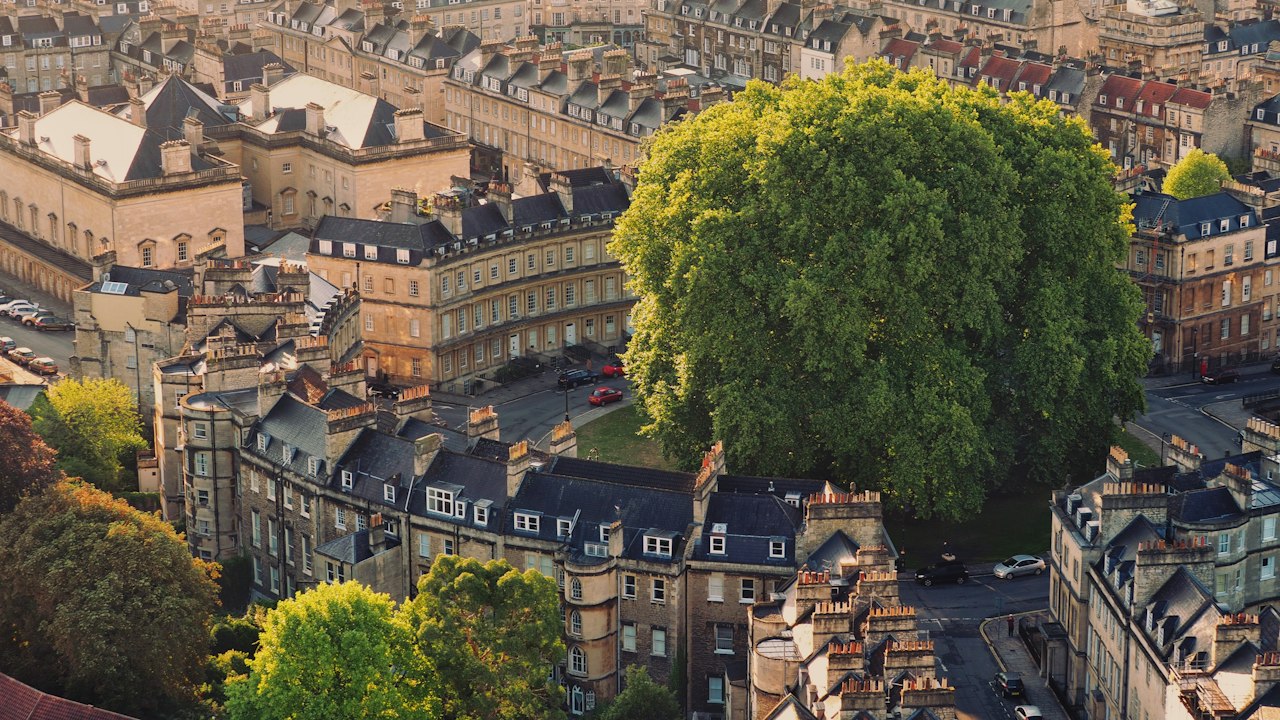
It is usually quieter than the most famous Bath landmarks, though it can fill up with people crossing through or sitting on the benches in warmer weather. Most visitors only spend a few minutes here unless they are using it as a pause on a longer walk. It links well with The Circus and the route down toward the city centre.
Parade Gardens
Parade Gardens are formal gardens beside the River Avon, laid out as a public space in the centre of Bath. From the edge, you see lawns, flowerbeds, paths, and the river beyond, with views across to the south side of the city. The detail worth noticing is the contrast between the neat planting and the movement of the river and foot traffic nearby.
It tends to be busier in fine weather and during the main visitor season, when people come to sit and look across the water. Many visitors spend a short time here, often combining it with a walk along the river or a stop near the bridge and abbey. It is directly connected to the centre of Bath, so it works well as a pause between Pulteney Bridge and the surrounding streets.
Pulteney Bridge
Pulteney Bridge is a stone bridge crossing the River Avon, lined with shops on both sides. What you actually see is a narrow street-like bridge rather than a simple crossing, with Georgian façades above the water and views of the river from the ends. The unusual thing to notice is that the bridge feels like part of the city as much as a way across the river, especially when seen from the banks below.
It is one of the busier places in central Bath, especially during the day, because people cross it, stop to look over the sides, and gather at the viewpoints nearby. Most visits are brief, though many people spend longer if they also walk down to the riverbank or along the edge of Parade Gardens. It sits close to the Abbey and the riverfront, so it is easy to combine with those places on foot.
Bath Abbey
Bath Abbey is the large parish church in the centre of the city, with a west front that dominates the surrounding streets. From outside, you see the tower, the stone tracery, and the carved figures on the façade; inside, the space opens up into a high, bright nave. One detail worth noticing is how the building rises abruptly from the tight streets around it, making the abbey feel larger than its footprint suggests.
It is busiest around service times and during the middle of the day, when the surrounding square is full of visitors. People usually spend anywhere from a few minutes outside to longer if they go in and look around the interior. It stands right beside Pulteney Bridge, Parade Gardens, and the main shopping streets, so it is the centre of a very walkable cluster.
Royal Victoria Park
Royal Victoria Park is a large public park on the edge of Bath, with open grass, tree-lined paths, and planted areas. What you actually see is a broad recreational landscape rather than a formal city garden, with room to walk, sit, and look back toward the city in places. The scale is the main thing to notice, because it gives a different feel from the tighter Georgian streets elsewhere in Bath.
It is generally quietest on weekday mornings and busiest in good weather, especially when families and local walkers are using the open spaces. People often spend from a short visit to a longer half-hour or more, depending on whether they are just crossing through or staying to sit and walk. It is near the Royal Crescent area, so it connects naturally with the northern Georgian neighbourhoods.
Bath Skyline
The Bath Skyline is a walking route above the city that gives long views over Bath and the surrounding hills. What you actually see is a changing sequence of fields, woodland edges, stone walls, and distant city rooftops rather than a single fixed viewpoint. The detail worth noticing is how quickly the urban centre gives way to countryside, while still leaving Bath clearly visible below.
It is usually quieter than the central sights, though weekends and good-weather afternoons can bring more walkers. People often spend one to several hours depending on how much of the route they do, because it is more of a walk than a stop. It works as a contrast to the Georgian centre and gives a wider sense of where the city sits in the landscape.
A Free Self-Guided Walking Route Through Bath
The route: Bath
This route works best as a morning or late-afternoon walk, when the Georgian streets are quieter; it’s roughly a gentle 4 km loop with time to pause for photos and viewpoints.
- Royal Victoria Park
- Royal Crescent
- The Circus
- Queen Square
- Bath Abbey
- Pulteney Bridge
- Parade Gardens
Paste it into the agent chat in Votura and it will build the map and the audio guide.
Want the Stories Behind Each Stop?
Everything above is free to do on your own. If you want the history and local context narrated as you walk, Votura's AI audio tours of Bath guide you stop by stop — at your own pace, offline if you like.
Sources
- Visit Bath — Free things to do in Bathvisitbath.co.uk
- The Mayor of Bath’s Honorary Guides — Free walking tours of Bathbathguides.org.uk
- UNESCO World Heritage Centre — City of Bathwhc.unesco.org
- University of Bath — City of Bath Walking Networkbath.ac.uk
Frequently Asked Questions
What free places can you visit in Bath on a self-guided walk?
You can walk to several of Bath’s best-known sights for free, including the Royal Crescent, The Circus, Queen Square, the Pulteney Bridge area, and riverside paths along the Avon. The post also highlights public squares, market browsing, architectural details, and scenic viewpoints as no-cost ways to explore the city.
Where is the Royal Crescent in Bath?
The Royal Crescent sits within easy reach of The Circus and the wider Georgian centre, making it a natural stop on a walking loop. It is a long curve of Georgian town houses set around a broad lawn, and visitors usually reach it on foot as part of exploring the city’s main Georgian streets.
How long do you need at The Circus in Bath?
The Circus is described as more of a short-stop place than somewhere people linger for long. Most visitors spend a brief time there taking in the circular Georgian design, the repeated stone fronts, and the carved motifs above the doors and windows.
When is the best time to visit the Royal Crescent or The Circus?
The Royal Crescent is usually busiest in daylight hours, especially in good weather, when people stop for photos and sit on the grass. For The Circus, early or later in the day is often best because there is less passing traffic and the curve is easier to appreciate.
Why is Bath good for budget travelers?
Bath rewards budget travelers because much of its character can be enjoyed just by walking the streets. The post focuses on free public spaces and scenic architecture, so you can see a lot without paying for entry.
Hear this city out loud
Votura turns the places in this guide into a self-guided audio tour you can follow at your own pace.