Free Things to Do in Manchester: A Self-Guided Walking Guide
The best genuinely free attractions in Manchester — parks, viewpoints, markets, and landmarks — ordered into a self-guided walking route you can follow today.

Manchester is a city that reveals a lot without asking you to spend a penny. From the civic grandeur of Albert Square and the red-brick drama of the former industrial quarter to canal towpaths, open plazas, and market halls you can admire from the outside, this walking guide focuses on the city’s public face and the views you can enjoy just by being there.
Why Manchester Rewards Travellers on a Zero Budget
That means lingering at street level for architecture, people-watching, and big-sky viewpoints rather than moving from paid attraction to paid attraction. If you want a more tailored way to explore, Votura AI generates audio tours matched to your travel time, transport preference, and chosen theme, so you can shape a free day around exactly how you like to wander.
Albert Square
Albert Square is a civic square in central Manchester, set around the town hall and bordered by Victorian and later civic buildings. From the middle, you see a broad paved space, the sheltering mass of the Town Hall, and the mix of stone façades and statues that give the square its formal feel. The detail worth noticing is how the square works as a stage for the city: the space is open, but the architecture closes in around it and makes the buildings feel larger than they do from the street.
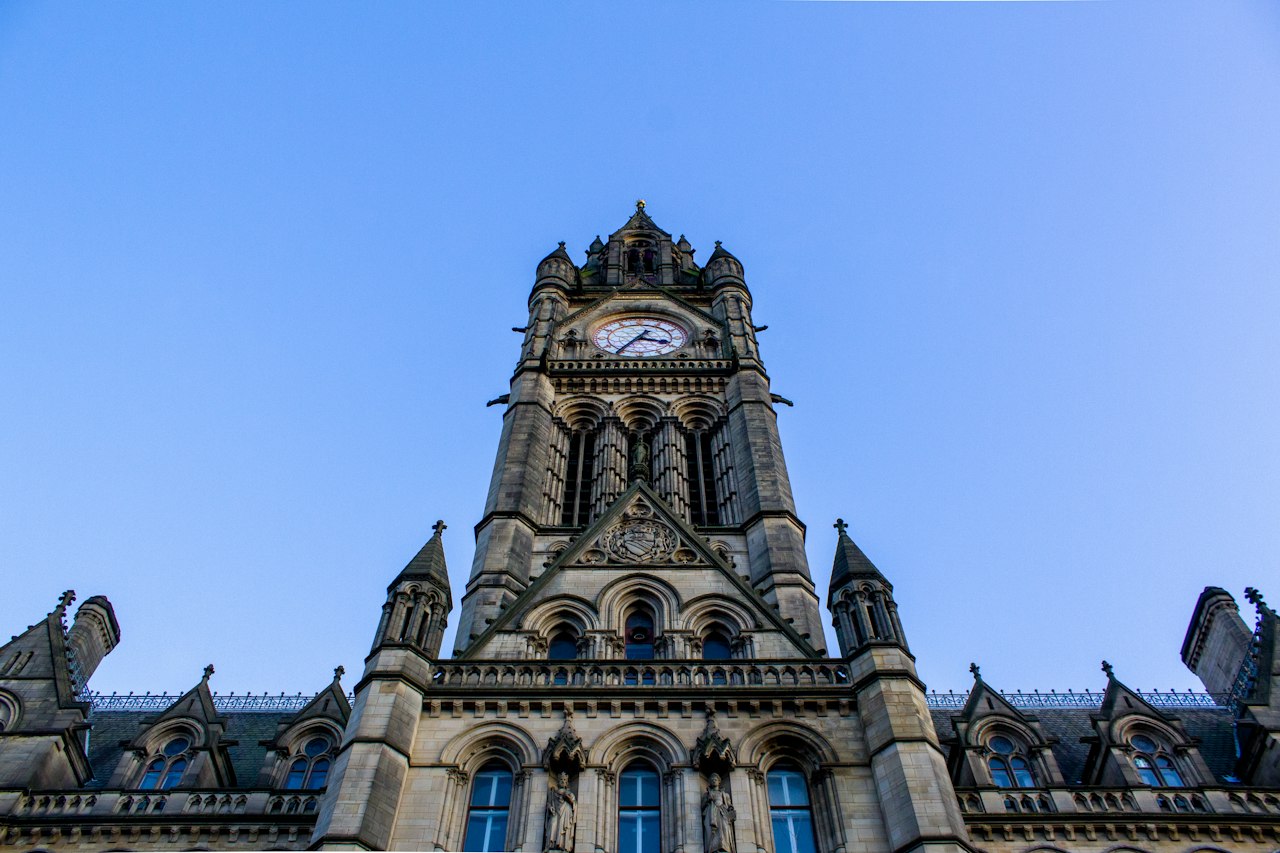
It is usually quieter in the morning and busier around lunch, late afternoon, and during events or markets. People often spend only a short time here unless they are pausing for photos or crossing between nearby streets. It sits close to St Ann’s Square, Deansgate, and the civic buildings around the town hall area, so it works well as part of a short walk through the centre.
Manchester Cathedral
Manchester Cathedral is the city’s Anglican cathedral, built in stone with a long, layered history that shows in its architecture. From outside, you notice the tower, the Gothic details, and the way the building sits slightly tucked away from the busiest shopping streets. What stands out is the contrast between the calm, enclosed setting and the city noise just beyond it, which makes the cathedral feel separate from the surrounding centre.
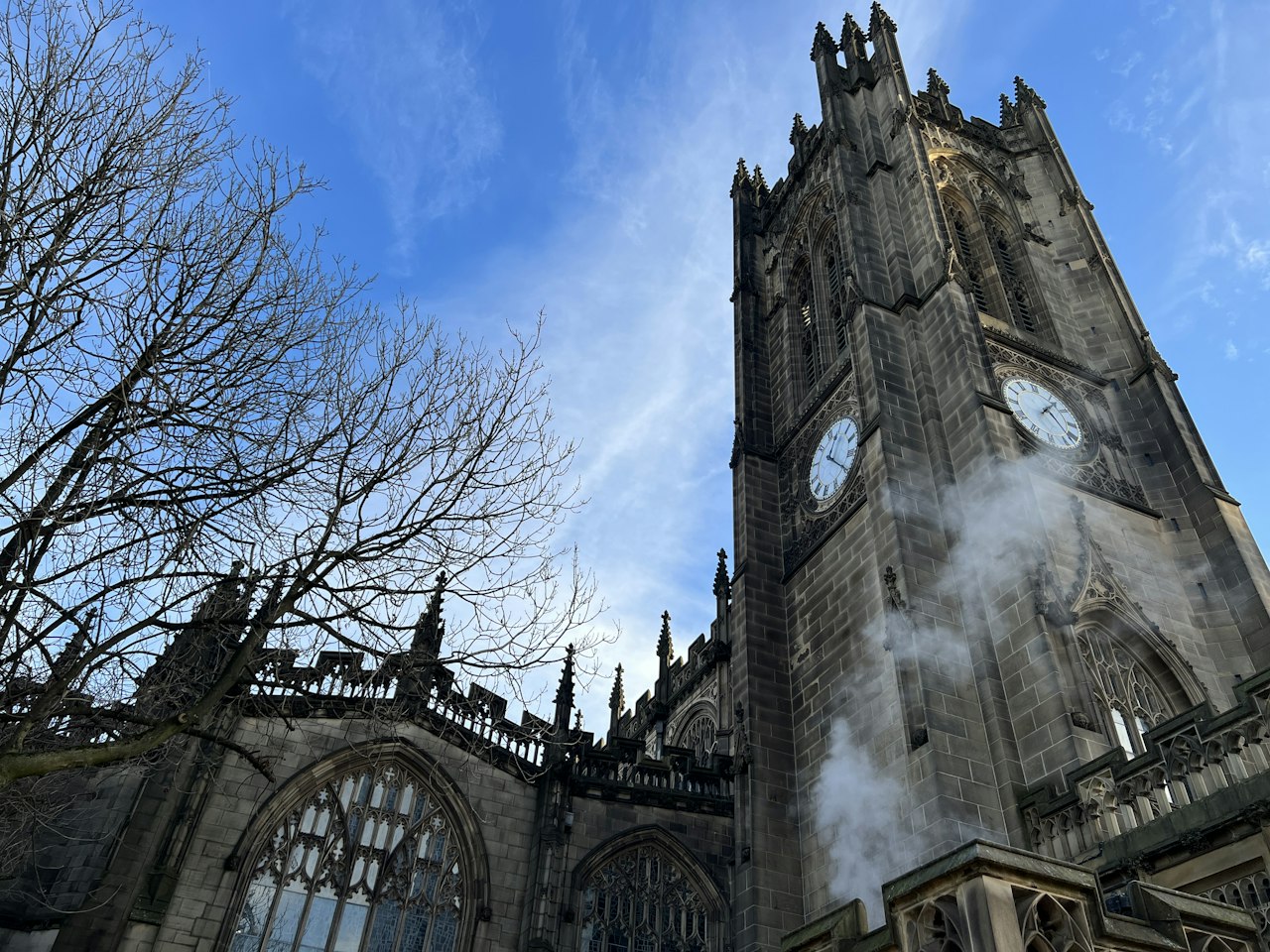
It is often quieter than the main shopping streets nearby, though it can be busier when services, tours, or events are taking place. Most people spend a short visit here unless they are looking around the interior in more detail. It is close to Exchange Square, the Shambles area, and the route toward the National Football Museum and Chetham’s Library.
Chetham’s Library
Chetham’s Library is a historic library in a former medieval building beside Manchester Cathedral. What you see from outside is stone, narrow windows, and an old complex that feels older than the modern city around it. The main detail to notice is the sense of age and enclosure: it is not a grand public facade so much as a place that still feels tied to scholarship and quiet use.
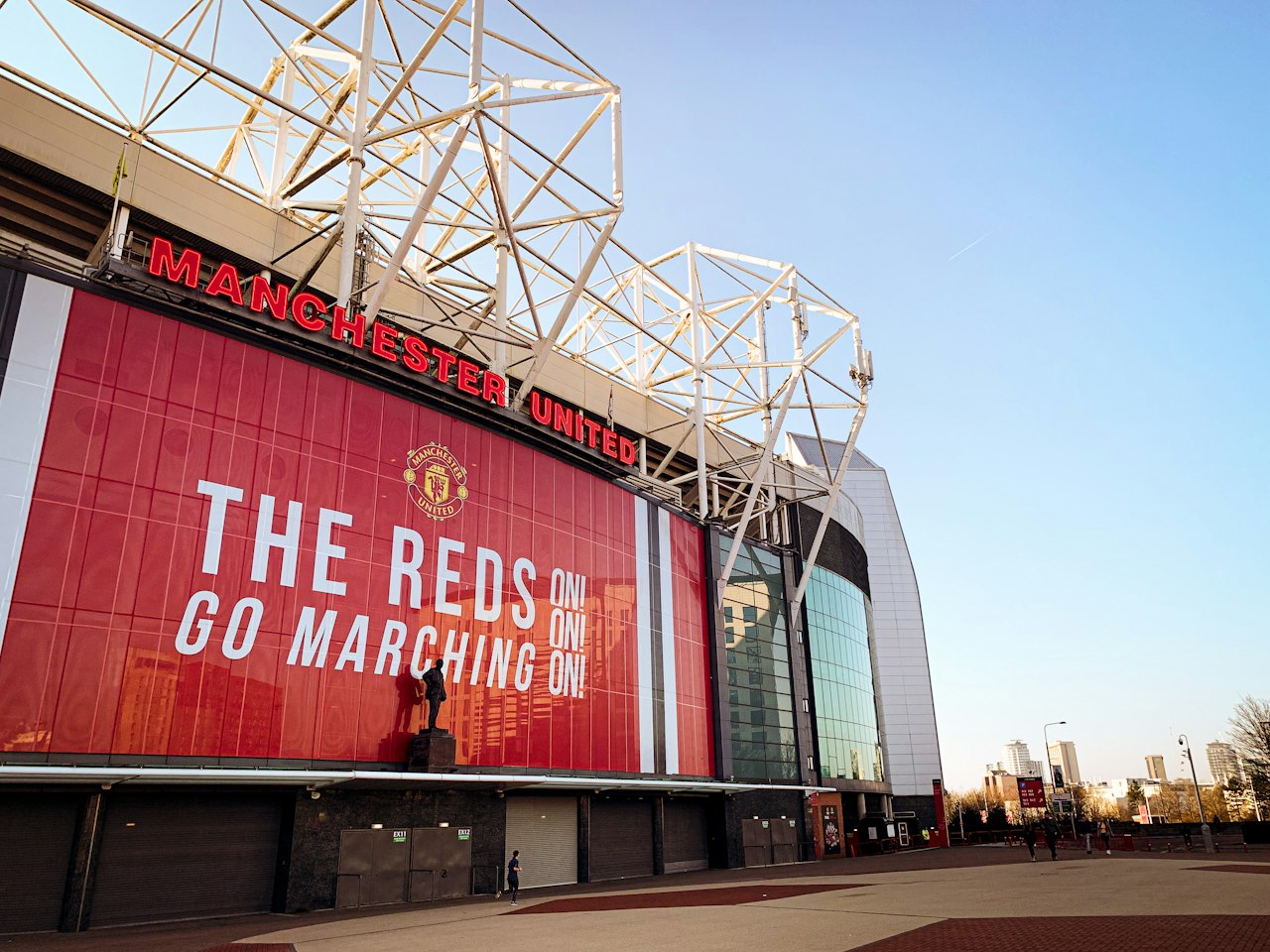
It is generally a quieter stop than the major visitor attractions nearby, and people usually come specifically to see the building rather than pass through casually. A visit is often brief unless you are joining a longer look around the historic rooms. It is closely linked with Manchester Cathedral and sits within easy walking distance of the National Football Museum and the city centre squares.
National Football Museum
The National Football Museum is a museum in central Manchester focused on football’s history and culture. From outside, you see a modern building with large glazed surfaces and a prominent position above Cathedral Gardens. The detail to notice is how open and public the setting feels, with the museum overlooking people moving through the city rather than standing apart from it.
It is usually busier than the surrounding public spaces, especially at weekends and during school holidays. Many visitors spend around an hour or two, depending on how much of the collection they want to see. It is near Manchester Cathedral, Exchange Square, and the edges of the shopping district, so it fits easily into a centre-city walking route.
Exchange Square
Exchange Square is a public square in the centre of Manchester, shaped by shops, office buildings, tram lines, and the flow of people through the city. What you actually see is a busy open space with seating, paving, and movement in every direction, rather than a square that feels isolated. The detail worth noticing is the mix of old and new around its edges, where the square acts as a connector between retail, transport, and the older part of the city.
It is usually busy through the day, especially at commuting times, lunch, and weekends, because it sits on a key route through the centre. People often pause here briefly rather than stay long, unless they are meeting someone or taking a break. It connects directly to the Arndale area, the National Football Museum, Manchester Cathedral, and the walk toward St Ann’s Square and the northern edge of the shopping district.
The Printworks
The Printworks is a large leisure complex in central Manchester, built in the shell of a former printworks. From outside and inside, what you see is a big mixed-use building with restaurants, bars, and entertainment spaces arranged around a central interior. The detail worth noticing is the old industrial structure that remains part of the setting, which gives the place more texture than a standard modern mall or entertainment block.
It is livelier in the evening and at weekends, and quieter during weekday mornings and early afternoons. Most people only spend a short time passing through unless they are eating, going to the cinema, or meeting friends. It sits near Exchange Square and Manchester Cathedral, with easy access to the surrounding city-centre streets.
St Ann’s Square
St Ann’s Square is a historic square in central Manchester, surrounded by older commercial buildings and set around St Ann’s Church. What you actually see is a calm rectangular public space with stone paving, trees, benches, and the church as its focal point. The detail worth noticing is the contrast between the square’s quieter, more restrained atmosphere and the busier shopping streets only a short walk away.
It is usually less hectic than nearby retail areas, though it fills up at lunchtime and during city events. People often spend a few minutes here, or longer if they are visiting the church or sitting in the square. It links well with Deansgate, King Street, Albert Square, and the route toward Exchange Square and the shopping core.
Northern Quarter street art
Northern Quarter street art is not one single site but a changing layer of murals, tags, paste-ups, and painted walls across the district. What you see is a mix of large commissioned pieces and smaller works on side streets, shutters, and alley walls. The detail to notice is that it changes often, so part of the experience is the difference between what feels planned and what feels improvised, with new work appearing over older paint.
It is generally best to walk around here in the daytime, when the streets are easier to explore and the artwork is easier to notice. People often spend anywhere from a short stroll to an hour or more, depending on how far they wander. It connects naturally with Stevenson Square, Oldham Street, Afflecks, and the wider Northern Quarter streets full of independent shops and cafes.
A Free Self-Guided Walking Route Through Manchester
The route: Manchester
This is an easy central loop best done in late morning or early afternoon, when the streets are lively but not yet packed; allow time to drift between stops and expect a few extra minutes for photo pauses and detours.
- Albert Square
- St Ann’s Square
- Exchange Square
- National Football Museum
- Chetham’s Library
- Manchester Cathedral
- Northern Quarter street art
Paste it into the agent chat in Votura and it will build the map and the audio guide.
Want the Stories Behind Each Stop?
Everything above is free to do on your own. If you want the history and local context narrated as you walk, Votura's AI audio tours of Manchester guide you stop by stop — at your own pace, offline if you like.
Sources
- Free things to do in Manchester — Visit Manchestervisitmanchester.com
- Walking routes — Manchester City Councilmanchester.gov.uk
- People’s History Museum — Visitphm.org.uk
- Science and Industry Museum admissions guidelines — Science and Industry Museumscienceandindustrymuseum.org.uk
Frequently Asked Questions
What free things can I do in Manchester on foot?
You can explore Manchester’s public spaces and architecture without paying, including Albert Square, Manchester Cathedral, canal towpaths, open plazas, and market halls that can be admired from the outside. The guide focuses on walking, people-watching, and city views rather than paid attractions.
Where is Albert Square in Manchester?
Albert Square is in central Manchester, around the town hall and bordered by Victorian and later civic buildings. It is close to St Ann’s Square, Deansgate, and the civic buildings around the town hall area.
How long do people usually spend at Albert Square?
Most people spend only a short time there unless they are stopping for photos or crossing between nearby streets. It is often used as part of a wider walk through the city centre.
Where can you see Manchester Cathedral from outside?
Manchester Cathedral is set slightly tucked away from the busiest shopping streets, near Exchange Square, the Shambles area, and the route toward the National Football Museum and Chetham’s Library. From outside, you can see the tower, Gothic details, and its calm setting in the city centre.
Can I use this guide for a free self-guided walk in Manchester?
Yes, the guide is designed as a self-guided walking route that highlights places you can enjoy just by being there. It emphasizes free public spaces, short stops, and a flexible way to explore the city centre on a zero budget.
Hear this city out loud
Votura turns the places in this guide into a self-guided audio tour you can follow at your own pace.