One Day in Kyoto: The Perfect Self-Guided Itinerary
Make the most of 24 hours in Kyoto — hit the highlights and uncover hidden spots with a Votura self-guided audio tour.

Kyoto rewards travelers who want a lot without wasting a minute: in one day, you can move from quiet temple lanes and vermilion gates to a bustling market and a refined tea break, all with surprisingly smooth transit. This itinerary is built for seeing Kyoto’s essentials efficiently, so you spend less time planning and more time actually walking its streets, shrines, and neighborhoods.
How to Make the Most of One Day in Kyoto
The goal is to make every stop count, whether you prefer walking, public transit, or a fast mix of both. Votura AI generates audio tours matched to the traveller’s time, transport preference, and chosen theme, helping you experience Kyoto in a way that fits a single day without feeling rushed.
Kyoto at Dawn and Dusk: A Two-Day Walk Through Shrines, Temples, and Pilgrim Streets
This is a two-day walk through Kyoto’s older eastern and western edges, starting in Higashiyama around Yasaka Shrine and ending in Arashiyama after Fushimi Inari Taisha and the city’s temple districts. The route threads together shrine precincts, temple grounds, old slope streets, and quiet pedestrian lanes, with long stretches where the city’s religious geography becomes the thing you are walking through. It earns the time because the connections matter: the transition from Yasaka Shrine to Kiyomizu-dera, then from the Philosopher’s Path to Ginkaku-ji and on to Arashiyama, shows Kyoto as a lived landscape rather than a list of attractions.
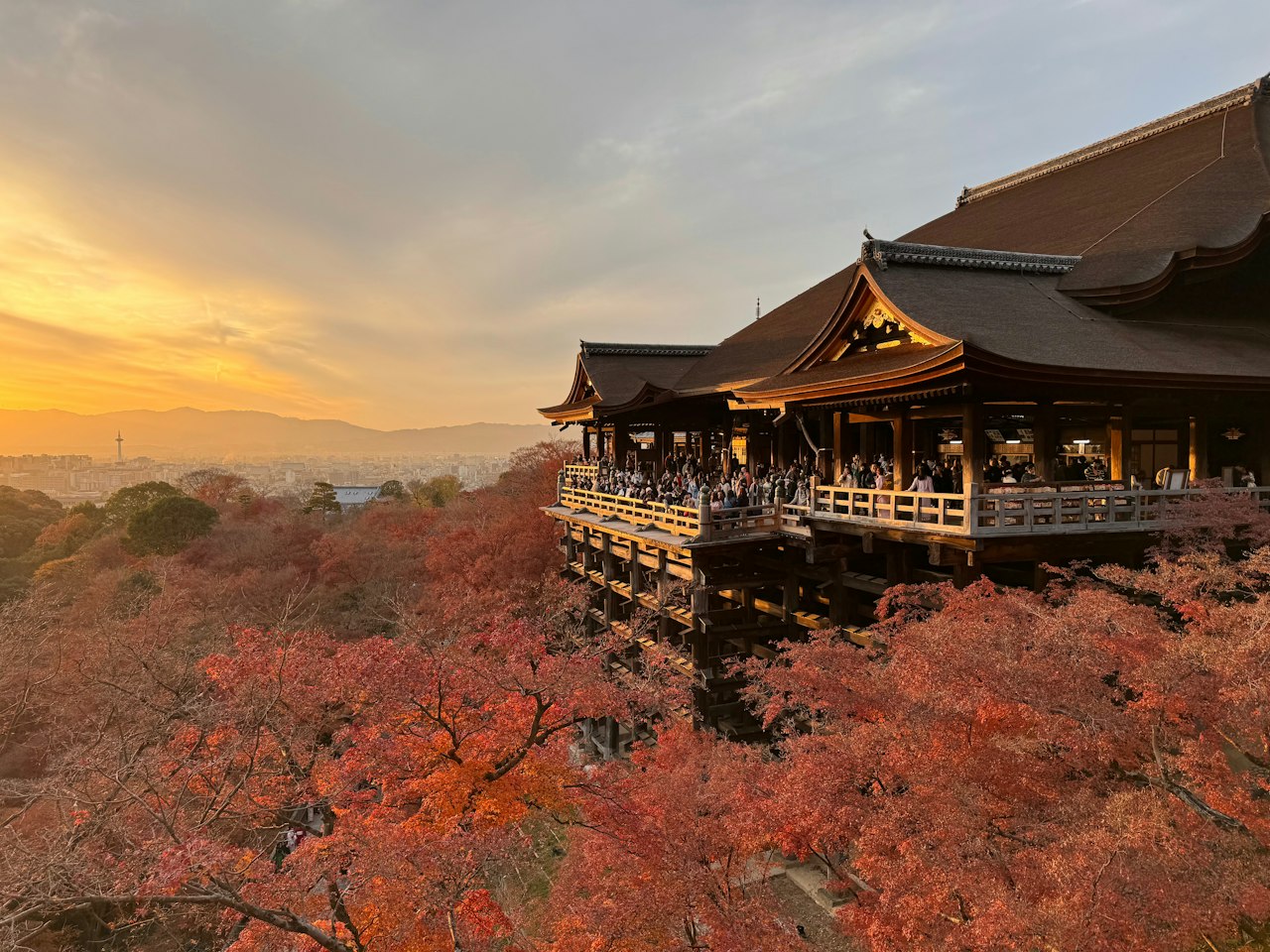
At Yasaka Shrine, the first thing that stays with you is the broad approach under lanterns and the sense that the precinct is still used, not staged. Kodai-ji feels more enclosed, with carefully kept gardens and temple buildings that turn the walk inward before the streets open again at Houkanji Temple and the Yasaka Pagoda, where the five-story silhouette is the thing everyone photographs. Sannen-zaka drops into a preserved slope of stone paving and low wooden fronts, and Kiyomizu-dera rises above it with its huge veranda, the wooden structure and hillside outlook doing most of the work. Chion-in changes the scale completely with its great stone steps and massive gate, while Shoren-in is quieter, with dark eaves, a garden feel, and the sort of interior calm that makes the earlier crowds seem far away. Nanzen-ji opens into broad temple grounds and the large brick aqueduct nearby, then the Philosopher’s Path gives you a narrow, tree-lined walk that leads to Ginkaku-ji and its restrained moss, sand, and clipped geometry; later, Fushimi Inari Taisha shifts the day into vermilion corridor after corridor, before Tenryu-ji, Nonomiya Shrine, and the Arashiyama Bamboo Grove finish the route with temple hallways, a small shrine by the grove, and a tall, filtered green silence.
The route
Plan on two days, walking east to west and starting at dawn.
- Yasaka Shrine (八坂神社)
- Kodai-ji (高台寺)
- Houkanji Temple and Yasaka Pagoda (法観寺 八坂の塔)
- Sannen-zaka (産寧坂 (三年坂))
- Kiyomizu-dera Temple (清水寺)
- Chion-in Temple (知恩院)
- Shoren-in (青蓮院門跡)
- Nanzen-ji Temple (南禅寺 法堂)
- Philosopher's Path (哲学の道)
- Ginkaku-ji Temple (慈照寺 (銀閣寺))
- Fushimi Inari Taisha (伏見稲荷大社)
- Tenryu-ji Temple (天龍寺 法堂)
- Nonomiya Shrine (野宮神社)
- Arashiyama Bamboo Grove (竹林の小径)
Paste it into the agent chat in Votura and it will build the map and the audio guide.
Before you go
Starting at dawn helps because the Higashiyama temples and slope streets are busiest once tour groups arrive, and the last stretch in Arashiyama is easier before midday crowds build. The walk is long and involves repeated climbs, stairs, and uneven stone, especially around Sannen-zaka, Kiyomizu-dera, Fushimi Inari Taisha, and the approaches to Tenryu-ji and Arashiyama. Some temple halls, gardens, and inner areas may close earlier than the grounds themselves, so the route works best if you keep flexibility and do not plan every stop as a fixed-duration visit. Bring water, comfortable shoes with grip, and a rain layer; the stone lanes and temple steps can be slick after rain.
Kyoto in Chant and Stone: A Two-Day Walk Through Higashiyama’s Sacred Heart
This route is a two-day walk through Kyoto’s eastern temple belt, beginning around Gion and climbing and descending through Higashiyama before continuing south toward Fushimi Inari and back up to Kiyomizu-dera. It links shrine grounds, major Buddhist complexes, neighborhood lanes, and steep stone approaches in a way that makes the city’s sacred geography feel continuous rather than separate. The time goes to crossings, pauses, and the in-between spaces as much as to the temples themselves. It earns the time because the sequence shows how worship, daily traffic, and old wooden architecture still share the same streets.
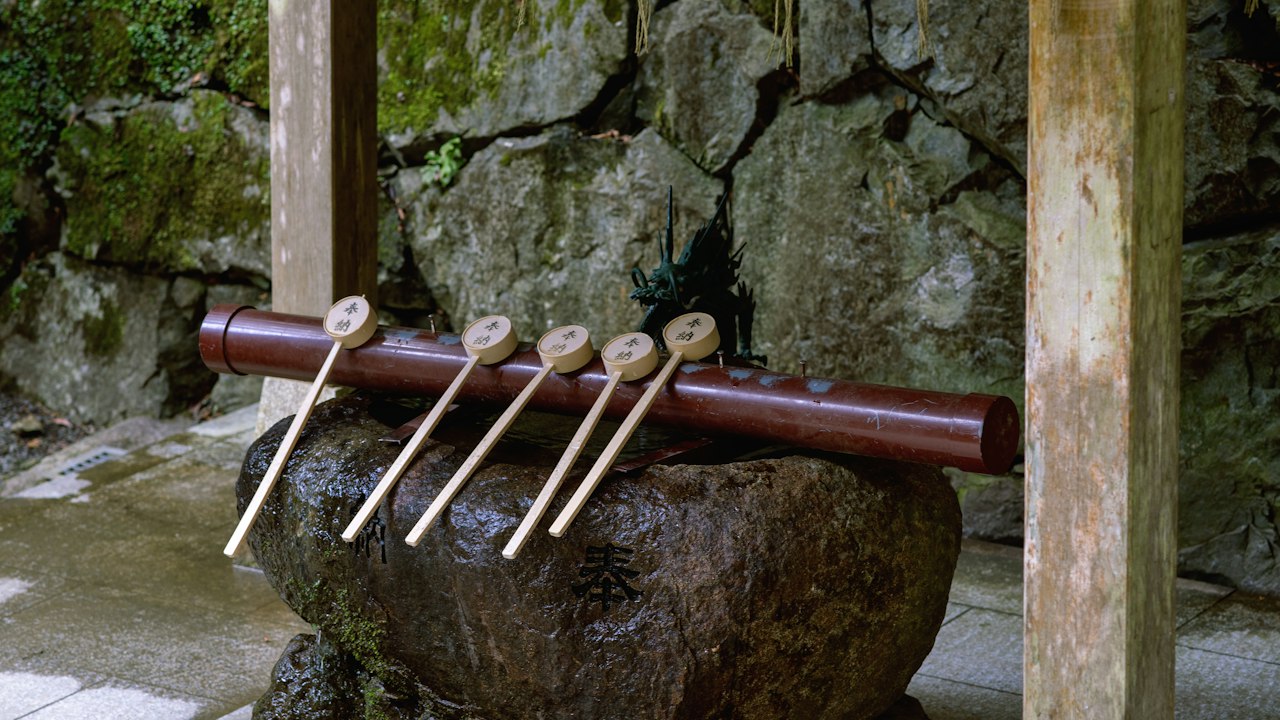
At Yasaka Shrine, the first impression is the broad forecourt, lanterns, and the constant flow of people passing under the gate into the precinct. Maruyama Park immediately changes the mood: open paths, old trees, and the pondside edges where the shrine crowds thin out. Chion-in then rises in scale, with its enormous Sanmon gate, broad stairways, and the quiet weight of the temple compound; Shoren-in feels more contained after that, with its carefully framed gardens and the blue-green surfaces that give the place its name. Nanzen-ji is defined less by one building than by its spread, especially the brick aqueduct and the large gate nearby, before the route drops toward Houkanji Temple and the Yasaka Pagoda, where the five-story tower appears suddenly above the narrow lanes. Kennin-ji offers the contrast of a deep temple precinct tucked into the city, while Rokuharamitsuji is smaller and more intimate, with its devotional images and compact grounds. Sanjusangen-do stretches the route into a long wooden hall, and by the time the walk reaches Tofuku-ji and then Fushimi Inari Taisha, the changes in scale are sharp: wooden bridges and temple roofs give way to the dense red torii and the long climb of stone steps. Koyasu Pagoda sits in the Kiyomizu area as a quieter landmark before the route finishes at Kiyomizu-dera, where the wooden veranda and the slope below the temple make the final approach feel elevated and exposed.
The route
Best walked southward over two days, starting near Yasaka Shrine and ending at Kiyomizu-dera.
- Yasaka Shrine (八坂神社)
- Maruyama Park (円山公園)
- Chion-in Temple (知恩院)
- Shoren-in (青蓮院門跡)
- Nanzen-ji Temple (南禅寺 法堂)
- Houkanji Temple and Yasaka Pagoda (法観寺 八坂の塔)
- Kennin-ji (建仁寺)
- Rokuharamitsuji Temple (六波羅蜜寺)
- Sanjusangen-do (三十三間堂)
- Tofuku-ji (東福寺)
- Fushimi Inari Taisha (伏見稲荷大社)
- Koyasu Pagoda (子安塔)
- Kiyomizu-dera Temple (清水寺)
Paste it into the agent chat in Votura and it will build the map and the audio guide.
Before you go
An early start matters because the walk crosses busy commercial streets, temple precincts that become crowded later in the day, and a long uphill finish around Kiyomizu-dera. The walking itself is not flat: there are repeated climbs, stone steps, and some long stretches on hard pavement, so it feels substantial even when each individual segment is short. Yasaka Shrine, Chion-in, Kiyomizu-dera, and Fushimi Inari Taisha can all draw large numbers of visitors, especially later in the morning and on weekends, while some temple buildings or gardens may have limited access or seasonal closures. Carry water, comfortable shoes, and enough time to pause inside the precincts rather than treating the route as a fast traverse.
Kyoto Icons on Foot: Gion, Higashiyama, Arashiyama & Fushimi Inari Highlights
This route strings together Kyoto’s eastern and southern sights on foot, beginning in Gion Shirakawa and ending at Fushimi Inari Taisha. It runs through the old streets around Hanami-koji, the temple lanes of Higashiyama, and then down to the train-linked shrine hill at Fushimi. The walk works as a two-day sequence because the first half is dense with narrow streets and temple precincts, while the second half collects larger walking stretches and a long final climb. It earns the time by letting the city change gradually, from wooden townscape to temple slopes to the bright torii tunnels of Inari.
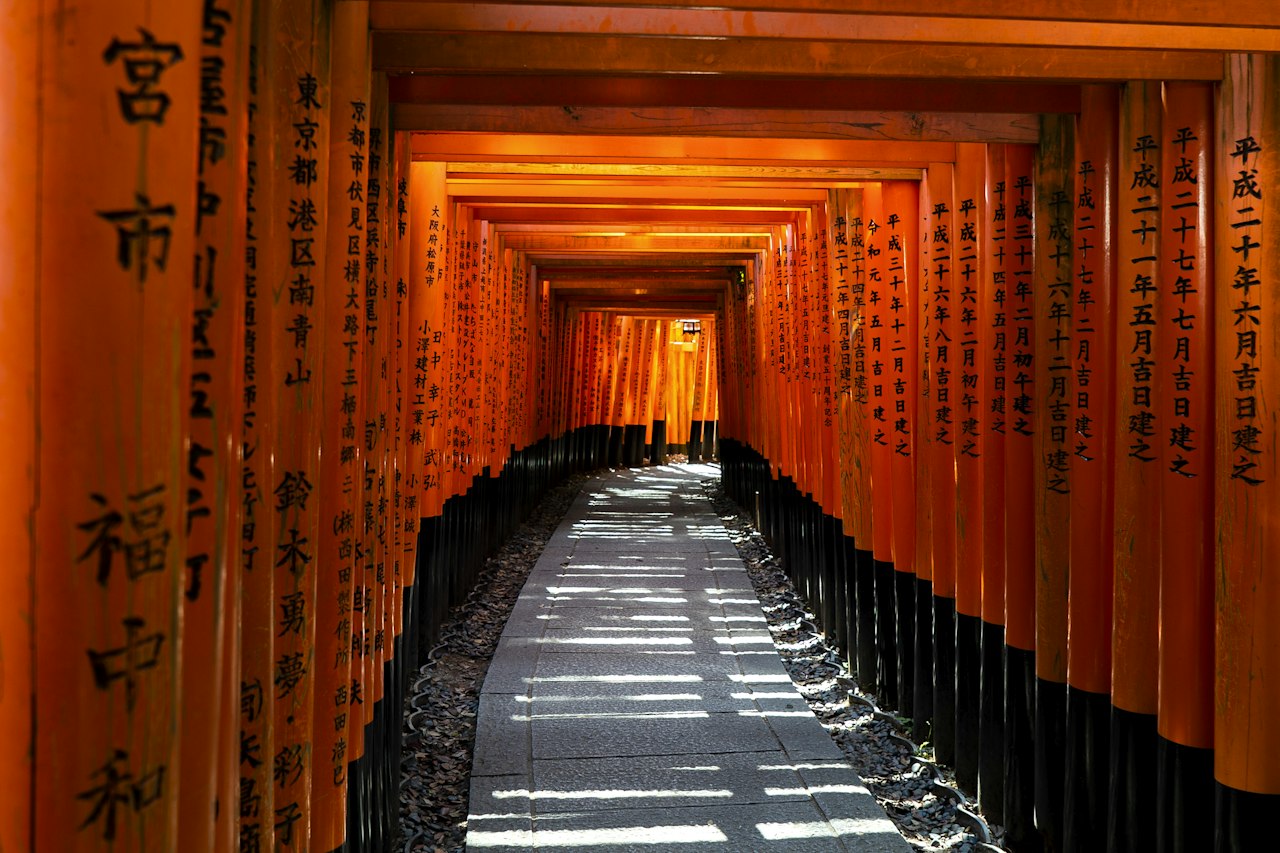
Shikinean Gion Shirakawa and Hanami-koji Street set the tone with narrow lanes, low eaves, and the canal-side atmosphere around Gion. Kennin-ji feels quieter and more enclosed, with gravel courts and temple buildings tucked behind the street frontage. Houkanji Temple and the Yasaka Pagoda are the point where the rooflines become the subject, especially when the pagoda rises above the lane at an angle. Ninenzaka, Kōdai-ji Temple, Maruyama Park, and Yasaka Shrine follow in a sequence of slopes, stone paving, and open space; the slope of Ninenzaka, the bamboo-work and gardens around Kōdai-ji, the broad paths of Maruyama Park, and the lanterns and gate at Yasaka Shrine each change the pace. Chion-in Temple has a more monumental feel, with long steps and a large gate, before Sannen-zaka and Kiyomizu-dera bring the route back into tight preserved streets and then up to the temple platform and its views. Fushimi Inari Taisha ends the walk with repeating vermilion torii, stone foxes, and a path that climbs steadily away from the station area.
The route
Allow about 2 days, walking from Gion toward Higashiyama first, then on to Fushimi Inari.
- Shikinean Gion Shirakawa (式音庵 祇園白川)
- Hanami-koji Street (花見小路)
- Kennin-ji (建仁寺)
- Houkanji Temple and Yasaka Pagoda (法観寺 八坂の塔)
- Ninenzaka
- Kōdai-ji Temple (高台寺 天満宮)
- Maruyama Park (円山公園)
- Yasaka Shrine (八坂神社)
- Chion-in Temple (知恩院)
- Sannen-zaka (産寧坂 (三年坂))
- Kiyomizu-dera Temple (清水寺)
- Fushimi Inari Taisha (伏見稲荷大社)
Paste it into the agent chat in Votura and it will build the map and the audio guide.
Before you go
I would start early, especially for the Gion and Higashiyama sections, because the lanes are narrow and fill quickly once day-trippers arrive. The walking is straightforward but not flat: there are many stone slopes and stairways, and the final approach to Kiyomizu-dera and the climb at Fushimi Inari take effort. Hanami-koji, Ninenzaka, Sannen-zaka, Kiyomizu-dera, and Fushimi Inari Taisha are the places most likely to feel crowded; temples and shrine grounds also tend to have areas that close earlier than the surrounding streets. Comfortable shoes, water, and a little flexibility for detours or pauses make the day much easier.
Kyoto Highlights by Bicycle: Dawn to Dusk Cultural Journey
This route links central Kyoto with the eastern and western edges of the city, moving by bicycle between Nishiki Market, Gion, Fushimi Inari Taisha, Kinkaku-ji Temple, and Arashiyama Bamboo Grove. It is less a straight line than a day spent stitching together Kyoto’s different districts, from food streets and old wooden lanes to shrine paths, temple grounds, and river-adjacent neighborhoods. The ride earns its time because each stop has a different atmosphere, and the gaps between them show the city changing from dense downtown blocks to quieter residential streets and back again.
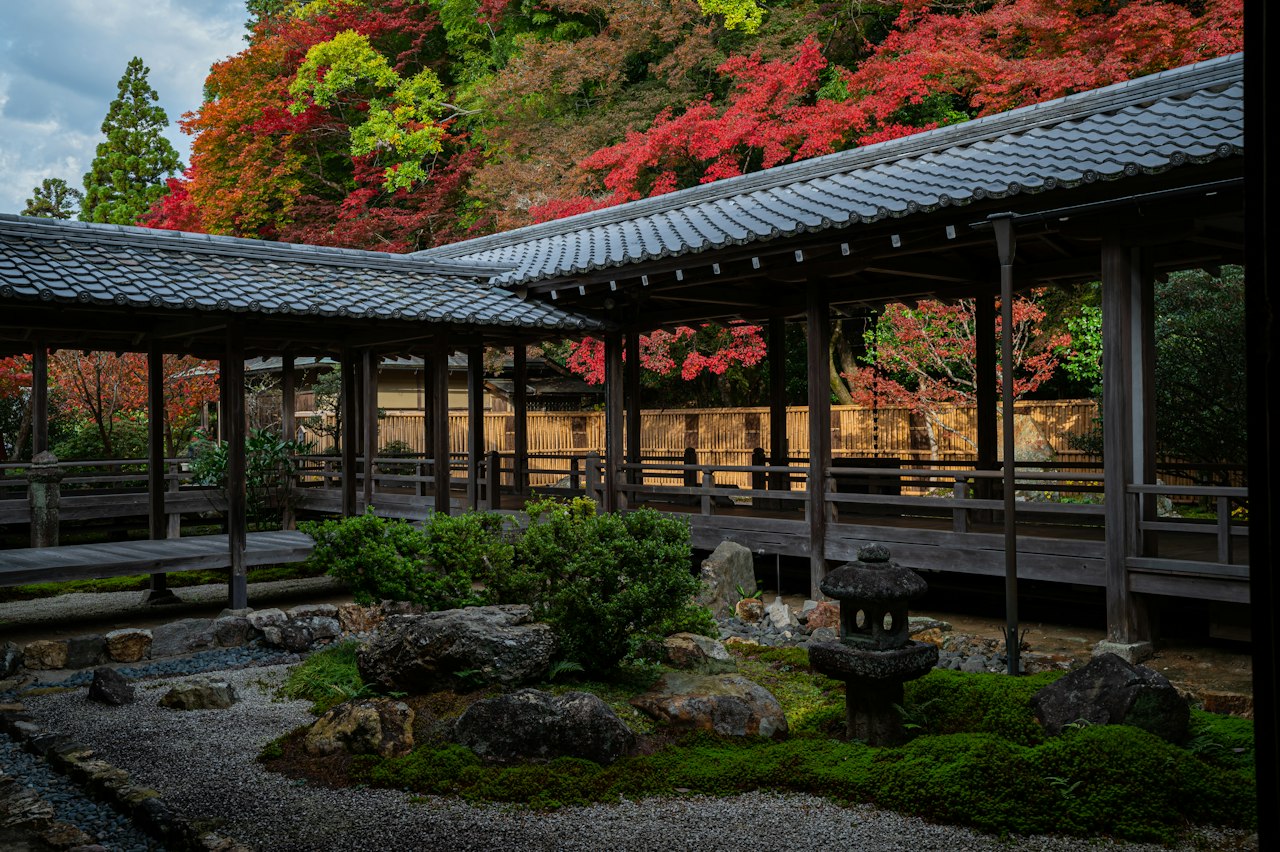
At Nishiki Market (錦市場), the narrow covered street is worth noticing for the overhead signs, the close spacing of stalls, and the quick changes in smell and sound as the crowd moves past fish, pickles, sweets, and knife shops. In Gion (祇園), the appeal is in the lanes themselves: latticed facades, stone paving, and the occasional quiet side street where the district feels more lived-in than staged. Fushimi Inari Taisha (伏見稲荷大社) begins with the bright orange torii gates, but the strongest impression is how quickly the path climbs away from the main shrine into shaded woodland. At Kinkaku-ji Temple (鹿苑寺 (金閣寺)), the gold pavilion matters most when reflected in the pond, especially if the water is still and the pine branches frame the building. Arashiyama Bamboo Grove (竹林の小径) is less about depth than texture: the stalks, the filtered light, and the narrow path create a clean vertical pattern that changes with the wind.
The route
Allow a long day, starting east or central Kyoto and finishing in Arashiyama.
- Nishiki Market (錦市場)
- Gion (祇園)
- Fushimi Inari Taisha (伏見稲荷大社)
- Kinkaku-ji Temple (鹿苑寺 (金閣寺))
- Arashiyama Bamboo Grove (竹林の小径)
Paste it into the agent chat in Votura and it will build the map and the audio guide.
Before you go
Starting early helps because Nishiki Market and Gion are easier to move through before the streets fill and because the middle of the day can feel crowded around Fushimi Inari Taisha and Arashiyama. The route is moderately demanding on a bike, with enough cross-town distance that the long, stop-and-go day matters more than any single hill, though the terrain is not extreme by Kyoto standards. Some parts are busier than others, and the shrine and temple grounds may have different closing rhythms from the surrounding streets, so the most useful plan is to avoid depending on a late arrival at any one stop. Bring water, a phone or map for navigation, and something for rain or heat, since Kyoto weather can change the feel of the ride quickly.
Kyoto Historical Treasures: A 2-Day Driving Journey
This route strings together a long sweep of Kyoto from the east side around Kiyomizu-dera and Gion, across central Kyoto past the Imperial Palace and Nijo-jo Castle, then out toward the western temple district and south to To-ji and Fushimi Inari Taisha. It is not a single continuous pedestrian trail, but a walking-and-transit itinerary through neighborhoods, temple grounds, and castle precincts that sit several kilometers apart. The sequence makes sense because it follows Kyoto’s historical layers from temple town and old merchant streets to the former imperial center and the city’s later religious sites. It earns the time if you want the city’s landmarks in one coherent arc rather than as isolated stops.
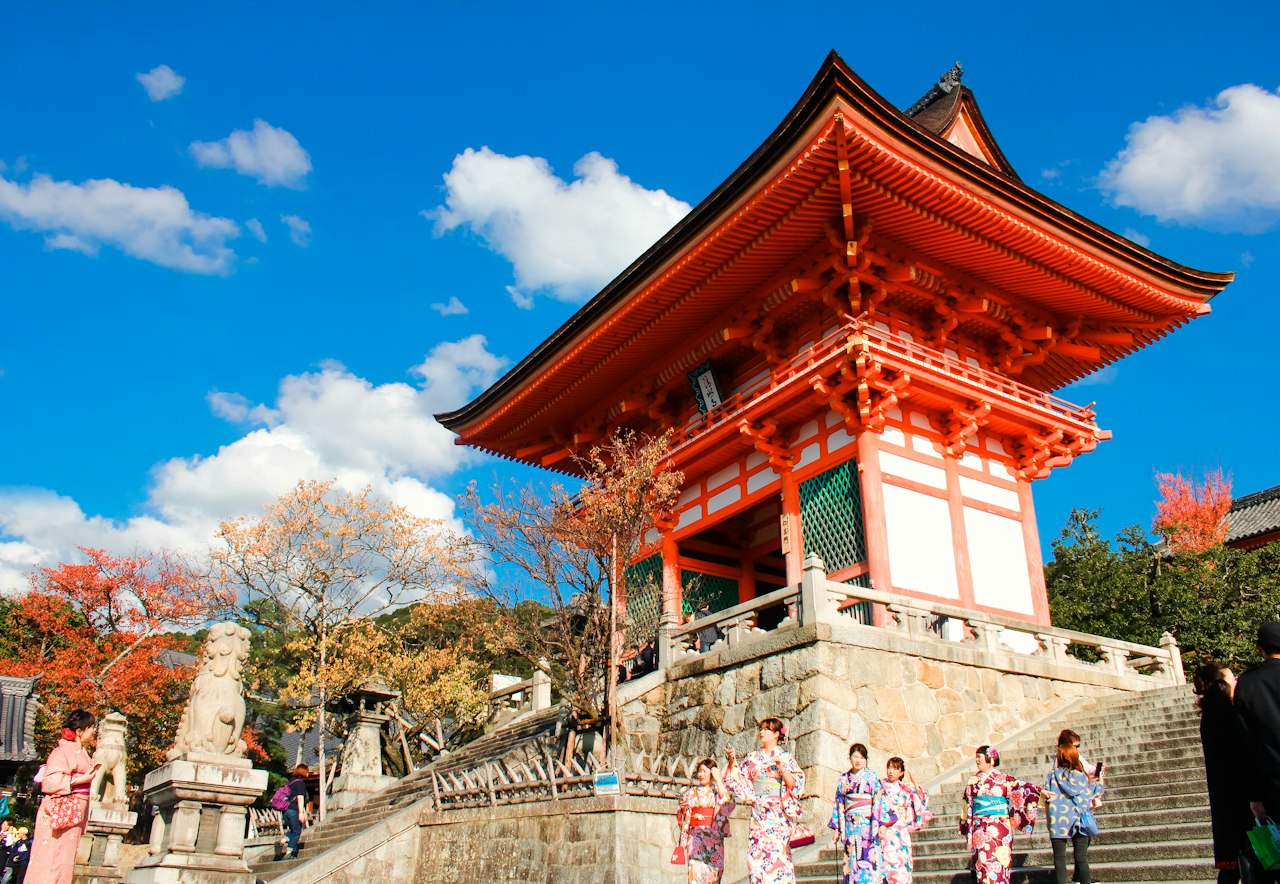
The first stretch around Kiyomizu-dera Temple opens on steep lanes and long views over the city, with the wooden veranda and hillside setting doing most of the work. From there Sanjusangen-do feels narrower and more ordered, and the row of golden figures inside is the detail that stays in mind rather than the exterior. In Gion, the point is the street pattern and preserved facades around Hanamikoji, where the contrast between traffic and old wooden buildings is strongest near dusk. Honno-ji Temple is more modest than the name suggests, and the thing to notice is its central city location rather than any grand approach. At Heian Jingu Shrine, the wide open courtyard and vermilion buildings stand out, then Nanzen-ji Temple shifts the mood with its massive gate, brick aqueduct, and quieter grounds. Kyoto Imperial Palace and Nijo-jo Castle are the architectural anchors of the middle of the route, one for its restrained imperial spaces and the other for the painted rooms and moat, before the western temples turn the day toward the flat gold of Kinkaku-ji’s pond reflection, the raked gravel of Ryoan-ji, the lantern-lined grounds of To-ji Pagoda, and finally the long red tunnel of Fushimi Inari Taisha.
The route
Best walked over 2 days, starting in the east and finishing at Fushimi Inari Taisha.
- Kiyomizu-dera Temple (清水寺)
- Sanjusangen-do (三十三間堂)
- Gion (祇園)
- Honno-ji Temple (本能寺)
- Heian Jingu Shrine (平安神宮)
- Nanzen-ji Temple (南禅寺)
- Kyoto Imperial Palace (京都御所)
- Nijo-jo Castle (二条城)
- Golden Pavilion (金閣舎利殿)
- Ryoan-ji (龍安寺)
- To-ji Pagoda (東寺 五重塔)
- Fushimi Inari Taisha (伏見稲荷大社)
Paste it into the agent chat in Votura and it will build the map and the audio guide.
Before you go
Start early, because the route crosses busy districts and some temple precincts are calmer before the day fills in. The walking itself is uneven rather than difficult: short urban stretches, temple stairs and gravel paths, and a few longer transfers between clusters of sites. Kyoto crowds its biggest names at midday, especially Kiyomizu-dera, Gion, Kinkaku-ji, and Fushimi Inari Taisha, while some sites have limited access to particular buildings even when the grounds are open. Comfortable shoes, water, a small amount of cash, and enough time to pause for trains or buses make the day much easier.
Kyoto's Hidden Gion & Higashiyama: A Two-Day Machiya Walk
This route is a two-day walk through Kyoto’s Gion and eastern temple district, moving from the flat streets around Gion Corner into the older lanes of Higashiyama and up to Kiyomizu-dera. It links theater, shrine precincts, temple grounds, and narrow alleys where machiya facades still shape the street. The interest is in how quickly the city changes: from entertainment quarter to residential lanes to steep stone-paved slopes. It earns the time because the walk shows Kyoto at street level, not as a sequence of isolated sights.
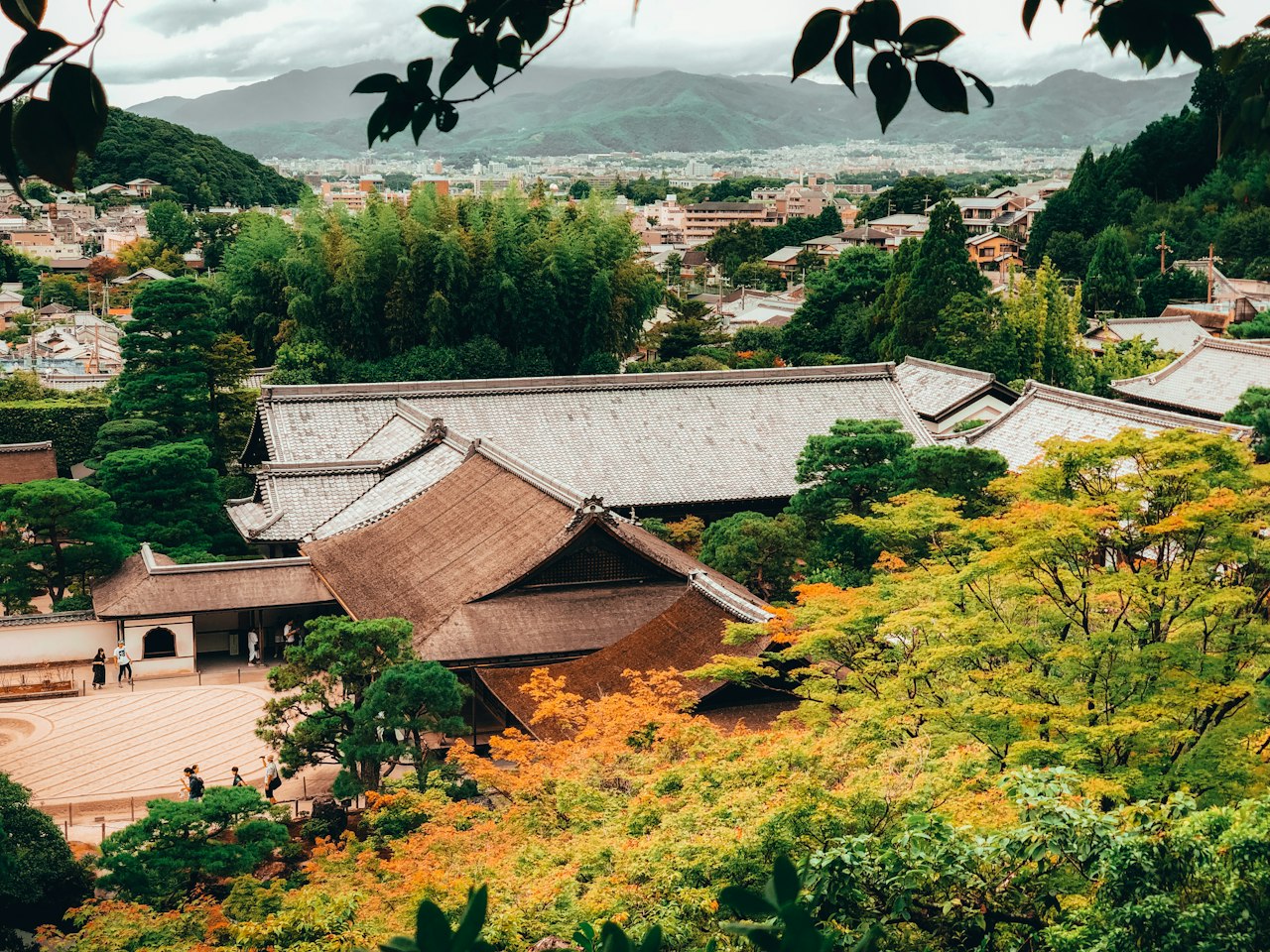
Gion Corner and Gion set the tone with theater fronts, lanterns, and the careful grid of streets around Hanamikoji. On Hanami-koji Street, the best detail is the narrowness of the lane itself and the wooden facades, especially in the quieter side stretches where the paving and eaves feel close overhead. Yasaka Shrine opens the space suddenly, with its broad grounds and hanging lanterns, then Maruyama Park softens the route with trees, paths, and the edges of ponds and rest areas. Kodai-ji shifts the mood again with its temple approach, and Ishibei-koji Alley is about surface and scale: stone walls, low wooden gates, and a lane that seems built for walking slowly. Ninenzaka rises in a sequence of worn steps and sloping roofs, then Houkan-ji Temple and Yasaka Pagoda give the classic stacked silhouette above the surrounding lanes; Kennin-ji feels more enclosed, with temple courtyards and calm pathways before the final climb to Kiyomizu-dera, where the broad wooden terrace and the city view are the main reward. Higashiyama Sancho Koen Park finishes the route with a higher, greener outlook and a pause above the dense district below.
The route
About 2 days; walk it from Gion toward Higashiyama, finishing at Higashiyama Sancho Koen Park.
- Gion Corner (ギオンコーナー)
- Gion (祇園)
- Hanami-koji Street (花見小路)
- Yasaka Shrine (八坂神社)
- Maruyama Park (円山公園)
- Kodai-ji (高台寺)
- Ishibei-koji Alley (石塀小路)
- Ninenzaka
- Houkanji Temple and Yasaka Pagoda (法観寺 八坂の塔)
- Kennin-ji (建仁寺)
- Kiyomizu-dera Temple (清水寺)
- Higashiyama Sancho Koen Park (東山山頂公園)
Paste it into the agent chat in Votura and it will build the map and the audio guide.
Before you go
Starting early in the day keeps the first half quieter, especially around Gion, Hanamikoji, and the approach to Kiyomizu-dera. The walk is not technically difficult, but the eastern half includes steady uphill sections, stone steps, and uneven lanes that add up over two days. Crowds are heaviest around late morning and late afternoon at Yasaka Shrine, Ninenzaka, Kiyomizu-dera, and the lanes around the pagoda; some temple interiors and garden areas may close earlier than the grounds outside. Comfortable shoes, water, and a little flexibility for detours or pauses make the route much easier.
How to Start Your Kyoto Tour with Votura
- Open Votura and tap Explore
- Search for Kyoto or let the app detect your location
- Browse available tours or tap Generate to create a custom tour
- Hit Play and follow the audio guide stop by stop
All tours include audio narration, a route map, and estimated stop times. Download any tour for offline access before you travel.
Frequently Asked Questions
What is the best way to make the most of one day in Kyoto?
The post recommends using a self-guided itinerary built to cover Kyoto’s essentials efficiently. It also notes that travelers can make the most of the day by choosing a mix of walking and public transit, or using a fast combination of both.
How can I get around Kyoto in one day without feeling rushed?
The itinerary is designed for travelers who want to move efficiently between sights with surprisingly smooth transit. The post says you can follow the route by walking, public transit, or a fast mix of both, depending on your preference.
What kind of places does the Kyoto one-day itinerary include?
The itinerary moves through quiet temple lanes, vermilion shrine gates, a bustling market, and a refined tea break. It is meant to show Kyoto’s essentials in a single day while still giving a sense of the city’s streets, shrines, and neighborhoods.
Can I customize the Kyoto itinerary to match my travel style?
Yes. The post says Votura AI generates audio tours matched to your time, transport preference, and chosen theme, so the experience can fit a single day without feeling rushed.
Why is Kyoto a good city for a one-day self-guided trip?
The post says Kyoto rewards travelers who want to see a lot without wasting time. Its sights are close enough to connect efficiently, and the city offers a strong mix of sacred sites, historic streets, and transit options that work well in a short visit.
Sources
- Sample Itinerarieskyoto.travel
- Historic Monuments of Ancient Kyoto (Kyoto, Uji and Otsu Cities) - UNESCO World Heritage Centrewhc.unesco.org
- Kyoto City Bus & Subway Travel Map / 5 Points of Interest Area Mapcity.kyoto.lg.jp
- LOCATION | KIYOMIZU-DERA TEMPLEkiyomizudera.or.jp
- ACCESS | Kinkaku-ji | 臨済宗相国寺派shokoku-ji.jp
Hear this city out loud
Votura turns the places in this guide into a self-guided audio tour you can follow at your own pace.