Jerusalem Travel Guide: Top Spots with AI Audio Tours
Your AI-powered guide to Jerusalem — covering top attractions, local favourites, and off-the-beaten-path discoveries with Votura.

Jerusalem rewards curious travellers with a rare mix of layered history, living faith, and walkable neighbourhoods packed between ancient stone walls. From the Old City’s four quarters to lively markets, sacred landmarks, and viewpoints over the hills, every turn reveals a new story tied to centuries of pilgrimage, conflict, and daily life.
Getting to Know Jerusalem
This guide is designed to help you explore the city with context, not just landmarks, so you can move from site to site with a clearer sense of what you’re seeing and why it matters. Votura AI generates audio tours matched to your available time, transport preference, and chosen theme, making it easy to build a route around history, religion, food, or hidden local corners.
Jerusalem’s Sacred Palimpsest: Old City Pilgrimage Walk
This is a long, on-foot pilgrimage through the Old City and its eastern ridge, beginning at the Temple Mount and the Western Wall, then threading through the Via Dolorosa to the Church of the Holy Sepulchre before leaving the dense lanes for the quieter slopes outside the walls. It then continues through the Garden of Gethsemane and up past Dominus Flevit to the Mount of Olives. The route earns its time because the places are physically close but historically and spiritually distinct, and the walk makes the shifts between them feel immediate.
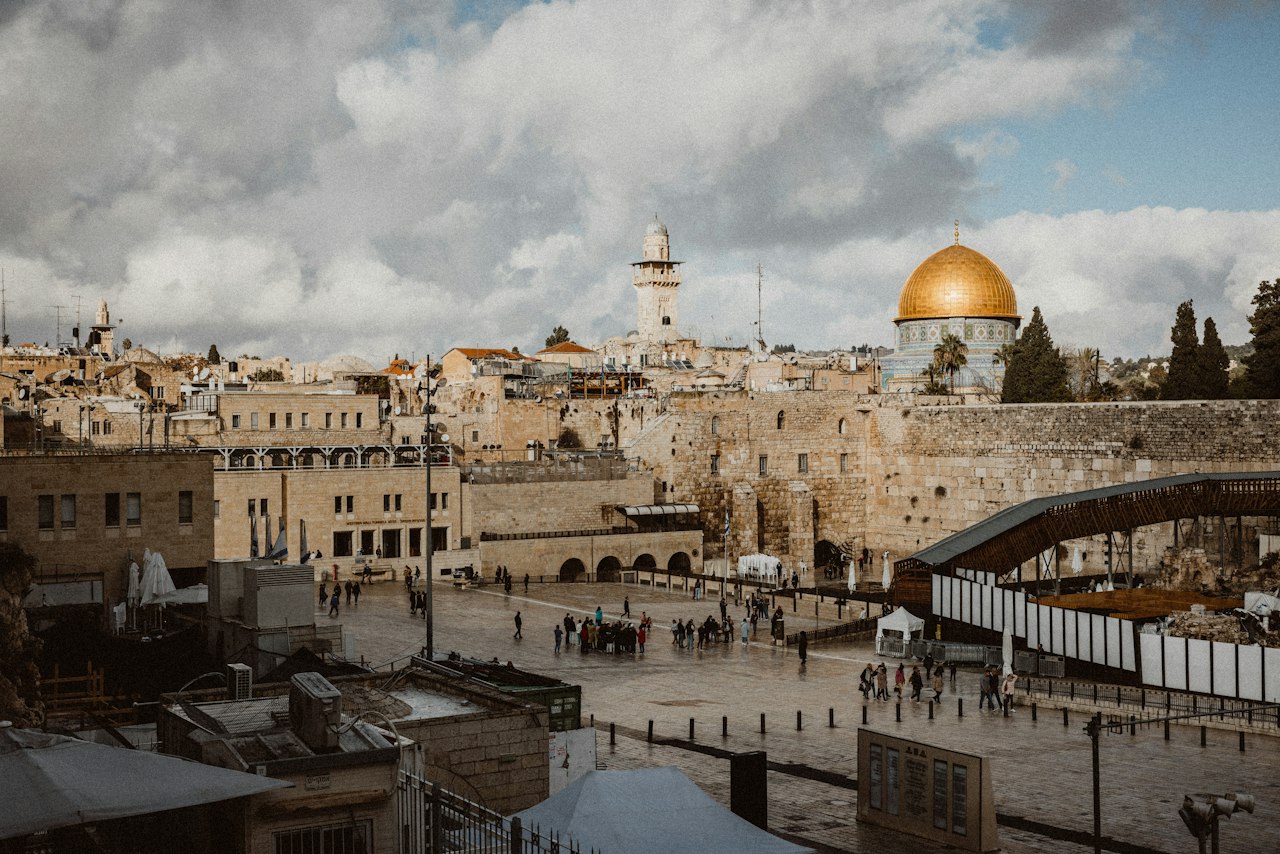
At the Temple Mount, the scale is the first thing to register: broad paving, the retaining walls, and the view across the platform rather than a single monument. At the Western Wall, the worn limestone blocks and the notes tucked into the cracks are the details that stay with you. The Via Dolorosa is less about one continuous scene than about the rhythm of narrow streets, small chapel markers, and the way the route weaves through ordinary commerce in the Muslim Quarter. The Church of the Holy Sepulchre is crowded and layered, with incense, dim light, and the constant movement around the tomb and the nearby chapels. In the Garden of Gethsemane, the old olive trees and the close-packed ground under them slow the pace, and Dominus Flevit is notable for its tear-shaped silhouette and its framed view back toward the city. On the Mount of Olives, what stands out is the sweep of the skyline: the Dome of the Rock, the Old City walls, and the stone roofs dropping away below.
The route
A full day on foot, best walked from the Temple Mount down through the Old City and out to the Mount of Olives.
- The Temple Mount (הר הבית)
- The Western Wall (Kotel) (הכותל המערבי)
- Via Dolorosa
- Church of the Holy Sepulchre (כנסיית הקבר)
- Old City of Jerusalem (העיר העתיקה)
- Garden of Gethsemane (גת שמנים)
- Dominus Flevit
- Mount of Olives (הר הזיתים)
Paste it into the agent chat in Votura and it will build the map and the audio guide.
Before you go
Starting early helps because the Old City is cooler, less crowded, and easier to read before the lanes fill up. The walk is not technically difficult, but it includes long stretches of stone paving, stairs, and some steep ascent on the Mount of Olives side. The Temple Mount and the Church of the Holy Sepulchre can have fluctuating access and crowding, and religious observance can affect timing in different parts of the route. Bring water, modest clothing that covers shoulders and knees, and sturdy shoes with grip for uneven stone.
Historical and Spiritual Journey in Jerusalem
This walk threads together Mount Zion, the Armenian and Jewish quarters, the edge of the Old City’s southern and western walls, and the approach to the Muslim Quarter near the Lions’ Gate. It links places that usually appear in separate guidebooks: a 19th-century windmill, a traditional room associated with the Last Supper, Roman and Byzantine street remains, Ottoman-era defenses, and functioning religious buildings. The route earns its time because the stones change character several times in a relatively short distance, and the transitions between neighborhoods are part of the story. It feels like a walk through layers rather than a single sightseeing line.
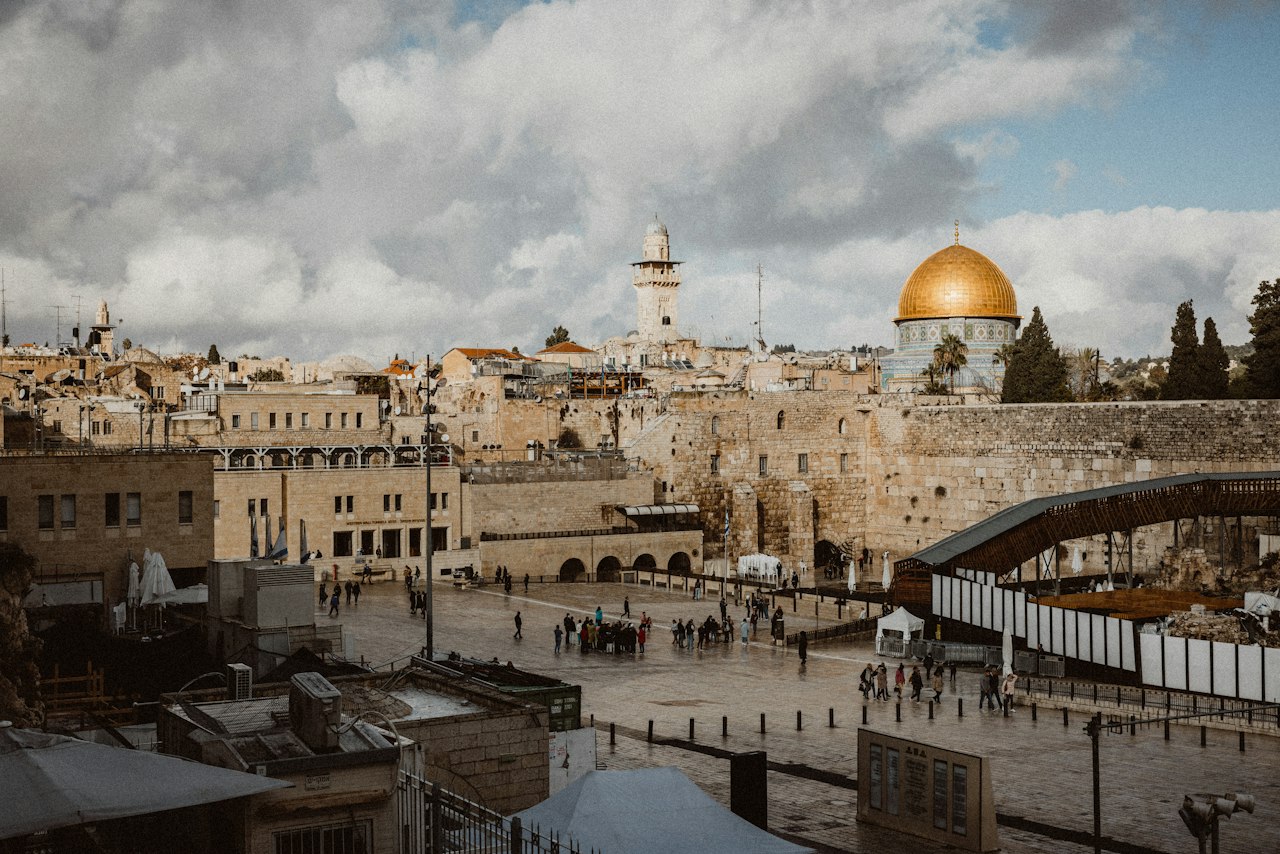
Montefiore's Windmill comes first, and the detail to notice is how small it looks against the skyline now; the surrounding neighborhood is the point as much as the mill itself. The Last Supper Room on Mount Zion is usually crowded, but the room’s plain stone interior and the sense of accumulated use are what stay with you. At Zion Gate, the bullet-scarred stone and the sharp bend of the entrance still make the old defensive logic easy to read. The Byzantine Cardo shows its Roman plan more clearly in the paving and the rebuilt columns than in the shops around it, while The Broad Wall stands out for its thickness, a massive stretch of ancient defense preserved between later buildings. Tiferet Yisrael Synagogue is worth a pause for the reconstruction story and its location in the Jewish Quarter, and the Cotton Merchant’s Market still feels narrow and irregular, with the Mamluk arches overhead. The Austrian Hospice of the Holy Family is the place to climb for the roofline views and the quieter interior courtyard, and Church of Saint Anne closes the route with its heavy Romanesque stone and the unusually calm acoustics inside.
The route
Plan on about a day’s worth of walking and go from Mount Zion toward the Lions’ Gate.
- Montefiore's Windmill
- Last Supper Room
- Zion Gate (שער ציון)
- The Byzantine Cardo
- The Broad Wall (החומה הרחבה)
- Tiferet Yisrael Synagogue
- Cotton Merchant’s Market
- Austrian Hospice of the Holy Family
- Church of Saint Anne
Paste it into the agent chat in Votura and it will build the map and the audio guide.
Before you go
Morning works best, before the Old City lanes fill and before the heat builds on the exposed stretches. The walk is not long by distance, but it is uneven and interrupted by stairs, cobbles, gates, and time spent inside churches and courtyards, so it feels moderate rather than easy. Some stops can close for services, security reasons, or prayer times, especially on religious holidays and Friday or Saturday, and the route passes through areas that can be busy at peak visitor hours. Good shoes, water, and modest clothing for entering religious sites make the day smoother.
Jerusalem in Ritual Time: 2-Day Walk Through the Living Holy City
This route is a two-day walk through Jerusalem’s layered sacred core, linking the Old City’s eastern and western edges with the spaces where Jewish, Christian, and Muslim ritual life still runs every day. It moves from the Temple Mount and the Western Wall through the Western Wall Tunnels, then along the Via Dolorosa to the Church of the Holy Sepulchre, back out by Jaffa Gate, and into the Haram area for Al-Aqsa Mosque before ending at Ecce Homo Basilica. It earns the time because the distances are short but the meanings are dense: stone, prayer, processions, barriers, and small changes in sound and crowding tell the story better than any map. Walking it is less about covering ground than about seeing how the city’s holy places fit together in real time.
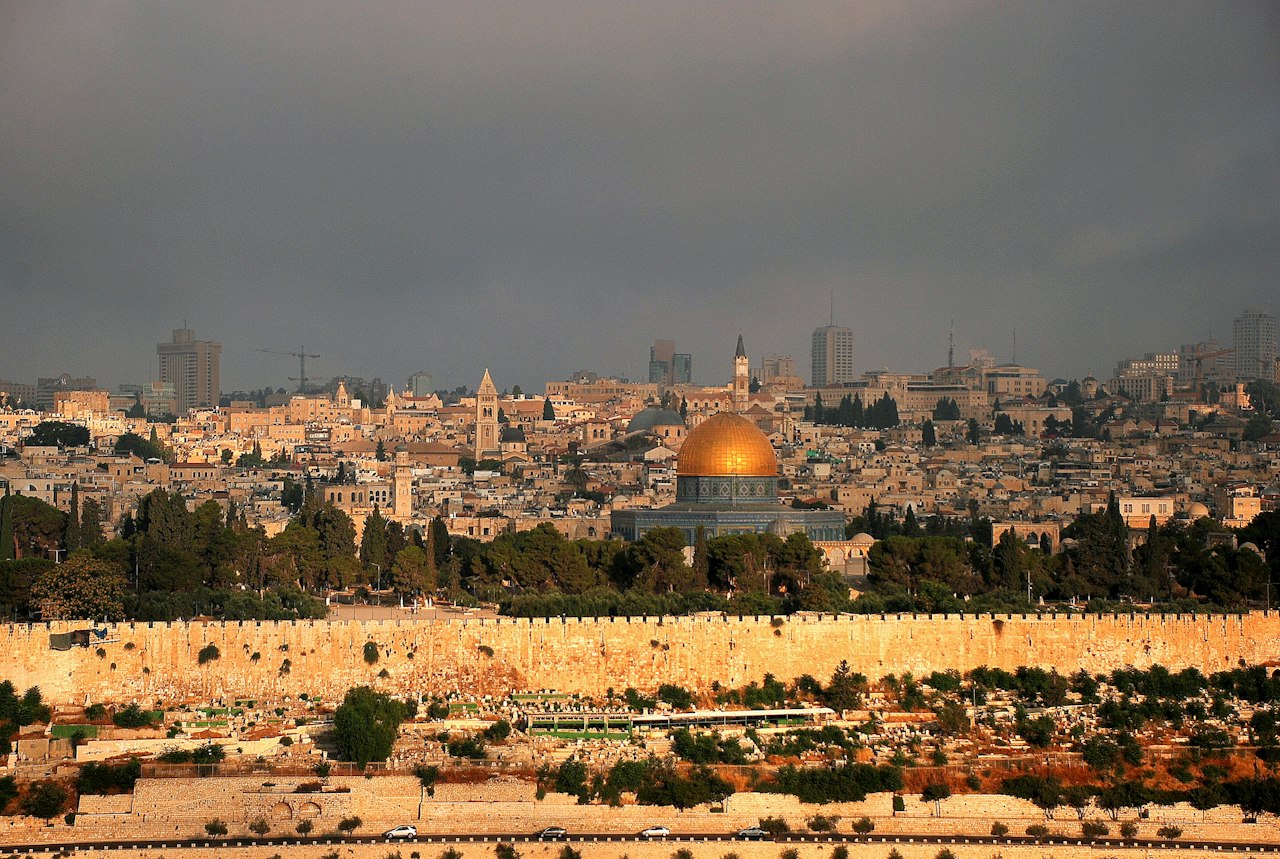
At the Temple Mount, the open expanse itself matters: the paving, the long sightlines, and the Dome of the Rock rising above the platform make the scale of the place immediately legible. At the Western Wall, the seam between the great ashlar blocks and the constant movement in the prayer area is worth watching, especially the notes tucked into the stones. The Western Wall Tunnels shift the experience underground, where the Herodian courses, vaulted passages, and exposed foundation stones give a physical sense of the platform’s depth and age. On the Via Dolorosa, the route is most vivid in the narrowness of the street, the hanging signs, and the stations marked along a path that is still part of daily market life. The Church of the Holy Sepulchre is a study in compression: incense, candles, ladders, and different liturgical spaces packed into one building. By the time you reach Jaffa Gate, the traffic, vendors, and fortress-like gatehouse change the tone again, and later Al-Aqsa Mosque brings you back to a quieter, open courtyard where the dome and prayer hall sit in a very different light. Ecce Homo Basilica, near the start of the Via Dolorosa area, is easy to miss unless you slow down, but its stone arch and interior remains are a good reminder that this whole route is built on layers.
The route
Best walked over two days, from Jaffa Gate toward the Temple Mount and back through the holy quarter.
- The Temple Mount (הר הבית)
- The Western Wall (Kotel) (הכותל המערבי)
- The Western Wall Tunnels
- Via Dolorosa
- Church of the Holy Sepulchre (כנסיית הקבר)
- Jaffa Gate (שער יפו)
- Al-Aqsa Mosque (הקונוס)
- Ecce Homo Basilica (גן הקבר)
Paste it into the agent chat in Votura and it will build the map and the audio guide.
Before you go
Start early, especially if you want quieter streets and a better chance of moving through security and religious sites before the day fills up. The walking itself is not long in distance, but it is stop-and-start, with stairs, uneven stone, checkpoints, and places where access can change. The busiest and most sensitive points are the Temple Mount / Haram area, the Western Wall, the Holy Sepulchre, and the narrow lanes around the Via Dolorosa, so delays are normal. Bring water, modest clothing for sacred spaces, and enough flexibility to adjust if a site is closed or access is restricted.
Shutters, Spice, and Sizzle: Two Days Eating Jerusalem’s Mahane Yehuda
This is a two-day food walk centered on Mahane Yehuda and the streets that feed into it, from Beer Bazaar Jerusalem through the market alleys, into Nachlaot, and back toward Ben Yehuda Pedestrian Mall. The route follows places where Jerusalem’s daily eating habits are visible rather than staged: beer taps, soup pots, pita ovens, pastry counters, and late-night snack windows. It earns the time because the character of the city changes block by block, and the sequence of kitchens tells a clear local story. The walk stays compact enough to do entirely on foot, but it works best when split so the market can be seen in both its daytime and evening moods.
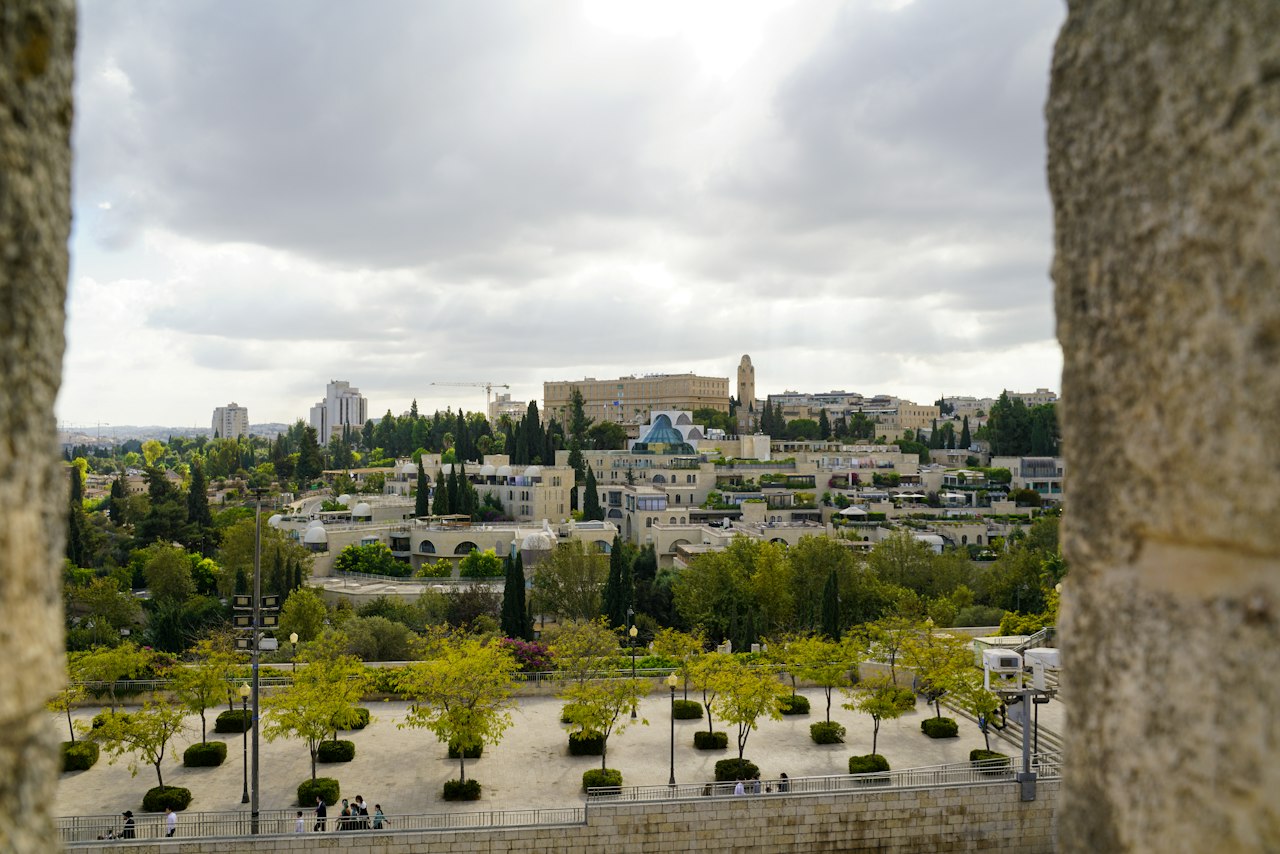
Beer Bazaar Jerusalem sets the tone with a room built around drinks and bar food rather than a formal sit-down meal. Azura follows with the heavy, familiar look of a long-running Iraqi restaurant, where the sight of stews and rice pots matters as much as the menu. Crave! and Dwiny Pita Bar (דוויני פיתה בשוק) pull the route back into the market’s tighter lanes, where open counters, griddles, and stacks of pita make the street feel compressed and busy. Hachapuria (חצ'אפוריה) is notable for the bread itself, while Morduch (מורדוך) and Jachnun Bar shift the eye toward baked and rolled pastries that look best when they are still warm and glossy. Fishenchips (פישנצי׳פס) adds the sharper smell of frying oil, then Mahane Yehuda Market (שוק מחנה יהודה) opens the walk out into produce crates, spice sacks, shutters, and late-day deliveries. Marzipan brings the route toward sweets and bakery display, Aricha Sabich narrows it again to a sandwich counter, and the stretch through Ben Yehuda Pedestrian Mall (מדרחוב בן יהודה) and Nachlaot (נחלאות) is about sidewalk life, apartment facades, and the quieter edges between meals. The final stops, The Iraqi Restaurant (המסעדה), Jafar Sweets, and ima אמא, keep the focus on dense, family-style cooking and dessert cases that feel tied to specific neighborhoods rather than a generic dining strip.
The route
Best walked over two days, starting at Beer Bazaar Jerusalem and ending at ima אמא.
- Beer Bazaar Jerusalem
- Azura (עזורה)
- Crave!
- Dwiny Pita Bar (דוויני פיתה בשוק)
- Hachapuria (חצ'אפוריה)
- Morduch (מורדוך)
- Jachnun Bar
- Fishenchips (פישנצי׳פס)
- Mahane Yehuda Market (שוק מחנה יהודה)
- Marzipan
- Aricha Sabich
- Ben Yehuda Pedestrian Mall (מדרחוב בן יהודה)
- Nachlaot (נחלאות)
- The Iraqi Restaurant (המסעדה)
- Jafar Sweets
- ima אמא
Paste it into the agent chat in Votura and it will build the map and the audio guide.
Before you go
The walk is easiest to begin in the morning, before the market lanes get crowded and before the later food stops are at their busiest. It is not a difficult route physically, but it adds up because the day fills with stops, pauses, and short zigzags through market streets and neighborhood blocks. Some places in and around Mahane Yehuda close earlier than the market itself, while others come alive later in the day, so splitting the route over two days makes the sequence feel more natural. Bring water, comfortable shoes, and a little flexibility for places that are closed between services, after lunch, or on Shabbat.
How to Start Your Jerusalem Tour with Votura
- Open Votura and tap Explore
- Search for Jerusalem or let the app detect your location
- Browse available tours or tap Generate to create a custom tour
- Hit Play and follow the audio guide stop by stop
All tours include audio narration, a route map, and estimated stop times. Download any tour for offline access before you travel.
Sources
- Old City of Jerusalem and its Walls — UNESCO World Heritage Centrewhc.unesco.org
- City of David Unearthed — Ancient Jerusalem Virtual Tourcityofdavid.org.il
Frequently Asked Questions
What is the best way to explore Jerusalem’s Old City on foot?
The post recommends a long pilgrimage walk through the Old City and its eastern ridge, starting at the Temple Mount and the Western Wall and continuing through the Via Dolorosa to the Church of the Holy Sepulchre. It then moves outside the walls to the Garden of Gethsemane and up to the Mount of Olives, giving a clear sense of how the sites connect.
Where does the Jerusalem pilgrimage walk start and end?
It begins at the Temple Mount and the Western Wall. From there, the route goes through the Via Dolorosa and the Church of the Holy Sepulchre, then continues past the Garden of Gethsemane and Dominus Flevit to the Mount of Olives.
How can I use AI audio tours in Jerusalem?
The guide says Votura AI generates audio tours based on your available time, transport preference, and chosen theme. You can use it to build a route around history, religion, food, or hidden local corners.
When is the best time to start visiting the Old City?
Starting early is recommended because the Old City is cooler and less crowded. The post begins its advice with this tip under “Before you go.”
Why is the Mount of Olives included in the Old City walk?
The Mount of Olives is included because it offers a wide view over Jerusalem, including the Dome of the Rock, the Old City walls, and the stone roofs below. It also helps show the shift from the dense lanes of the Old City to the quieter slopes outside the walls.
Hear this city out loud
Votura turns the places in this guide into a self-guided audio tour you can follow at your own pace.